Proposed routes through Syria and Turkey could diversify Iraqi oil exports but would require security, investment and political cooperation
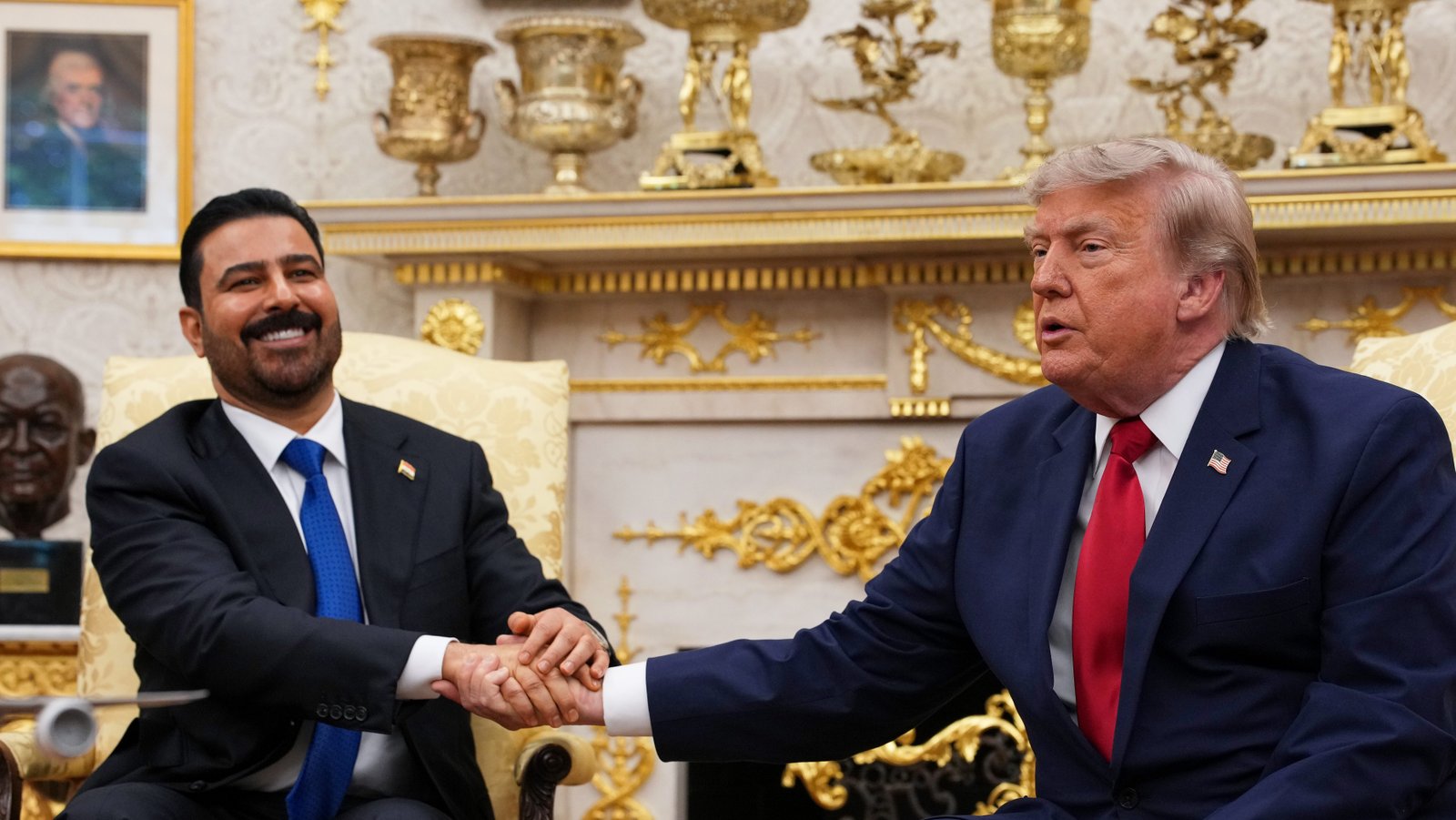
The meeting between US President Donald Trump and Iraq’s new prime minister, Ali al-Zaidi, was presented in Washington as the beginning of a different relationship with Baghdad—one centered on oil, investment and economic integration as the United States prepares to complete the withdrawal of its remaining forces from Iraq.
Behind the handshakes at the White House lie difficult questions: Can Iraq expand its ties with Washington without destabilizing its essential relationship with Tehran? Can new energy corridors through Iraq and Syria to the Mediterranean become part of a broader regional architecture designed to reduce dependence on the Strait of Hormuz?
Similar questions are emerging in Syria and Lebanon.
President Trump has reportedly intensified pressure on Israeli Prime Minister Benjamin Netanyahu to begin redeploying Israeli forces from Syria and move forward with withdrawals from Lebanon, while suggesting that Syrian President Ahmed al-Sharaa could play a role in addressing the Hezbollah threat. Taken together, the moves may reflect an American attempt to shift greater responsibility toward central governments in Baghdad, Damascus and Beirut while reducing direct US military involvement and, potentially, Israel’s territorial footprint beyond its borders.
Whether those governments are capable of exercising that authority remains far less certain.
During the July 14 meeting at the White House, the US president praised al-Zaidi and emphasized Iraq’s oil resources and the expanding involvement of American companies. He said new oil partnerships were being formed and described forthcoming agreements as potentially among the largest of their kind.
Al-Zaidi presented the visit as the beginning of an economic partnership and reiterated that the remaining US forces were expected to leave Iraq by September 30. He also said that weapons should ultimately come under the exclusive control of the Iraqi state.
Days earlier, al-Zaidi had participated in events surrounding the funeral in Iraq of Iran’s late Supreme Leader Ali Khamenei. He then traveled to Washington despite reported Iranian pressure against making the United States his first foreign destination as prime minister.
According to Axios, which cited two unnamed US officials, Washington interpreted the visit as evidence of an emerging “Iraq first” approach and hoped al-Zaidi would move against Iran-backed armed groups. Yet his government emerged from an Iraqi political system in which Tehran-linked parties and armed actors retain considerable influence.
Laura Silvia Battaglia, a Middle East correspondent currently reporting from Baghdad, sees a strategic incentive for the new prime minister to move closer to Washington, even as she warns that the domestic balance of power will constrain him.
Battaglia told The Media Line that, in her view, if it were up to al-Zaidi, Baghdad would already have decided to chart its future with the United States rather than with Iran.
“This is because closeness to the United States means greater security, investment, the country’s reintegration into the global financial system, infrastructure, and a renewed strategic role as a corridor between the Gulf and the Mediterranean,” she said.
The difficulty, she argued, begins when that foreign-policy ambition encounters Iraq’s internal political system, where Iran-backed armed groups and their political allies retain substantial influence over security and government decision-making.
“Once back home, al-Zaidi will not have an easy life. The militias are pushing to preserve their role and to guarantee the continuation of Iran’s sphere of influence in the country,” she noted.
In practical terms, Battaglia said, those groups are likely to resist any attempt by al-Zaidi to curb their political power, bring their weapons under state control or weaken Iraq’s strategic ties with Tehran.
“Even if, in the best-case scenario, they were absorbed by the central government as secondary military bodies, their political demands would still be difficult to reject, especially considering that the Shiite bloc holds a majority in parliament,” she added.
Battaglia was referring to demands by Iran-backed factions and their political allies to retain influence over security policy, government appointments, state resources and Iraq’s relationship with Tehran. Their parliamentary strength, she argued, would make it difficult for al-Zaidi to bring their weapons fully under state control or sharply reduce Iranian influence.
Dr. Tallha Abdulrazaq, an independent analyst specializing in Middle Eastern politics and security who has written for outlets including TRT World and Middle East Monitor, disputes the idea that al-Zaidi’s arrival in Washington should itself be interpreted as evidence of a meaningful Iraqi strategic realignment.
“It’s not very significant,” he told The Media Line, arguing that similar pledges by Shiite Islamist politicians have repeatedly failed to materialize.
Although al-Zaidi is new to the political scene, Abdulrazaq said, his rise was enabled by the Coordination Framework, a Shiite Islamist bloc dominated by figures including Nouri al-Maliki, whom he described as Iran’s principal ally in Baghdad. He added that President Trump had alluded to Maliki when saying he did not want him back in power and argued that Maliki’s support for al-Zaidi carries clear implications given Maliki’s ties to Tehran.
For Abdulrazaq, the underlying assumption that Baghdad is attempting to escape Iranian influence is itself questionable. He asserted that almost everyone holding political power in Iraq today has links to Iran and that many were empowered following the US-led invasion in 2003.
“There’s no getting around this reality, and the attempts of making the Green Zone politicians appear to be reluctantly under Iran’s thumb when in actual fact they are willing participants [show] how poor the understanding and analysis of Iraq has been for almost a quarter of a century since the invasion,” he said.
John Keith King, founder of Q Advisory, offers a more intermediate assessment. Rather than interpreting the moment as a decisive Iraqi move from one camp to another, he sees the possibility of a gradual diversification of Baghdad’s relationships.
“The Trump–al-Zaidi meeting is significant, but it should not be interpreted as Iraq abruptly changing sides. It signals an attempt to redefine the US–Iraq relationship around investment, energy, trade and Iraqi state sovereignty as the American military presence is reduced.”
King said Washington clearly sees al-Zaidi as a potential partner in limiting Iranian influence, particularly by strengthening legitimate Iraqi institutions and bringing weapons under state control.
The real test, however, will be whether the agreements reached in Washington produce measurable changes inside Iraq
“The real test, however, will be whether the agreements reached in Washington produce measurable changes inside Iraq,” he told The Media Line.
Baghdad can rebalance its relationships, King said, but it cannot realistically separate itself completely from Tehran. Iran’s influence is embedded in Iraqi political parties, commercial networks, religious relationships and powerful armed organizations, while the two countries share a long border and substantial economic ties.
In his view, a successful Iraqi strategy would rely on diversification rather than confrontation: expanding relations with the United States, Turkey, Europe and the Gulf states while maintaining a functional relationship with Iran.
Attempting to force Iraq into an exclusively anti-Iranian alignment could destabilize the country and weaken al-Zaidi
“Attempting to force Iraq into an exclusively anti-Iranian alignment could destabilize the country and weaken al-Zaidi,” he argued.
The Pipeline Proposal
At the center of the economic discussion is Iraq’s geography.
Recent disruption in and around the Strait of Hormuz has again exposed the vulnerability of countries whose energy exports depend heavily on the waterway. Saudi Arabia and the United Arab Emirates already possess routes allowing at least part of their exports to bypass the strait. Iraq, by contrast, remains heavily dependent on its southern outlets and is examining additional export routes.
US envoy Tom Barrack has held discussions with Iraqi and Syrian officials, as well as companies including Chevron, over reviving the long-defunct Kirkuk-Baniyas pipeline, which would carry Iraqi crude from the Kirkuk region through Syria to the Mediterranean port of Baniyas.
Other options are also under consideration, including a new route from southern Iraq through Haditha that could branch toward Syria, Turkey or Jordan. President Trump said during al-Zaidi’s Washington visit that major new oil agreements would soon be announced.
The projects remain under discussion and would require substantial investment, security guarantees and political coordination before they could provide meaningful alternative export routes.
In Battaglia’s reading, oil pipelines and a possible revival of the Hejaz Railway could help Iraq position itself not simply as an oil producer but as a geographical bridge linking the Gulf to the Mediterranean, provided political and security conditions allow it.
King also sees strategic potential in the pipeline concept but cautions against overstating how quickly such infrastructure could transform regional energy flows.
“The Hormuz crisis substantially increases Iraq’s strategic importance because Iraq can potentially provide energy routes to the Mediterranean that do not depend on the Strait. The pipeline through Turkey offers the more immediate option, while a revived route through Syria could provide additional long-term resilience. However, pipelines through Syria will require significant investment, physical security, political agreements, and dependable infrastructure. They cannot replace Iraq’s southern export capacity overnight,” he said.
For King, the importance of the project goes beyond energy.
The Iraq–Syria pipeline should be understood as both an energy-security project and a geopolitical instrument
“The Iraq–Syria pipeline should be understood as both an energy-security project and a geopolitical instrument. Economically, it would diversify Iraqi exports and reduce vulnerability to disruptions in Hormuz. Strategically, it could connect Iraq more closely with Syria, Turkey, Gulf investors and Western markets while diminishing Iran’s ability to exploit regional chokepoints,” he said.
Yet King warned that presenting the infrastructure too explicitly as an anti-Iranian project could threaten its viability. The pipeline must remain commercially credible and Iraqi-led, he said. If it is portrayed primarily as an American weapon against Tehran, armed groups could target it, and Iraqi political support could quickly disappear.
Abdulrazaq is more skeptical about describing Iraq as an alternative regional energy corridor.
“Theoretically, yes. But practically, no. Iraq is not really an alternative energy corridor at all, as it can only ship its own oil to Syria and Turkey; it has no influence on international oil shipping routes,” he said. “The reason for this is that (a) Iraq’s only access to the sea depends on Hormuz itself and (b) for countries like Saudi Arabia to start pumping energy through Iraqi territory and beyond, they would need to trust that Iraq is no longer under the thrall of Iran, the country that’s been bombing them since the end of February.”
He viewed that prospect as extremely unlikely, arguing that Iranian influence is too deeply embedded in Iraq for neighboring states to ignore, regardless of Baghdad’s public statements.
Abdulrazaq said reducing reliance on the Strait of Hormuz is not only a US policy objective but also a priority for Iraq and, in some respects, Iran. He maintained that Iran has long used Iraq as a sanctions-evasion channel, while the US Treasury routinely targets Iraqi entities accused of conducting business for Tehran and the Islamic Revolutionary Guard Corps.
No party benefits if Iraq loses access to its primary source of economic growth, Abdulrazaq argued. With a “vanishingly small private sector,” an oversized public sector, limited industry and innovation, and near-total dependence on energy exports, Iraq is especially vulnerable to disruption.
“If those go down, and Iraq goes down with it, everyone from the US to Iran loses out,” he said.
The pipeline debate reveals the contradiction at the center of Iraq’s geopolitical position. Infrastructure could give Baghdad greater strategic flexibility, but it would have to cross a political environment in which competing regional powers, armed groups and domestic factions retain the capacity to obstruct it.
From Iraq to Syria and Lebanon
The emerging American approach is also increasingly visible to Iraq’s west.
President Trump has pressed Netanyahu to begin redeploying Israeli forces from Syrian territory and to proceed with withdrawals in Lebanon. According to US and Israeli officials cited by Axios, the US president told Netanyahu that the Israeli presence in Syria was generating tensions and could produce further escalation.
Netanyahu emphasized Israel’s demand for security zones along its borders as Lebanon and Israel advanced a separate US-brokered process. Under the June 26 framework, the parties agreed to establish “pilot zones” involving the deployment of Lebanese state forces, the disarmament of armed groups in those areas and the progressive withdrawal of Israeli troops.
Following the latest negotiations in Rome, US officials said the two sides had agreed on the structure and guidelines for beginning implementation, although fundamental disagreements remain over Hezbollah’s weapons and the timetable for an Israeli withdrawal.
President Trump has repeatedly suggested that al-Sharaa’s government in Syria could help “take care of” Hezbollah, arguing most recently that Syrian forces could act more precisely than Israel. Al-Sharaa, however, has publicly rejected military intervention in Lebanon and said Syria intends to remain outside the wider regional war.
“Trump’s request for the withdrawal of Israeli troops from Lebanon and Syria is an attempt that reflects the conditions and recommendations of the Gulf countries, but it does not align with the strategy pursued so far by the messianic Israeli right in power in Tel Aviv. Even if there is a formal withdrawal, the IDF will find other ways to re-enter the picture in those border areas over the medium term,” Battaglia noted.
King argues that an Israeli withdrawal from Lebanon should remain the objective but cannot be separated from the question of who controls the territory and weapons after Israeli forces leave.
“A complete Israeli withdrawal from Lebanese territory should remain the diplomatic objective because Lebanese sovereignty cannot be strengthened while foreign forces retain positions inside Lebanon. However, withdrawal should be coordinated with verifiable security arrangements, deployment of the Lebanese Armed Forces and concrete steps to establish the Lebanese state’s exclusive authority over weapons,” he said.
His assessment of al-Sharaa’s potential role is more limited than the one repeatedly suggested by President Trump.
“Ahmed al-Sharaa’s government can help secure Syria’s borders, exchange intelligence and disrupt weapons trafficking. It should not be encouraged to conduct a military intervention inside Lebanon, which could revive historical fears of Syrian domination and inflame sectarian tensions,” King said.
Abdulrazaq similarly argues that Hezbollah ultimately must be addressed internally, while warning that continued Israeli military operations can make it politically harder for Lebanese or Syrian actors to confront Iran-aligned groups.
“The Hezbollah problem has to be resolved locally and by local actors. Israel’s presence simply makes matters worse and more volatile, and it delegitimizes local actors who could otherwise handle the threat. Right now, the Lebanese government and armed forces are being described as ‘Zionists’ in Iran-sponsored strategic messaging from Hezbollah media outlets linked to the IRGC. The same applies to Syria,” he said.
Taken together, the developments point toward an emerging American concept for the region, even if it has not yet become a coherent doctrine.
As the remaining US forces prepare to leave Iraq, Washington is promoting American investment in Iraqi energy, exploring infrastructure routes through Syria, pushing for stronger state control over armed groups, and pressing Israel to reduce its presence inside neighboring countries.
The potential model would rely less on permanent American deployments and more on interconnected economies, energy corridors, and local governments capable of controlling borders and weapons.
King believes such a shift may already be beginning, but he cautions that economic integration cannot entirely replace security power.
“That would be a strategically sustainable direction, but economic engagement cannot entirely replace deterrence. Washington will still require limited security partnerships and the ability to respond when terrorist organizations or armed groups threaten regional stability,” he added.
For Abdulrazaq, Washington continues to underestimate the depth of Iraq’s structural problems.
“The US should stop searching for quick fixes within the current establishment and instead work on building a ‘Syria solution’ in Iraq, where Iraqis who are hostile to Iran and open to relationships with international state actors—including the US—govern. Anything less than that, and we’re going to keep going round the corruption and Shia militia merry-go-round, achieving nothing but speeches and platitudes,” he contended.
He is equally skeptical that a White House meeting alone can change the regional equation.
“While this sounds good on paper, a few handshakes with men like Zaidi aren’t going to accomplish that, and instead only serve to kick the can down the road. And without anyone having their hand on the rudder, things can quickly spin out of control,” he said.
The central test facing al-Zaidi will be whether he can translate the promises made in Washington into changes inside Iraq.
Pipeline projects, American investment, and renewed diplomatic attention can offer Baghdad alternatives that did not previously exist. But infrastructure alone cannot redefine the regional order. The same applies to an Israeli withdrawal from Lebanon or Syria: Territorial redeployment can create political space, but only functioning state institutions can fill it.
Whether the current moment produces a genuine redistribution of power depends less on announcements in Washington than on what happens next in Baghdad, Damascus and Beirut.
For Iraq, the question is whether al-Zaidi can place weapons under state authority without destabilizing the political coalition that brought him to power. For Lebanon, it is whether the state can expand its authority as Israel withdraws while confronting Hezbollah’s continued armed presence. For Syria, it is whether al-Sharaa can become a stabilizing regional actor without being drawn into another country’s internal conflict.
The United States appears to be betting that economic corridors and stronger states can gradually replace some of the military mechanisms that have shaped the region for decades. Whether those states are strong enough to carry that burden remains unanswered.