AI cities abound in ASEAN regional headlines, as if the future had already arrived. Numbers pale compared to spending in the US, where the so-called hyperscalers alone have poured well over a trillion dollars into AI data centers since 2022. But resources permitting, ASEAN is gearing up for a big regional rollout.
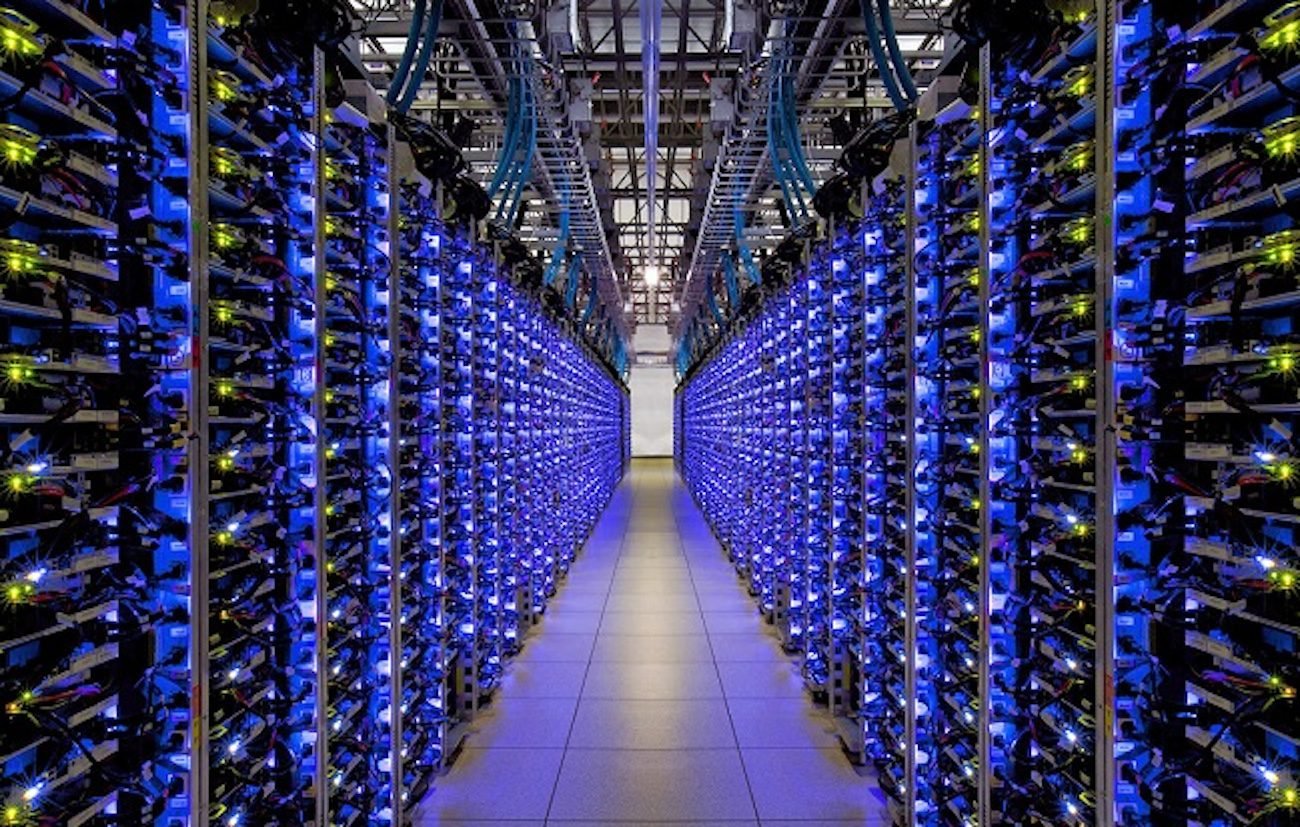
There’s a catch: our ChatGPT sessions, our Claude chats, the cameras that watch us — the AI that is supposed to change everything, maybe take our jobs and usher in a world of plenty, or possibly even destroy us all — does not live in a “cloud.” It runs in vast warehouses of computers that gobble enough electricity and water to power small nations.
The latest entrant is Thailand, whose Board of Investment (BOI) reported more than 1 trillion baht (US$30.7 billion) in investment applications in the first quarter of 2026, with the digital sector accounting for some 874 billion baht.
National races for data center crowns have recently become a regional obsession. Yet it might be more useful to ask whether ASEAN overall, or any member nation, has what it takes to be a serious AI player: reliable power and water. In that sense, ASEAN’s AI future is fragmented — separate grids, separate aquifers and, above all, inter-nation rivalry.
The original map everyone is working from was drawn by Singapore. The city-state’s moratorium on new data center builds, imposed in 2019 and only partially relaxed in 2022, was the single most consequential policy decision in the region because it forced pent-up demand to relocate elsewhere.
Singapore still hosts more than 70 facilities and roughly 1.4 gigawatts of capacity, but its Energy Market Authority effectively caps data centers at around 12% of national grid load. Data center construction costs there ranked second only to Tokyo’s globally in 2025, at $14.53 per watt.
In short, Singapore’s answer has been to ration access and sell scarcity as a premium. In December 2025, it opened a second Call for Applications for at least 200 megawatts, requiring half the power to come from green sources, and it is anchoring a 700-megawatt low-carbon park on Jurong Island.
In other words, the city-state has stopped competing on volume and started competing on governance and efficiency. Other ASEAN states are now racing individually to pick up the slack Singapore left behind.
A causeway away
The largest beneficiary sits a causeway away. Johor has gone from Singapore’s overflow valve to a market in its own right, and the numbers are impressive.
JLL projects Malaysian capacity will more than double to 2,055 megawatts by the end of 2026, a roughly 70% compound annual growth rate. Another 3,500 megawatts are in the pipeline beyond that.
According to Cushman & Wakefield, Thailand and Malaysia together supplied nearly two-thirds of all new Asia-Pacific data center capacity — measured in megawatts of IT load — in the first half of 2025. But Johor is also where the model’s limits first became visible to ordinary residents.
In February 2026, residents of Gelang Patah protested outside a data center construction site over water — a resource that centers consume in enormous volumes for cooling, and the kind of essential, basic resource Malaysian voters notice fastest.
The AI boom will likely bring many more such backlashes in the years ahead, given precarious resources across much of the region.
Thailand’s bid should be read against that backdrop, and its most telling asset is not the BOI’s headline numbers but who is doing the building.
Gulf Development — the country’s largest privately-held power producer — has pledged up to 140 billion baht over five years to expand from roughly 200 megawatts of data center capacity toward 2,000, in partnership with Google, which is putting $1 billion into a Bangkok cloud region, as well as Microsoft and a Singtel-AIS venture.
Arguably, that’s the whole story in one company. When reliable power — “firm power,” as it’s known in the business — is the leading hurdle, whoever already owns the power plants is halfway to the finish line.
Elsewhere in ASEAN
CBRE now ranks Thailand alongside Indonesia as a high-growth Asia-Pacific destination, with Eastern Economic Corridor campuses scaling past 300 megawatts.
The caveat is that BOI approval is not a guarantee of a built facility, and Thailand’s own promoters concede that power readiness and a thin pool of skilled operators remain real constraints. Approved value, signed agreements and operational megawatts are three different things.
Indonesia is the market where scale and sovereignty collide most directly, which makes it the one to watch. Microsoft has committed $1.7 billion and Nvidia a smaller sum to a venture in Solo, but the more telling deal is RangeIDC’s $5 billion campus in Batam — the first overseas project for a Shenzhen-listed operator, sited on an island that is itself a low-latency (i.e., data speed) annex of Singapore.
Jakarta is simultaneously building a sovereign-AI story around GPU Merdeka and the Sahabat-AI local-language models, pitching domestic control of compute as a national project.
Chinese capital, American chips and Indonesian sovereignty rhetoric are being poured into the same concrete. How Jakarta manages that triangle will tell us more about the region’s direction than any megawatt tally.
The Philippines is the market that most regional analyses leave out, and the omission is a story in itself. The country has a credible pipeline — ABB recently energized VITRO Santa Rosa in Laguna, billed as the country’s first AI-ready hyperscale site, with announced builds from ePLDT, STT GDC, Digital Edge and others behind it.
What holds it back is structural: grid-delivered power costs around $154 per megawatt-hour, the second-highest in ASEAN after Singapore, on a grid that cautious investors consider high risk.
On the other hand, Manila has the land, the connectivity and an anglophone workforce. But until it can guarantee firm power, it will remain the market everyone thinks of last.
AI eyes on Vietnam
Vietnam is the mover to watch on the variable governments actually control — the rules. Hanoi now permits wholly foreign-owned data centers, an unusual move that reportedly drew more than $7 billion in AI data center commitments before the country’s national AI law took effect in March.
STT VNG’s second Ho Chi Minh City hyperscale facility was due online in the first half of this year, and Nvidia has planted a research center and acquired a domestic AI unit.
Notably, the ceiling here is not Vietnamese policy, but Washington’s: US export controls on advanced accelerators stretched local procurement times from eight weeks to 26 weeks and pushed spot prices for high-end cards to punishing levels, splitting the market between operators with offshore access to chips and those without.
And perhaps that best sums up ASEAN’s AI story in miniature. Southeast Asia’s data center buildout is routinely described as a digital-economy success story. Aggregate capacity may well triple by 2030. But the underlying contest is not for an “AI city.”
It is about who can deliver firm, increasingly green electricity; defend their water tables against the first stirrings of organized public anger; and balance American silicon and Chinese capital without being captured by either — a difficult-to-achieve outcome in an every-nation-for-itself ASEAN.
Chris Taylor is a senior risk consultant at Access Asia Group, a due-diligence consultancy based in Singapore.