
There is a version of development work that looks responsible but accomplishes very little. It moves cautiously, funds what is already proven and prioritizes institutional comfort over urgency. As a region of staggering diversity, rapid change and compounding crises, Asia cannot afford to settle for that version.
In 2025, a year of significant headwinds for global development, Asia proved to be a region more interested in building something new than falling back on what is known.
Across the region and beyond, we saw the courage of leaders, partners, practitioners and community champions in building regional partnerships, embracing new tools, and bringing fresh energy to problems that have resisted solutions for decades.
When others shrank their ambitions, Asia’s leaders raised them. The example they have set matters as much as the results they achieved.
Consider what a well-placed bet did for the region’s energy future. After a period of rapid expansion, India’s renewable energy growth stalled when battery storage, the essential piece to making a clean grid truly reliable, couldn’t keep up. The technology existed. What was missing was proof that it could be financed at scale in an emerging market.
That’s where the Global Energy Alliance made a big bet. Their concessional loan to establish India’s first standalone utility-scale battery energy storage system has helped deliver reliable electricity to more than 100,000 people in New Delhi at roughly half the national benchmark price.
More importantly, it created a model for success that proved battery storage was a bankable solution. That bet has unlocked an estimated US$5-6 billion in further investment in India alone and catalyzed more than 8,000 megawatts of battery storage development globally. All it took was one early risk-taker to change the narrative of what was possible.
A similar mentality is helping close the information gaps that have left smallholder farmers exposed to new threats. Across South and Southeast Asia, climate volatility is intensifying and traditional agricultural support systems are proving insufficient. They are often too slow, too expensive, and too uniform to reach millions of farmers with timely, tailored guidance.
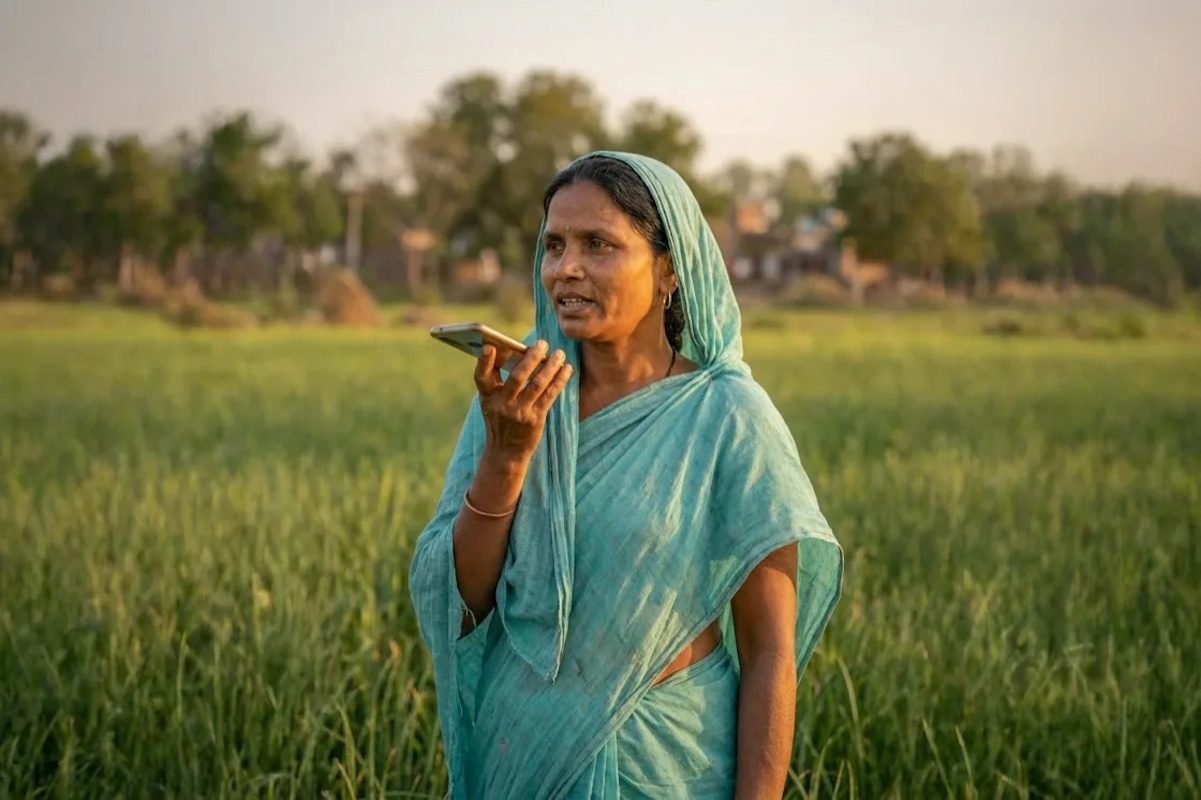
That’s why we’re seeing a shift to embracing new technologies, such as Digital Green’s AI-powered app, Farmer.Chat, to deliver personalized, climate-smart advice in farmers’ own languages. Farmer.Chat already has more than 1.6 million downloads and over ten million queries across six countries, helping farmers build climate resilience and boost their incomes.
And Asia is also demonstrating a bold shift in approach to the region’s health security. By embracing a new approach to coordinated training, surveillance data and regional laboratory networks, health workers are better equipped to detect and contain outbreaks of dengue, avian influenza and other threats far faster than before.
This kind of investment rarely attracts headlines because it is hard to quantify exactly how many lives were protected. But in a region of 4.7 billion people facing intensifying climate-driven disease threats, every potential outbreak averted counts.
There are common threads running through each of these examples. They required trust in community and regional partnerships. They required the vision to focus on infrastructure and technology that will sustain progress far into the future.
And most of all, each required a willingness to embrace risk. That means they all come with the possibility of failure – but the same can be said for any bet worth making.
That is the role philanthropy can play at its best. Not replacing governments or markets, but helping move bold ideas from possibility to proof, especially at moments when uncertainty makes others hesitate.
The Rockefeller Foundation has long believed that humanity’s greatest challenges are solvable with bold, committed action. In 2025, the results across Asia reinforced that belief.
Asia now sits at an inflection point. The gap between what existing systems can deliver and what this moment demands has rarely been wider. Disruption means we must change how we work, but never who we work for.
That is what makes big bets – not safe ones – more necessary than ever.
The author is head of Asia at The Rockefeller Foundation.