
Iran’s move on Hormuz is ultimately a short-term maneuver. And if it doesn’t get its act together soon, the whole region could turn against it.
The new wave of US attacks against Iran has an undefined time frame, but at least a clear, limited objective – to reopen the Strait of Hormuz against Tehran’s claim of control. And it ushers in new possibilities and threats for Iran.
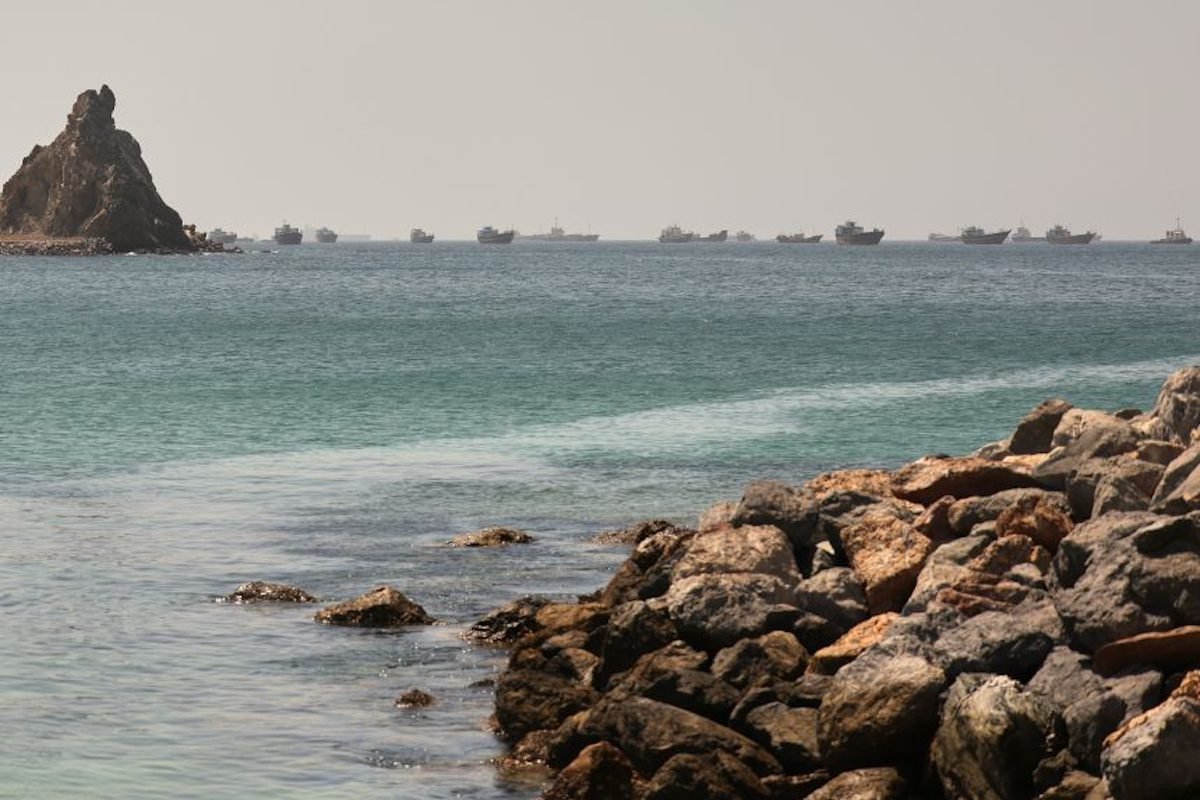
Thirteen tankers crossed the Strait of Hormuz on July 8 compared with an average of 33 per day over the previous week. Traffic slowed after Iranian attacks on at least three ships triggered a renewed round of fighting with the US.
And while oil markets have not yet priced in a complete closure of Hormuz, they could become more nervous next week if a truce isn’t re-established.
Key to the truce is a hazy compromise in which Iran doesn’t threaten the Strait, without explicitly declaring such a threat. Behind the short-term tactical agreement lie medium- and long-term considerations.
By threatening traffic through Hormuz, Iran deprived itself of long-term leverage (the possibility of closing the Strait), which would have worked only as long as it wasn’t used.
Gulf States are developing alternatives to bypass the Strait of Hormuz via pipelines to the Indian Ocean or the Mediterranean. Eventually, the Hormuz chokehold will apply only to Iranian oil, with no clear alternative routes. Tehran would then be trapped by its own strategy.
Some in Iran may believe that, in this situation, they need to maximize their short-term advantage and try to partially close the Strait. This is enough to pressure the market.
Even if 90% of traffic continues, a few sporadic attacks are enough to drive up insurance premiums and, consequently, oil prices, affecting global markets. It’s minimal pressure for maximum results.
To avoid that, some in US circles talk about occupying Iran’s Kharg Island, which controls access to Hormuz. But after Iraq and Vietnam, who can guarantee this won’t be the first step into quicksand?
If the US occupies Kharg, then the next day, US troops there become targets of missile batteries it hasn’t identified or eliminated. And then it must go deeper, sinking further into the quicksand.
Some in Israel may want outright regime change in Iran, but Turkey, Saudi Arabia, Egypt, and Pakistan, to name a few, do not because today they have something like a “sporting” alliance with the US and difficult or less-than-cordial ties with Israel.
But if Iran becomes pro-Israel and pro-US via full-blown regime change, this would quickly redefine the region’s power balance. All the others would have to reconsider their relations with each other and the US.
No one wants a nuclear Iran or one that controls Hormuz, but a pro-Israeli Iran would be another matter entirely.
Amid this general chaos — with an open war in Ukraine, an undefined conflict with China, and a runaway nuclear rearmament in North Korea — is it wise to embark on an uncertain adventure in Iran?
In this situation, Iran appears to have only a short-term game, threatening Hormuz and dragging its feet with its fissile nuclear material.
There are two competing strategies in the US and Iran. US President Donald Trump’s administration may want to bring some form of closure to the war as soon as possible to avoid interference with the difficult midterm elections in November. Iran may want to drag on opening and shutting the spigot of threats until the elections.
But this strategy, like the Hormuz threats, has a short shelf life. Before the elections, Trump may be interested in concessions, but after the elections, that interest will diminish.
Moreover, the nuclear threat and the chokehold on Hormuz have de facto created a new convergence of interests beyond Israel’s position.
Turkey, Saudi Arabia, Pakistan and India may all have an interest in pushing back against Iran and, with time and patience, could be coaxed into acting to reopen Hormuz and halt Tehran’s nuclear program. Such action would be very different from US-Israel moves.
This would create new openings and challenges for both Israel and Iran. And Tehran may not have much time to decide how it wants to play its high-stakes cards.
This article first appeared on Appia Institute and is republished with kind permission.