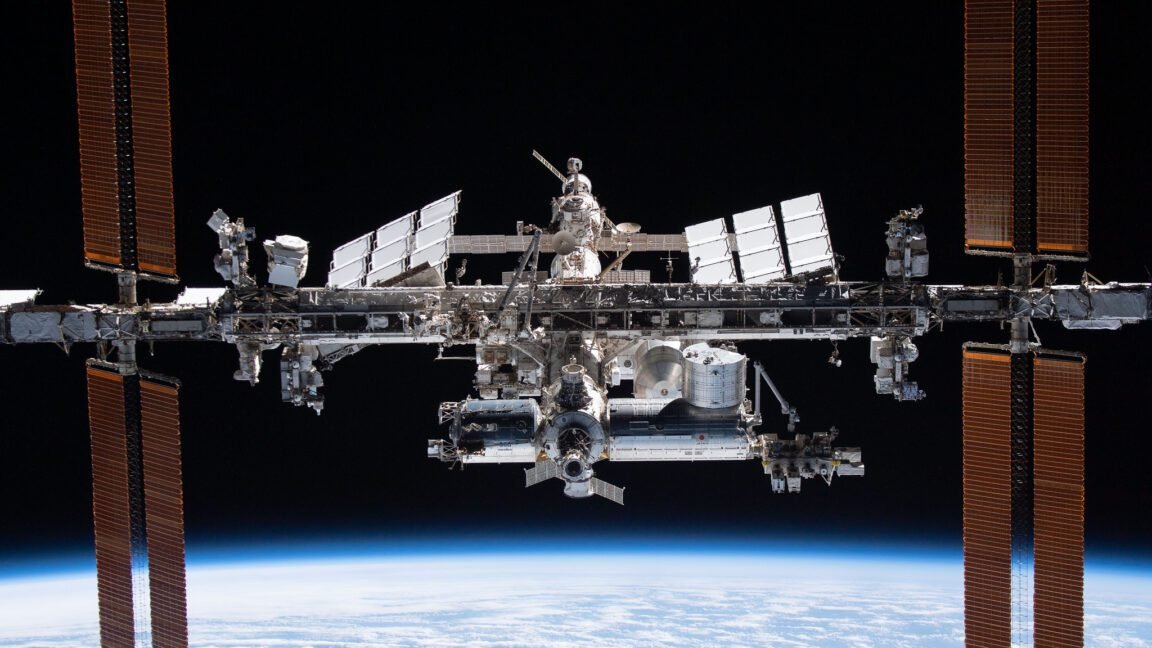
NASA this week released a much-anticipated document, known as a “draft Request for Proposals,” that provides some clarity about what it expects from US companies attempting to build privately operated space stations in low-Earth orbit.
The stakes are high with this document, known as a draft RFP. The space agency, publicly, has set an end date for the International Space Station of 2030. Although there is likely to be a two-year extension, time is still running short to build, test, and fly a vehicle as complex as a space station. NASA officials and the US Congress have both said they want to avoid a gap in having a human presence in orbit, and this has created considerable urgency about what comes next.
Nearly five years ago the space agency took a concrete step toward filling this gap, awarding funding to three companies to develop space station concepts. Previously, NASA had also provided $140 million to another space station company, Axiom Space. These Space Act Agreements were intended as a prelude to a second phase of the program, which would award substantially more funding to one or two more companies to proceed into the construction and launch of their space stations. But phase two of the program kept getting delayed, in part because Congress dithered on funding.
Then, about a year ago, the interim administrator of NASA, Sean Duffy, issued a “directive” that indicated to the private companies that the rules of the game were going to be changed due to a budget shortfall. Only months later, however, it became clear this directive would not stick. In January, a key Senate staffer resorted to “begging” NASA to release the draft RFP. Then, in March, NASA suggested it may reshuffle the rules again by building a “core module” for the private space stations to dock to.
No one liked that because most of the competitors are seeking to build “free flying” stations, independent of the International Space Station. So NASA discarded the core module idea and released the draft RFP this week.
A document finally comes out
“NASA’s review reflects what we’ve been hearing from industry throughout this process. Industry believes it can meet the timelines and that a viable commercial marketplace exists where NASA is one customer among many,” said NASA Administrator Jared Isaacman, in a news release. “We’re focused on supporting those efforts, enabling the capabilities that make this transition possible, and doing all we can to ensure the United States maintains a continuous human presence in low Earth orbit.”
So what do the private companies—the key players are Axiom Space, Vast Space, Voyager, Blue Origin, and possibly SpaceX—think about the new document? This week Ars spoke on background with half a dozen officials from these firms to get a clear sense of how they are reacting.
There are two main feelings: relief and concern.
The relief is easy to explain. A government-sponsored core module was widely disliked and seen as an effort by NASA’s Johnson Space Center, which operates the International Space Station, to remain in the business of operating a space station. Now that worry is gone.
Reasons for concern
But there are multiple reasons for concern. One is lost time. The private companies expected phase two to begin at least a year or two ago, and they are struggling to raise funding and support growing workforces in the interim.
NASA is just one customer for a US-built private space station, but it is the most important customer. Its rules for human safety in orbit will drive the designs the private companies ultimately build. So companies really need to know exactly what NASA wants, and how much it is willing to pay to move forward.
And in this document, NASA has provided guidance. Quite a lot of it. Requirements are the key element of a NASA planning document like this, the bureaucratic currency by which NASA buys off on the safety of a spacecraft, such as the amount of habitable volume the agency requires. Generally companies prefer fewer requirements as it allows them more freedom for design and innovation. More requirements give NASA engineers more control over the design of vehicles.
Several of the companies were shocked by the number of requirements levied in the NASA documents. One participant estimated there are more than 3,000 requirements. The companies were hoping for hundreds. Some of the requirements do seem fairly harsh. For example, on page 50 of the 246-page “contract data requirements list,” it appears as though NASA’s chief information officer must approve all software purchases a company makes.
Reads like a cost-plus contract?
“It’s got all the requirements, deliverables, and clauses of a cost-plus contract, but they are stuffed into a firm fixed-price bag,” said Phil McAlister, NASA’s former chief of commercial spaceflight, who originally created NASA’s private space station program. “That would be OK if NASA were willing to pay for all that.”
But NASA does not appear to be willing to do that, McAlister added.
The document leaves companies with some key questions, including just how much funding is available—it could be as much as $1.5 billion over five years, or substantially less—and how many companies will be dividing that funding up. If there are two winners, the funding is probably enough. If there are three or more, it could be stretched too thin.
“At least the draft RFP is out now, so industry finally knows what NASA is asking of them,” McAlister said. “But the budget and lack of a long-term contract shows that NASA is still not fully committed to this program.”
It is important to note that this is just a draft version of the RFP document. The agency will now accept, and certainly receive, feedback from the US space industry about all of this. A final RFP could come in September, which would then allow companies to bid for contracts. Awards could be made next spring.