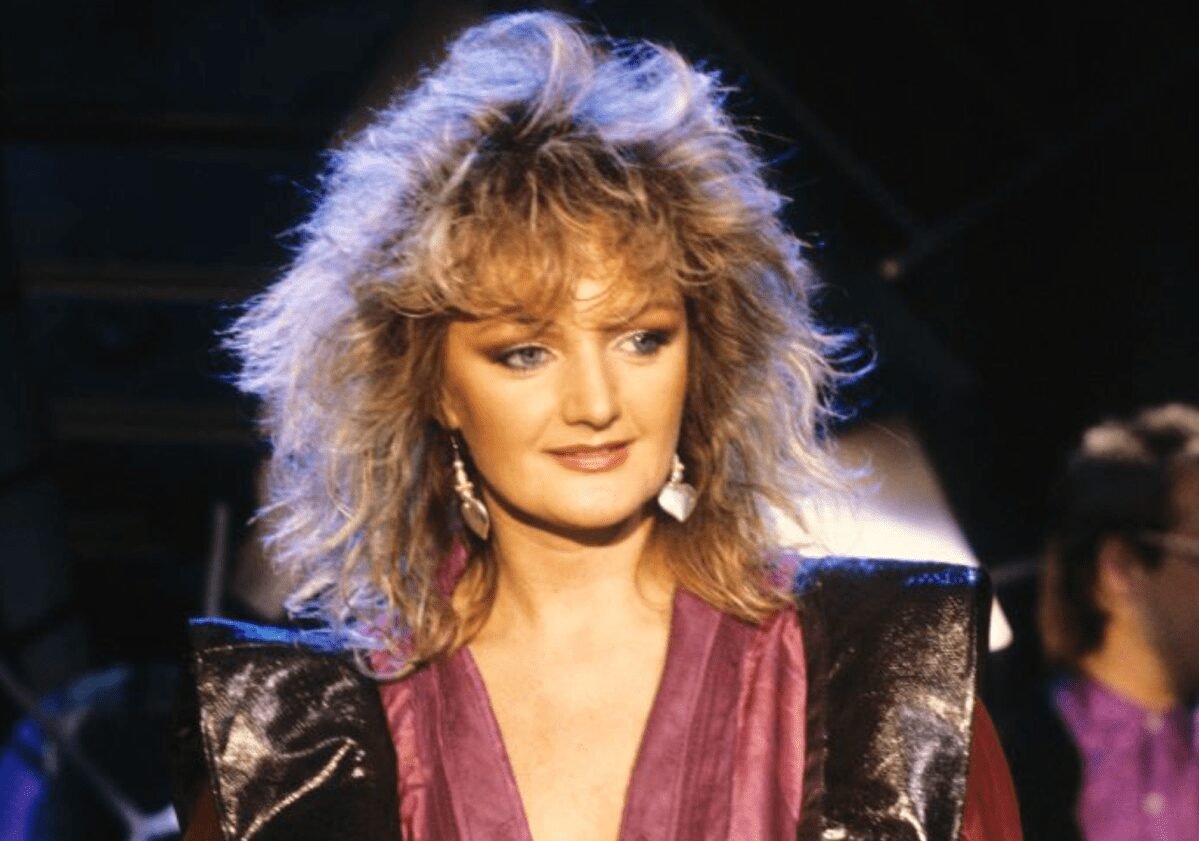
Bonnie Tyler, the powerhouse Welsh singer whose raspy voice turned “Total Eclipse of the Heart” into one of the most unforgettable songs of the 1980s, has died. She was 75.
The devastating news was announced Thursday, July 9, in a message posted on Tyler’s official website by her family and team.
“We are heartbroken to announce that Bonnie unexpectedly passed away last night in hospital in Portugal as a result of the illness that she was being treated for,” the statement said.
Her loved ones said a fuller statement would be released later and asked for privacy as they deal with the tragedy.
Tyler’s death comes after a frightening health battle that began earlier this year. In May, the singer was placed in an induced coma after undergoing emergency intestinal surgery in Portugal. Last month, her spokesperson said she had come out of the coma, but remained “very unwell” in intensive care.
For fans around the world, Tyler will always be remembered for that unmistakable voice — raw, gravelly, dramatic and impossible to confuse with anyone else. It powered her biggest hits, including “Total Eclipse of the Heart,” “It’s a Heartache” and “Holding Out for a Hero.”
Born Gaynor Hopkins in Skewen, Wales, in 1951, Tyler grew up as one of seven children. Her father had become disabled after fighting in World War II, and Tyler remained deeply close to her family throughout her life.
In a 2012 interview with The Guardian, Tyler credited her mother with giving her the advice that helped carry her through decades in show business.
“My mum was a wonderful mother,” she said. “I remember she said to me: ‘Believe in yourself because no one else is going to do it for you.’ I’m sure a lot of my success is due to her words of advice.”
Tyler’s path to stardom started in a humble way. At 17, she answered a newspaper ad seeking backup singers at a local club. Before she became a global name, she spent years performing other people’s songs in clubs and dance halls.
“In those days, it was easier for people to come in the music business because there were a lot more clubs and dance halls,” she told The Guardian in 2013. “It wasn’t so much DJs around then; it was live bands.”
She said she sang in clubs for seven years, doing everything from blues to pop to country. On Sundays, the crowds came for ballroom dancing.
In 1973, Tyler married Robert Sullivan, the manager of the club where she had been singing. She later said their marriage lasted because they tied the knot before fame came crashing into their lives.
But her famous voice came from a painful twist of fate.
After singing six nights a week, Tyler developed nodules on her vocal cords and underwent throat surgery in 1976. Following four months of recovery, her voice came back stronger — and with the raspy edge that would become her trademark.
Her first major hit arrived in 1977 with “It’s a Heartache,” from her second album, Natural Force, released on RCA Records. The song soared to No. 3 in the United States, No. 4 in the United Kingdom, and topped the charts in Australia and Canada.
But Tyler was not thrilled with the song at the time.
“I was a bit cheesed off,” she told PEOPLE in 1983, explaining that she was unhappy with the management team that held her under contract and wrote much of her material. “I didn’t even like it as I was recording it.”
The hit also pushed her toward country, even though Tyler wanted to rock. During the last 18 months of that management contract, she stopped performing and waited for the deal to expire.
Her career, by her own admission, took “a bit of a nosedive.” Then came the song that changed everything.
In 1983, with a new manager and a new label, Tyler released “Total Eclipse of the Heart.” The massive power ballad was written by Jim Steinman, the late hitmaker behind songs for Meat Loaf, Air Supply and Celine Dion.
Steinman knew Tyler’s voice was something special.
“I always thought she had a great voice,” he told PEOPLE in 1983. “She reminds me of Creedence Clearwater Revival’s John Fogerty, probably my favorite male rock ‘n’ roll singer. Her voice isn’t pure or smooth. It sounds ravaged, like it’s been through a lot. It’s what rock ‘n’ roll is all about.”
When Tyler met Steinman in 1982, he played her some of his favorite songs to see whether they had the same musical instincts. He was impressed and agreed to work with her.
Steinman had originally begun writing “Total Eclipse of the Heart” for a Nosferatu musical, but he reshaped it into a grand, dramatic showcase for Tyler’s voice.
“I never thought it had a prayer as a single,” he told PEOPLE. “It was an aria to me, a Wagnerian-like onslaught of sound and emotion. I wrote it to be a showpiece for her voice.”
Tyler later said she gave the song everything she had.
“I poured my heart out singing it,” she told The Guardian in 2023.
She also recalled writing to a friend from New York after recording it, saying she had just recorded an “incredible song” but feared it was so long that no one would ever play it.
She was wrong.
“Total Eclipse of the Heart” became a monster hit, reaching No. 1 in both the U.S. and the U.K. It also helped push her 1983 album, Faster Than the Speed of Night, to No. 1 in the U.K. and No. 4 in the U.S.
The song never really left pop culture. Decades later, it still surged in popularity during real-life eclipses. In 2024, when a wide stretch of the U.S. could see a full solar eclipse, Tyler joked on Good Morning America that the song always came roaring back.
“Every time the eclipse comes, everyone all over the world, they play ‘Total Eclipse of the Heart,’ and I never get tired of singing it,” she said.
A year after “Total Eclipse,” Tyler scored another unforgettable hit with “Holding Out for a Hero,” which was featured in the 1984 movie Footloose. The song reached No. 34 in the U.S. and No. 2 in the U.K.
Tyler said in 2013 that she still enjoyed performing her biggest ’80s anthems because they always fired up the crowd. She also credited Steinman’s songwriting for helping the songs stay alive for generations.
Although her U.S. career cooled in later years, Tyler never disappeared. She continued to perform and remained especially popular overseas.
“A lot of people may have thought I’d given it up, but I’ve been working all the time,” she told PEOPLE in 1996. “All over Europe, it’s great for me.”
In 2013, she represented Britain in the Eurovision Song Contest. Across her long career, Tyler released 18 albums, earned three Grammy nominations, and in 2022 was appointed a Member of the Order of the British Empire for her services to music.
Tyler and Sullivan never had children. She was open about suffering a pregnancy loss in 1992, and later said she had still built a full and happy life.
“I think what you don’t have, you don’t miss,” she told PEOPLE in 1996. “It just wasn’t for me, you know. I’ve got a great life, and I’m far from packing it in.”
For Tyler, fame was never the whole point. The work mattered more.
“It’s no good singing if you just want to be a pop star,” she told The Guardian in 2009. “You’ve got to work at it and do it for the love for it, not because you think it will make you famous.”
She added that she had already spent seven years singing before she ever landed a record deal.
“I was already loving what I was doing,” she said. “I just got lucky and got discovered.”
Tyler is survived by her husband, Robert Sullivan.