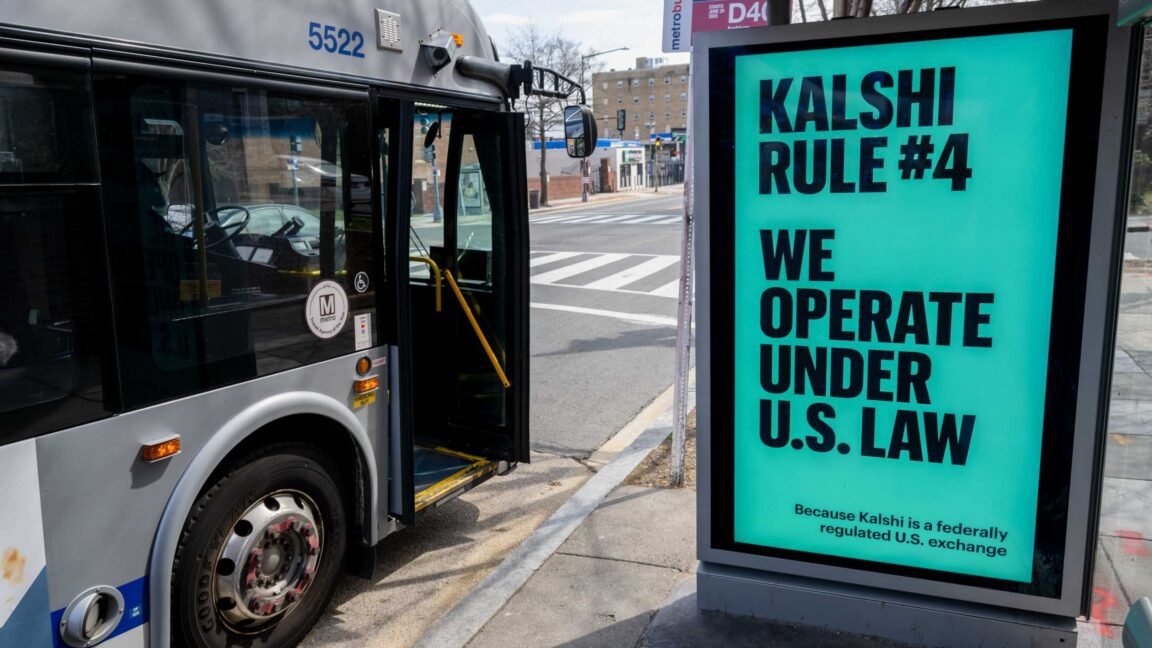
Kalshi lost an attempt to override New York’s state gambling laws yesterday, with a federal judge rejecting the prediction market operator’s request to prevent enforcement of the rules.
Kalshi is appealing the decision to a higher court. This is one of numerous cases in which judges must decide whether state laws are preempted by federal regulation of prediction markets.
New York Governor Kathy Hochul and Attorney General Letitia James issued a joint statement on the ruling today. “New York’s gambling laws are designed to protect consumers,” they said. “Kalshi tried to ignore them. Yesterday, they lost in court. We will continue to hold all gambling platforms accountable to the law—and that includes prediction markets.”
The ruling against Kalshi was issued by US District Judge Analisa Torres in the Southern District of New York. Shortly after the ruling, Kalshi filed a notice stating that it is appealing the decision to the US Court of Appeals for the 2nd Circuit.
Kalshi is registered with the US Commodity Futures Trading Commission (CFTC) as a designated contract market (DCM). Torres found that this does not exempt Kalshi from state gambling laws.
“Congress did not intend to preempt all state actions that may relate to DCMs,” Torres wrote. “Instead, the CEA [Commodity Exchange Act] leaves room for states to regulate tangential issues that may arise from trading swaps and other financial products on DCMs.”
Judge: US inaction doesn’t block states
While the CFTC has not exercised its own authority to restrict Kalshi’s sports-event contracts, Torres wrote that the federal agency’s inaction does not block New York gambling laws. New York laws regulating gaming “complement rather than conflict with federal law,” she wrote.
The CFTC has taken a more lenient approach to prediction markets than states and sued states to preempt laws that prohibit or regulate the markets. Kalshi and its rival Polymarket both have Donald Trump Jr. as an advisor, and a Trump Jr.-backed venture capital firm invested in Polymarket.
The Kalshi lawsuit against New York began in October when it sued over a State Gaming Commission order that told it to stop offering sports-related event contracts. Kalshi could face civil penalties and fines for offering the contracts in New York, and called the rules an “intrusion into the federal government’s exclusive authority to regulate derivatives trading on exchanges overseen by the Commodity Futures Trading Commission.”
New York officials say residents would be harmed if Kalshi offers unsupervised sports gambling, particularly to people between the ages of 18 and 24. State law also prohibits gambling on sports involving any New York-based college team.
Yesterday’s District Court ruling didn’t end Kalshi’s lawsuit against New York, but it allows the state to continue enforcing its laws while litigation continues. Torres rejected Kalshi’s request for a preliminary injunction against State Gaming Commission officials.
NY ordered Kalshi to stop
Kalshi began listing sports-event contracts in January 2025, letting users bet on events like the NCAA basketball and US Open golf tournaments. In October 2025, the Gaming Commission ordered Kalshi to “cease and desist from illegally operating, advertising, promoting, administering, managing, or otherwise making available an unlicensed mobile sports wagering platform in New York State in connection with any sports event.”
Kalshi says its sports-event contracts are swaps and thus regulated under the CFTC’s exclusive jurisdiction over various types of derivatives. But these contracts let users wager money on the outcomes of sporting events, and states have long exercised regulatory power over gambling and lotteries.
To get an injunction that would let it offer sports bets, Kalshi must show that its lawsuit is likely to succeed on the merits, that it will suffer irreparable harm without an injunction, and that an injunction is in the public interest. For the purposes of deciding Kalshi’s motion for an injunction, Torres did not decide whether the contracts are swaps under federal law.
Torres wrote that courts apply a presumption against preemption in areas where states historically exercised their police powers, and gambling regulation has historically been left to states.
“The presumption against preemption, therefore, applies to this case, and the Court must analyze whether Kalshi has demonstrated that, in enacting the CEA, it was the ‘clear and manifest purpose of Congress’ to preempt New York’s authority to regulate gambling where a DCM, like Kalshi, offers sports-event contracts on its platform,” Torres wrote.
No clear intent from Congress to preempt
Torres does not see any clear intent from Congress to preempt New York gambling laws. While the CEA gives the CFTC exclusive jurisdiction over transactions involving swaps on a DCM, it says this power does not “supersede or limit the jurisdiction at any time conferred on… other regulatory authorities under the laws of the United States or of any State.”
“This provision evinces Congress’ intent to leave room for states to regulate certain activities that may have otherwise been covered by the CEA… Moreover, given that the power to regulate gambling is a traditional police power exercised by New York, the Court also declines to interpret the CEA’s grant of exclusive jurisdiction as leaving ‘no room for supplementary state legislation,’” Torres wrote.
Congress specifically prohibited states from applying gambling laws to swaps in certain limited circumstances, and similarly prohibited state regulation of swaps in insurance contracts and other contexts, Torres wrote. These provisions demonstrate “Congress’ intended scope of preemption” and provide evidence that “Congress did not intend to regulate so broadly as to exclude all state gambling laws from regulating transactions involving swaps,” she wrote.
Kalshi also hasn’t proven that enforcement of New York gambling laws would prevent the federal government from achieving the purposes of the Commodity Exchange Act, Torres found. “Kalshi has not shown that it is impossible to comply with both New York gambling laws and the CEA,” she wrote.
The legal battle over state regulation of prediction markets is proceeding at various district courts and circuit appeals courts around the US. In another lawsuit filed by Kalshi, the US Court of Appeals for the 3rd Circuit ruled in April that New Jersey cannot regulate sports bets on prediction markets.
Kalshi has lost some other notable decisions, including a 6th Circuit appeals court ruling in which judges refused to grant a preliminary injunction against Ohio gambling laws. Conflicting rulings at circuit appeals courts raise the odds that the Supreme Court will eventually determine where federal jurisdiction ends and state authority begins when it comes to prediction markets.