Earlier this week, the United States Department of War restored the US Indo-Pacific Command’s name to the US Pacific Command, reversing an eight-year-old title change and restoring operational clarity.
The announcement comes in the same week that a growing chorus of commentators is arguing that America just lost the war in Iran:
● The Atlantic declared “Trump Celebrates While America Capitulates”, arguing Iran walked away with everything it wanted while Washington got little in return.
● CNN’s Stephen Collinson wrote that Trump broke his own rules, handing Iran economic relief before locking down hard commitments on nuclear weapons.
● Reuters reported that even Republican allies in Congress are questioning whether Washington and Tehran are describing the same deal.
Closer to home, Ravi Velloor , one of Singapore’s sharpest foreign affairs minds, makes the most sophisticated version of this argument in his Straits Times commentary this week, “As deal to end war emerges from chaos, Iran and China sweep the stakes.”
Velloor argues that the chaos surrounding America’s conduct has handed China a strategic opening to deepen Gulf relationships, expand its financial architecture and present itself as a stable, predictable alternative to an increasingly unpredictable Washington. And that, as a result, the regional order that America built and has maintained since 1945 is shifting.
I would like to offer three reasons why Velloor’s reading, while sharp on the optics, also needs to account for the strategic ground the US actually gained through Operation Epic Fury.
First, this week’s Iran deal is structurally superior to anything achieved diplomatically before
Critics are right that the deal’s 60‑day framework leaves the hardest nuclear questions unresolved. Iran’s IRNA agency, for instance, has claimed no new concessions were made.
But the right comparison should be with former US President Barack Obama’s JCPOA, which left Iran’s centrifuges largely intact, embedded sunset clauses, allowed enrichment infrastructure to remain, and was followed by 60% enrichment capability and a four‑theater proxy network.
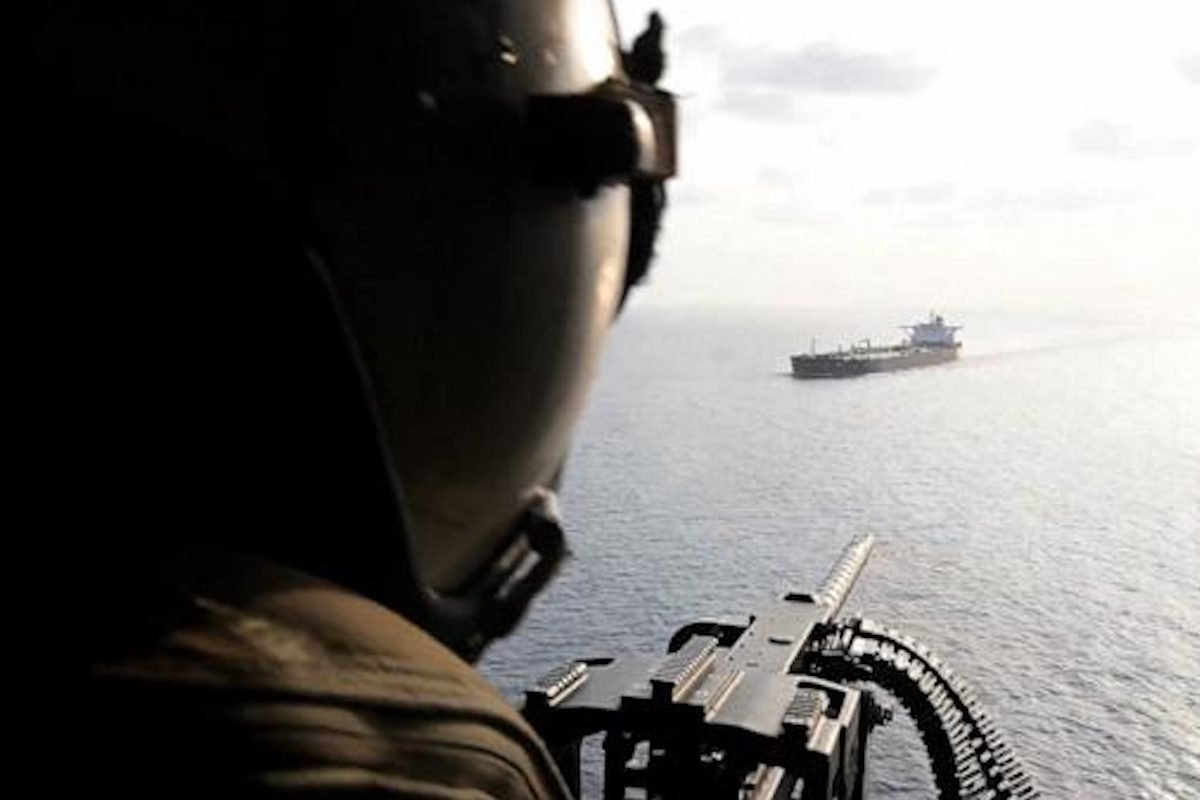
The White House claims that more than 13,000 Iranian targets were struck in 38 days under Operation Epic Fury; Iran’s navy was effectively destroyed, with every submarine sunk and 97% of naval mines cleared, and ballistic missile attacks on US forces fell by 90% within 19 days, the Pentagon said.
On top of that, we are learning that the terms of the deal would require the destruction of roughly 900 pounds of highly enriched uranium, with nuclear facilities at Fordow, Natanz and Isfahan slated for permanent dismantlement. Detailed nuclear provisions are to be finalized within 60 days under US-Israel oversight under the deal.
In sum, that means a heavily degraded Iranian military, proxy network and nuclear program. Objectively, this appears to put the US in a significantly stronger position than the JCPOA accomplished.
Furthermore, these facts sit inside a wider regional architecture. The Trump administration has tied US diplomatic facilitation to expanding the Abraham Accords to Saudi Arabia, Qatar, Egypt and Turkey, with the State Department’s May 2026 report laying out the formal strategy and institutional framework for recognizing Israel.
Now, if that expansion proceeds and Iran is drawn, even partially, into a US‑managed regional order, then the Beijing-Moscow-Tehran axis anchored in the Shanghai Cooperation Organisation loses a key western pillar.
That potential shift in regional architecture should be considered as part of the strategic value of the Iran deal, and has to be realistically weighed alongside the MOU’s immediate limits.
Second, the US-led security architecture has strengthened, with the USPACOM reversion as a clear indicator of the trend
In the Asia-Pacific, Japan had effectively pledged kinetic defense commitments for Taiwan, just as South Korea committed $150 billion to support American shipbuilding and defense industrial linkages.
At the recent Shangri-La Dialogue in Singapore, US Secretary of War Pete Hegseth was in a position to praise all ten key partners in and around ASEAN for stepping up on burden‑sharing.
This is not the behavior of a US-led security architecture in retreat, and the USPACOM renaming should be read in that context. Removing the “Indo” that former Defense Secretary James Mattis added in 2018, as a symbolic nod to India, acknowledges that New Delhi has not become the co‑manager Washington once hoped for.
India hedged throughout Operation Epic Fury, continued to buy Russian oil and S‑400 systems and deepened its BRICS+ engagement in parallel.
At the same time, analysts at ASPI had already flagged in late 2025 that the previous command construct lacked a dedicated, theater‑level warfighting headquarters, creating ambiguity in roles and focus.
Reverting to USPACOM restores a clear focus on the Pacific theater, centers stabilization of the Taiwan Strait as a core mission and ties that mission explicitly to treaty allies who are prepared to act as structural anchors.
Third – and this is what the skeptics most avoid – China was supposed to play Iran as America plays Taiwan, but Beijing didn’t
Singapore’s former Foreign Minister George Yeo, in an interview with Professor Kishore Mahbubani for the Asian Peace Program, disclosed: “They (China) have an Iranian option – that if you really move on Taiwan, we’ll move on Iran. Since the 90s, I’ve always observed that the Chinese approach to Iran has been linked to the American approach to Taiwan.”
It was a widely held theory among those like Yeo who watched Beijing closely. Yet when Operation Epic Fury tested it, China’s response was calibrated and rhetorical.
Chinese Foreign Minister Wang Yi condemned the strikes, Beijing called for a UN Security Council ceasefire, and then nothing more happened.
Instead, Beijing pressed Iran to allow vessel transit to protect its own commercial interests in the Gulf, and in doing so, surrendered its so-called Middle East second front it had factored into its Taiwan contingency planning.
Velloor points to mBridge and China’s Gulf diplomacy as evidence of Beijing’s growing influence. But they are, at best, instruments of commercial reach, not strategic deterrence.
Here, Professor John Mearsheimer’s framework for what constitutes a great power is instructive: population and military wherewithal.
And on both, the Sino-US gap is not narrowing:
● China’s population has declined for four consecutive years, with its working-age cohort shrinking by 6.62 million in 2025 alone and 23% of its population already over 60.
● US nominal GDP stands at $31.8 trillion against China’s $20.6 trillion, with US GDP per capita exceeding $94,000 against China’s $15,000.
● On hard power, the US defense budget of $997 billion is 3.2 times China’s $314 billion and is backed by 11 nuclear carriers against China’s three, 625 aerial tankers against 10, and 750 overseas bases against China’s single installation in Djibouti.
Operation Epic Fury demonstrated what that gap looks like operationally: 38 days, over 13,000 targets, full air superiority, a critical waterway secured and fewer than ten US soldiers killed in action. Neither Russia nor China can replicate this record today.
Is Southeast Asia misreading America’s exaggerated decline?
This year’s ISEAS State of Southeast Asia Survey found that 52% of Southeast Asians would choose China over the US if forced to align, reversing last year’s result, in which Washington held a slim lead. Japan emerged as the most trusted power in the region at 65.6%, ahead of the EU, US and China.
But trust in Japan is, at its foundation, trust in American-underwritten regional stability, a connection and distinction the survey’s respondents may or may not have deciphered.
That disconnect reflects Velloor’s point that in today’s geopolitics, the optics are messy. But optics and capability are not the same thing, and a structural reading of the power balance does not support the conclusion that America is losing ground in Asia, the Middle East and globally.
Despite the negative, messy optics, America appears to favor clarity. It is about time we in Southeast Asia did so too.
Marcos Loh is the chairman of the Public Affairs Group at PRCA Asia Pacific and a director at Temus, a Singapore AI and digital services firm. He is currently reading War Studies at King’s College London.