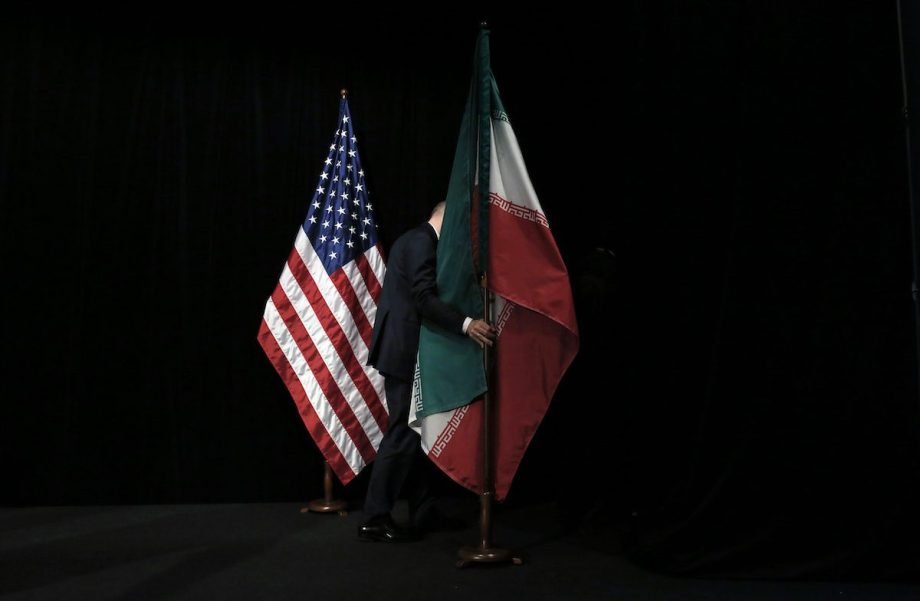
Iran said early Thursday that a 14-point memorandum of understanding (MOU) with the United States aimed at ending the war had been formally finalized after the presidents of both countries signed the text of the agreement, Anadolu reports.
Iranian Foreign Ministry spokesman Esmail Baghaei said the “Islamabad memorandum” had become fully official after being signed by both Tehran and Washington, according to remarks carried by Iran’s semi-official Mehr News Agency.
Baghaei said the agreement was signed digitally and confirmed that negotiations under the memorandum would focus exclusively on nuclear issues and sanctions relief.
He said the two sides would hold talks for up to 60 days, with the possibility of extending negotiations if necessary due to the complexity of the issues involved.
Baghaei said the plan for the negotiating teams to be in Geneva remains in place, but the memorandum was signed digitally and no signing ceremony would be held in Switzerland.
The memorandum became more difficult to violate after being signed by the presidents of both countries and was described as formally finalized, he noted, adding that implementation would be more challenging.
Iran would carry out its obligations only if the other side fulfilled its commitments, he added, Tehran would monitor implementation “without any leniency.”
The memorandum stipulates that future negotiations will focus exclusively on the nuclear issue and sanctions relief. He underlined that Tehran deliberately avoided discussing nuclear matters during the war-ending talks.
READ: Trump says US will have to give Iran’s money back
Baghaei highlighted that Lebanon is mentioned three times in the memorandum’s opening provision, including references to respect for its sovereignty and territorial integrity.
He added that if Israel’s attacks against Lebanon continue, it will be considered a violation of the US commitments under the MOU.
“We do not separate the United States and the Israeli regime,” Baghaei said, adding that despite differences between Washington and Tel Aviv, it is the responsibility of the United States to ensure Israel respects commitments made under the memorandum.
The spokesman also said US commitments regarding the lifting of its naval blockade on Iran had effectively begun following urgent talks after Israeli attacks on Beirut’s southern suburbs and Iranian threats of retaliation.
He added that Iranian vessels had already entered and exited ports “without problems,” describing it as a sign that US commitments were beginning to take effect.
He added that Iran expects oil sanctions relief to begin immediately and be implemented in practice, including the ability to export oil, secure shipping and insurance services, and receive revenues from oil sales.
The spokesman said Tehran had separately negotiated issues related to frozen Iranian assets, sanctions relief and post-war reconstruction alongside the memorandum itself, adding that the US had committed to removing obstacles to the release and use of Iranian funds.
Baghaei said Iran’s commitments regarding the Strait of Hormuz would begin following the signing and implementation of the memorandum.
On the Strait of Hormuz, Baghaei said Iran was finalizing arrangements for managing traffic through the strategic waterway in coordination with Oman, noting that Iran and Oman are the only two littoral states bordering the strait.
READ: Iran to charge ships for services in Strait of Hormuz, parliament speaker says
He said safe passage through the Strait of Hormuz would be ensured while preserving Iran’s sovereignty over the waterway and added that Tehran plans to charge fees for services provided there.
Baghaei also reiterated that Iran’s missile program and defense capabilities would not be discussed in any negotiations with any party.
“Iran’s missiles are for launching, not for negotiating,” he said.
The spokesman further said Iran would not transfer its enriched uranium stockpile abroad, describing such a move as unacceptable, while noting that dilution of enriched uranium remains one possible option for future discussions.
The US and Iran on Wednesday remotely signed a memorandum of understanding, officials from both countries announced.
The 14-point draft, made public by US officials on Wednesday, calls for an immediate and permanent end to military operations on all fronts, including Lebanon, removal of the naval blockade on Iran within 30 days, and safe passage for commercial vessels through the Strait of Hormuz.
It also includes a reconstruction and economic development plan for Iran valued at a minimum of $300 billion, oil export waivers, the release of Iran’s frozen assets, and a reaffirmation by Tehran that it will not develop nuclear weapons, with the future of its enriched uranium stockpile to be negotiated.