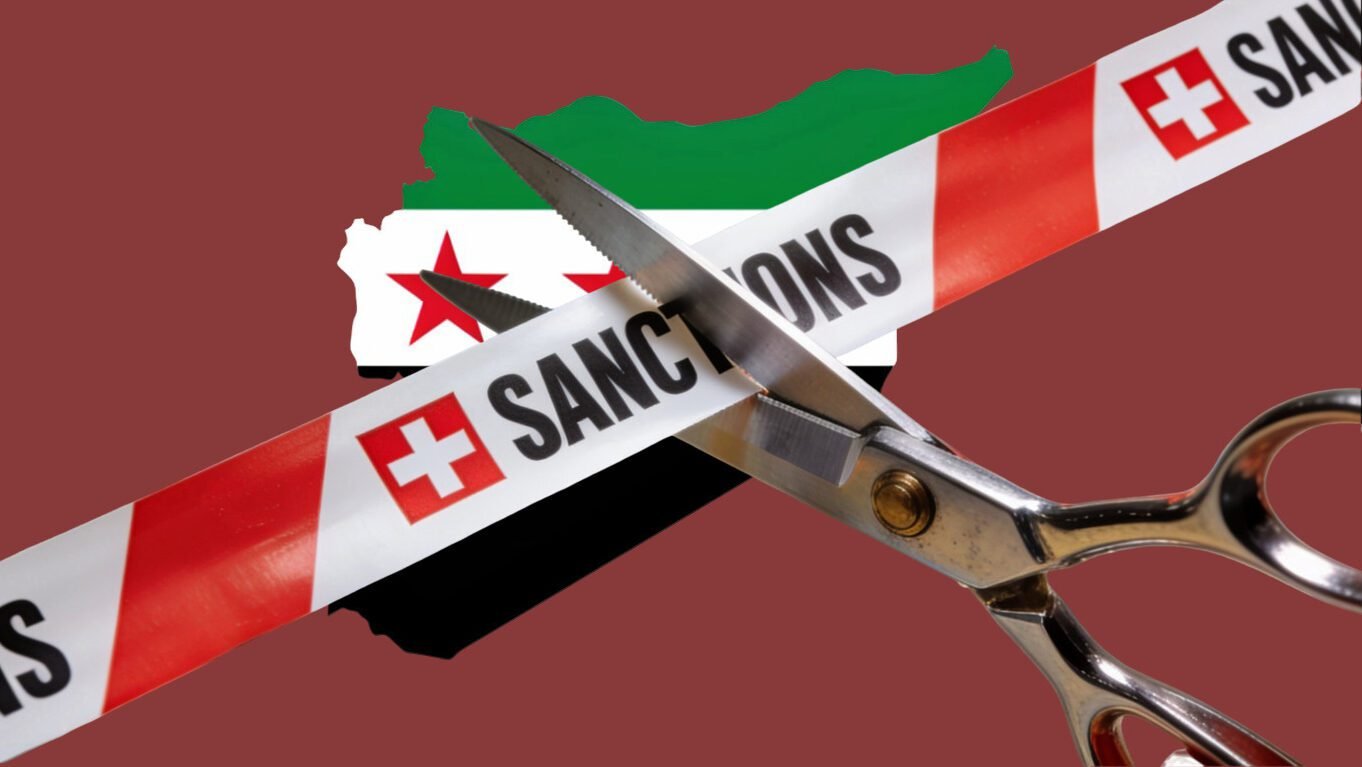
Switzerland removed seven Syrian state-linked entities from its sanctions list this week, aligning its measures with recent European Union action as Western governments continue easing restrictions on Damascus following the fall of Bashar Assad’s regime.
The Swiss State Secretariat for Economic Affairs said the Federal Department of Economic Affairs, Education, and Research amended Annex 7 of Switzerland’s Syria sanctions ordinance on June 15. The changes took effect at 11 p.m. on June 16. The amendment removed seven entries and modified listings for 18 individuals and four entities.
The delisted Syrian entities include the Ministry of Defense, Ministry of Interior, Air Force Intelligence Directorate, General Intelligence Directorate, Military Intelligence Directorate, Political Security Directorate, and Higher Institute for Applied Sciences and Technology.
The move follows the EU’s May decision to renew restrictive measures targeting individuals and entities tied to the former Assad regime until June 1, 2027, while removing seven Syrian entities from its blacklist. The EU said the delistings were intended to “support the strengthening of the EU’s engagement with Syria.”
The EU first imposed sanctions on Syria in 2011 after Assad’s government violently suppressed anti-government protests. After Assad’s fall in late 2024 and the formation of a transitional government, European governments began recalibrating their approach. The EU lifted most economic sanctions on Syria in May 2025 to support political transition, economic recovery, and reconstruction, while keeping targeted measures against figures linked to the former regime and sanctions imposed on security grounds.
The Syrian Future Movement welcomed the Swiss decision, calling it a positive step toward enabling state institutions to support security and development. The group said the move reflected a shift away from treating Syrian institutions as indistinguishable from the former regime.
The movement said the decision remains partial, noting that restrictions remain on individuals and entities, alongside asset freezes and bans on weapons and equipment used for repression. It called for a broader lifting of sanctions to support recovery, investment, the return of displaced people, and reconstruction.