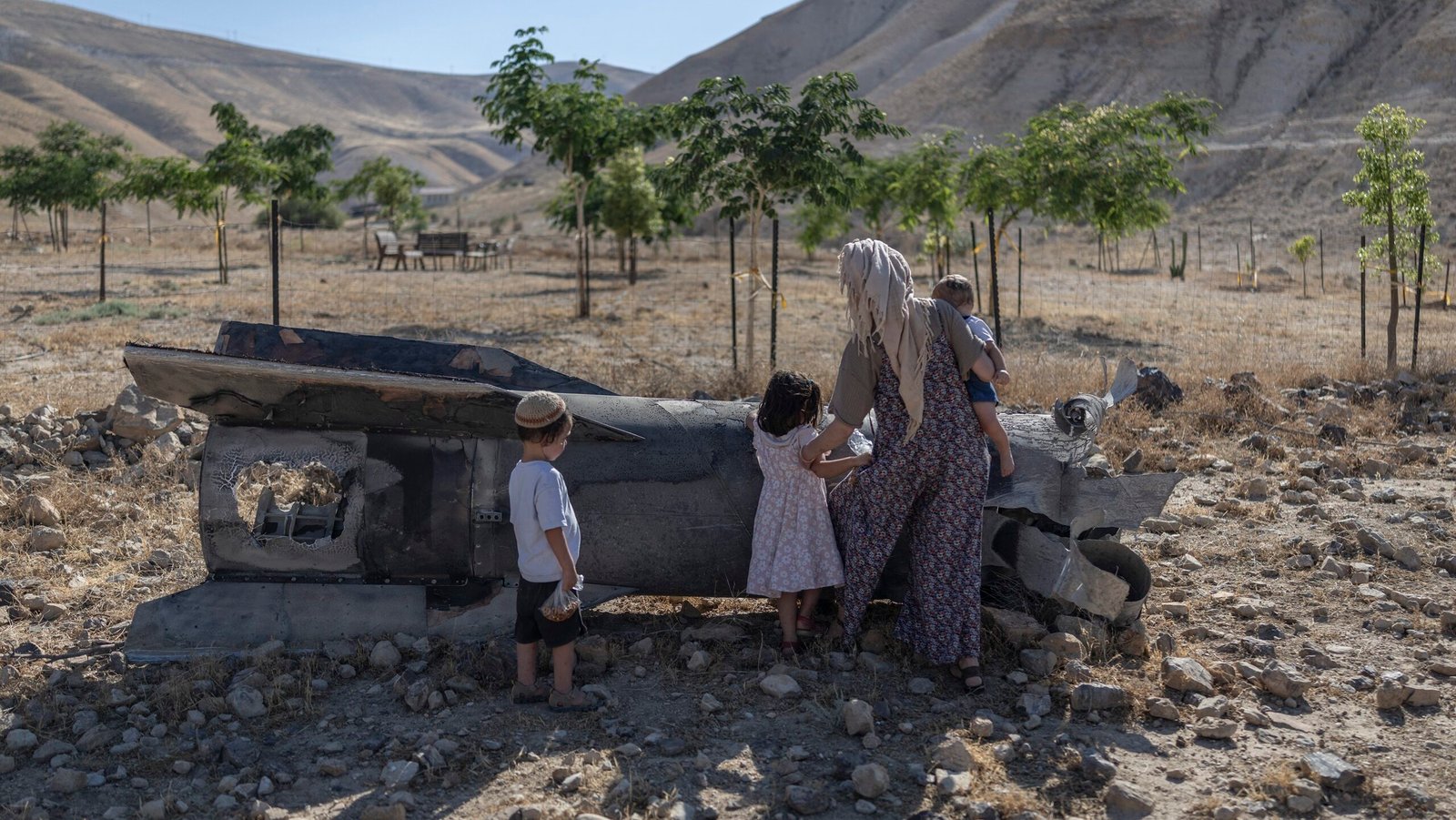
Israel has weakened its enemies across Gaza, Lebanon, and Iran, but analysts say its military gains have yet to produce a stable regional order
Nearly three years after Hamas’ devastating attack on Israel on October 7, which plunged the country into a multifront war, Israel finds itself at a strategic crossroads as a new US-Iran memorandum of understanding reshapes the regional battlefield.
Israel remains largely isolated on the international stage, maintains a military presence in Gaza, Lebanon, and Syria, and is still far from achieving long-sought normalization with Saudi Arabia. None of its conflicts has been conclusively resolved, and its relationship with its major ally in Washington has grown more complicated.
The preliminary US-Iran framework reached earlier this week is a significant turning point.
Israel has projected its military might throughout the region, causing massive destruction in Gaza and southern Lebanon while conducting airstrikes in Syria, Iran, Yemen, and Qatar. The strike in Qatar, carried out in September 2025, targeted Hamas leaders in Doha and drew international condemnation for violating Qatari sovereignty.
There is a great gap between the military picture and the strategic picture, which is one of overall defeat and collapse of Israel’s strategy
“There is a great gap between the military picture and the strategic picture, which is one of overall defeat and collapse of Israel’s strategy,” Chuck Freilich, a former Israeli national security adviser and currently a professor at Tel Aviv University and Columbia University, told The Media Line.
Despite that military prowess, Israel is far from reaching its goals.
“It did not succeed in destroying Hamas or unseating it from power, Hezbollah is coming back despite downgrading its capabilities greatly, and Iran believes with good reason that it won the war by surviving an attack by the world’s superpower and greatly out-negotiated the US, coming ahead on the diplomatic level as well,” Freilich added.
Israeli Prime Minister Benjamin Netanyahu vowed to overthrow Hamas in Gaza, destroy all of Hezbollah’s military capabilities, and remove Iran’s nuclear threat over the Jewish state.
Still, budding alliances between Israel and several Arab states under the Abraham Accords survived the war, despite initially seeming fragile. Relations with Saudi Arabia, long coveted by Netanyahu and pursued by several American administrations, remain out of reach.
“All of Israel’s enemies are significantly weaker; there is wider interest in the Abraham Accords because of the threat from Iran, but Israel’s diplomatic and political situation internationally is much worse, particularly in the United States,” Prof. Jonathan Rynhold, a senior researcher at the BESA Center for Strategic Studies at Bar-Ilan University, told The Media Line. “Israel has been far more isolated than this during its history.”
The picture across Israel’s main fronts remains complex.
For decades, Israel has viewed Iran as its most significant strategic threat and the driving force behind the network of armed groups that surround it. Israel entered the latest confrontation determined to degrade Iran’s nuclear program and military capabilities. Tehran sought to demonstrate resilience and preserve its regional posture.
The joint American-Israeli strikes inflicted significant damage on Iranian military infrastructure and reportedly set back elements of Tehran’s nuclear program. Yet the conflict ended without the collapse of the Islamic Republic, perhaps amplifying its nuclear ambitions, and without a broader regional realignment in Israel’s favor.
Iranian officials and state media quickly declared victory, arguing that Tehran had survived direct attacks by both Israel and the US while maintaining its regime and much of its strategic posture.
“Iran believes that it won the war, doing so by withstanding a major American and Israeli operation,” said Freilich. “They come out feeling stronger and invigorated. Israel and the US helped them achieve progress towards their goal of being a regional hegemon.”
The memorandum of understanding with Iran, announced by Washington, demonstrated Israel’s dependence on American diplomatic backing while also revealing differences between Netanyahu and President Donald Trump over the desired endgame. While Israel views Iran as an unresolved threat requiring continued pressure, Washington has sought to prevent a wider regional war, reopen maritime traffic through the Strait of Hormuz, and stabilize the situation.
For now, neither side appears to have achieved a decisive outcome. Iran emerged weakened militarily but intact politically, while Israel demonstrated unprecedented military reach without fully removing the threat it sought to eliminate.
Israel faces a real problem
“Israel faces a real problem,” said Rynhold. “If Iran is not limited in its conventional missile stockpile, Israel will want to attack, and it will be constrained by the US.”
The future of sanctions against Iran is also unclear, as the sides have agreed on a 60-day period to negotiate the final terms of a deal.
“From Israel’s perspective, the worse the Iranian dilemma between survival and building military power is, the better,” Rynhold continued. “Sanctions relief would be a strategic failure if it becomes part of any future agreement between the US and Iran.”
When Hamas launched its surprise attack on Israel on October 7, 2023, Israel was shocked. Thousands of terrorists stormed across its southern border, and Netanyahu vowed to retaliate, promising to release all 251 hostages Hamas took and remove the terrorist group from power. Israel launched a major offensive, which also resulted in significant international backlash. Critics, including some close allies, accused Israel of excessive force and war crimes—claims Israel categorically denies.
More than two and a half years later, a fragile ceasefire is in place, and all of the hostages, including the bodies of those killed in captivity or taken to Gaza after they were killed, have been returned. Israel controls more than half of the Gaza Strip, with Hamas still controlling the other half. The next phase of the ceasefire, which is meant to see an Israeli withdrawal, is conditioned on Hamas’ disarmament, something the terrorist group refuses to do. Netanyahu has said Israel will continue to maintain a presence in Gaza and has implied that the military will inch deeper into Palestinian territory.
The US administration mediated the ceasefire while backing Israeli moves in the Palestinian territory.
“Hamas’ military capabilities are a fraction of what they were,” said Freilich. “They no longer constitute a military threat, but they constitute a threat to the forces in Gaza, and they are still in power politically. Israel will be forced to withdraw from Gaza sooner or later, whether it likes it or not.”
Israel’s leadership has vowed to move further into Gaza to complete its mission of removing Hamas from power and destroying all of its capabilities.
“This may be done because there are no longer hostages in Gaza,” Freilich continued. “It’s also possible that Trump will try to compensate Netanyahu a little by giving him some free rein in Gaza for a while, especially before an election.”
Netanyahu, who leads a far-right government, has support from within his coalition to intensify military pressure on Hamas, while the international community has become increasingly critical. From allegations brought by South Africa that Israel is committing acts of genocide to growing cultural, academic, and weapons embargoes, the Jewish state is increasingly isolated.
“Any Israeli government will not move in a hurry,” said Rynhold. “There are a number of reasons for this—psychologically for the Israeli public, it keeps Hamas further away from the border and also because withdrawal is a hard thing to do.”
Senior members of the current government favor resettling Gaza with a Jewish population. Netanyahu has pushed back on that desire, but the voices from within his coalition are dominant and loud, drawing international attention and outcry.
“As long as Israel won’t allow settlers in, Israel has the ability to shape what goes on there—possibly keeping military control but giving other Palestinian factions civilian control,” said Rynhold.
Israel is scheduled to hold national elections by late October, and the outcome will have a major impact on the future of Gaza.
The Iranian-backed Hezbollah terrorist organization was once seen as Israel’s most immediate and substantial threat. The group joined Hamas days after the October 7 attack. Israel retaliated, and Lebanon became another arena in the multifront war that engulfed the Middle East. Israel believed it had nearly defeated Hezbollah at the end of 2024, only to see the strategic equation between the two rivals shift again. Iran is now using the group as a deterrent, not only through Hezbollah’s own force but also by threatening to attack Israel if Israel attacks its most prized proxy.
“Israel cannot allow itself to live with that equation,” said Freilich. “This is another failure of its strategy.”
Yet Hezbollah is also reeling from more than two years of war with Israel.
Hezbollah is infinitely militarily, financially, and politically weaker than it was before October 7
“Hezbollah is infinitely militarily, financially, and politically weaker than it was before October 7,” said Rynhold.
Hezbollah began firing at Israel two days after the joint American-Israeli attack against Iran began in March of this year, prompting an Israeli campaign in Lebanon that lasted into June. Fighting has eased since the US-Iran memorandum was announced, but Israeli forces remain in southern Lebanon, and Hezbollah has said its position on the ceasefire depends on Israeli compliance. Israel has continued to strike Hezbollah targets in southern Lebanon, further cementing its presence in an area Hezbollah says should be covered by earlier ceasefire understandings.
“Hezbollah now has a partial shield, by virtue of the agreement between the US and Iran; whether it becomes more or less, is another matter,” Rynhold said.
Iran’s threats have made the Dahieh neighborhood in Beirut, Hezbollah’s strategic stronghold, more difficult for Israel to target. President Trump made it clear to Netanyahu that Israeli action there would threaten attempts to reach a broader arrangement with Iran. Analysts say Hezbollah and Iran may emerge from the situation with greater leverage, even as both have absorbed heavy blows.
In the almost three years since October 7, Israel stands in a paradoxical position. It has showcased extraordinary military capabilities and weakened its enemies. Yet many of the political and strategic objectives that justified the war remain unresolved. Hamas remains a force in Gaza, Hezbollah continues to challenge Israel from Lebanon, and Iran has survived and, according to Freilich, may feel emboldened, while Israel faces growing international isolation. As Israelis prepare to head to the polls again, the country finds itself confronting a question that military victories alone cannot answer: how to translate battlefield achievements into a lasting, sustainable, and favorable regional order.