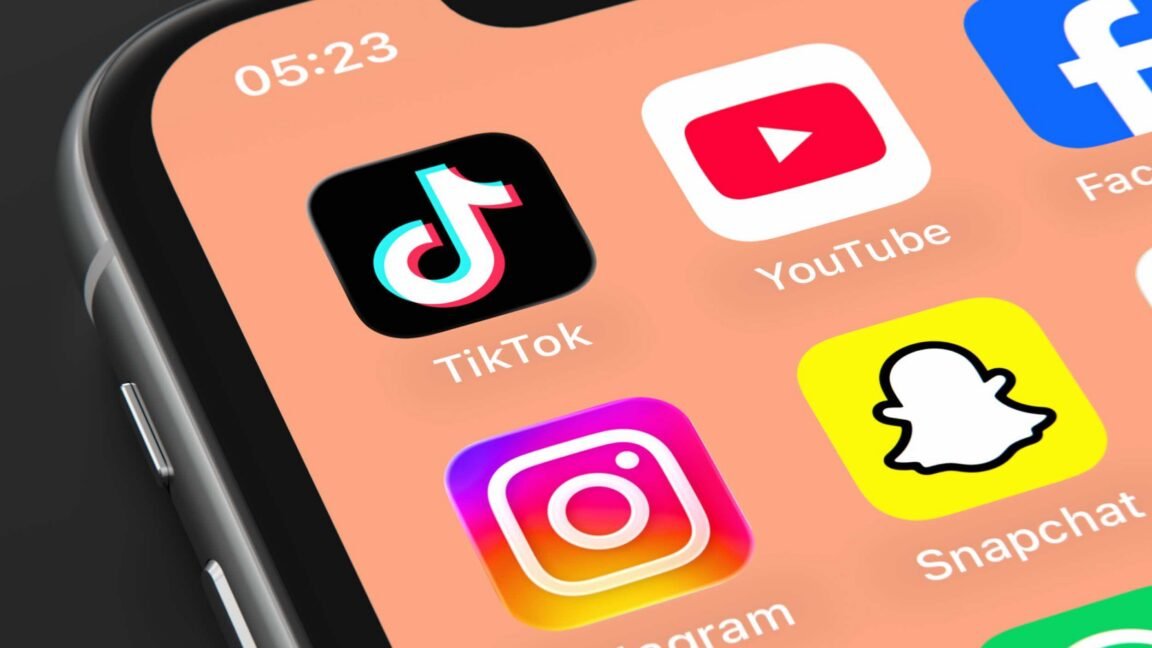
The UK government announced today that it will ban social media for all kids under the age of 16 in rules expected to take effect in spring 2027. The ban will apply to platforms including Snapchat, TikTok, YouTube, Instagram, Facebook, and X.
“We’re going further than any country in the world by banning social media for under-16s and putting wider protections in place to give kids their childhood back,” Prime Minister Keir Starmer said in the announcement.
In addition to the ban on social media, Starmer’s government said it will impose “world-leading blocks on harmful functions such as livestreaming and stranger communication with children for under-16s… Restrictions on these functionalities will also be on by default for 16- and 17-year-olds to prevent a cliff-edge at 16.” The livestreaming and stranger-contact rules would apply to a range of services, such as online gaming.
“The government will also be looking in more detail at overnight curfews and breaks in infinite scrolling for under-18-year-olds and will set out more detail in July,” the announcement said. The planned social media ban will not apply to messaging services like WhatsApp and Signal.
Another planned change is that “so-called AI ‘romantic companion’ chatbots—designed to simulate sexual relationships or roleplay with users—will have to enforce a minimum age of 18. Similar intimate functionalities will be restricted for under-18s on AI chatbots more widely,” the UK government said.
Age checks
Platforms will be ordered to verify users’ ages. Communications regulator Ofcom will be tasked with determining what kinds of age-verification systems will be required to comply with the rules. The ban decision was made after a consultation that drew responses from 116,000 people.
“Ofcom will set out in the coming months different options for effective forms of age assurance for proving whether someone is over 16 that are accurate, robust, reliable, and fair,” the government said in a fact sheet on the rules, noting that facial recognition may be part of the age-check scheme. Adults can avoid the new age check on their existing social media accounts if they’ve already proven their age in another way.
The UK Online Safety Act already requires age checks for porn and other sensitive content. When it took effect last year, it appeared that many people in the UK used VPNs (virtual private networks) to circumvent the age verification.
VPNs themselves can create privacy and security problems. “The VPNs that children are incentivized to use pose privacy and security risks. Bad actors in the VPN space often trade in the sensitive browsing data that these tools can gather,” said the Center for European Policy Analysis, a research group whose funders include Google and Meta.
UK modeled rule on Australia ban
The UK government today said the social media ban will use the same model as Australia, where online platforms must pay financial penalties if they fail to block underage users. Social media companies criticized the Australian rules but agreed to comply.
YouTube said in a statement to media outlets today that “blanket bans push kids out of such curated, supervised, beneficial experiences and towards anonymous, less-safe services.” Meta said the similar rule in Australia showed that “bans risk isolating teens from online communities and information, and driving them to unregulated alternatives that lack built-in protections and parental controls.”
The Electronic Frontier Foundation has said that age-verification requirements harm privacy by requiring more collection of personal information from users of all ages. Banning social media also prevents kids from accessing useful content, the group said.
“Beyond being spaces where people can share funny videos and engage with enjoyable content, social media enables young people to engage with the world in a way that transcends their in-person realm, as well as find information they may not feel safe to access offline, such as about family abuse or their sexuality,” the EFF said in March as the UK discussions were progressing. “In severing this connection to people and information by banning social media, politicians are forcing millions of young people into a dark and censored world.”
Liberal Democrats prefer age-rating system
MP Victoria Collins of the Liberal Democrats party said the proposal is “woefully inadequate.” The UK should instead force tech companies to address addictive algorithms and harmful content, she said.
“That’s why the Liberal Democrats put forward a social media age-rating system that, instead of a blanket ban, puts the onus on the social media giants to clean up their act and have safety by design for all of us,” she said.
MP Nigel Farage, leader of the right-wing Reform UK party, said “the social media ban is well-intentioned” but is “unlikely to work given the mass adoption of VPNs. It will also mean the introduction of Digital ID via the back door. The real answer here is handsets for children with limited features.”
Conservative Party leader Kemi Badenoch took credit for Starmer’s Labour Party deciding on an under-16 ban. “It is fantastic news that the government has finally woken up to the dangers of social media for young people… Huge credit goes to MP Laura Trott and my Shadow Cabinet for relentlessly fighting for this. Conservatives welcome this latest Labour U-turn, and will continue to work for the best implementation of the policy,” Badenoch said.