Escalation around the Red Sea chokepoint could pressure Israel and the United States while risking backlash from Egypt, Saudi Arabia, China, Europe, and global shipping interests
Bab el Mandeb gives Yemen’s Houthis a way to pressure Israel and the United States, but using that leverage too aggressively could turn Egypt, Saudi Arabia, China, Europe, and global shipping interests against them.
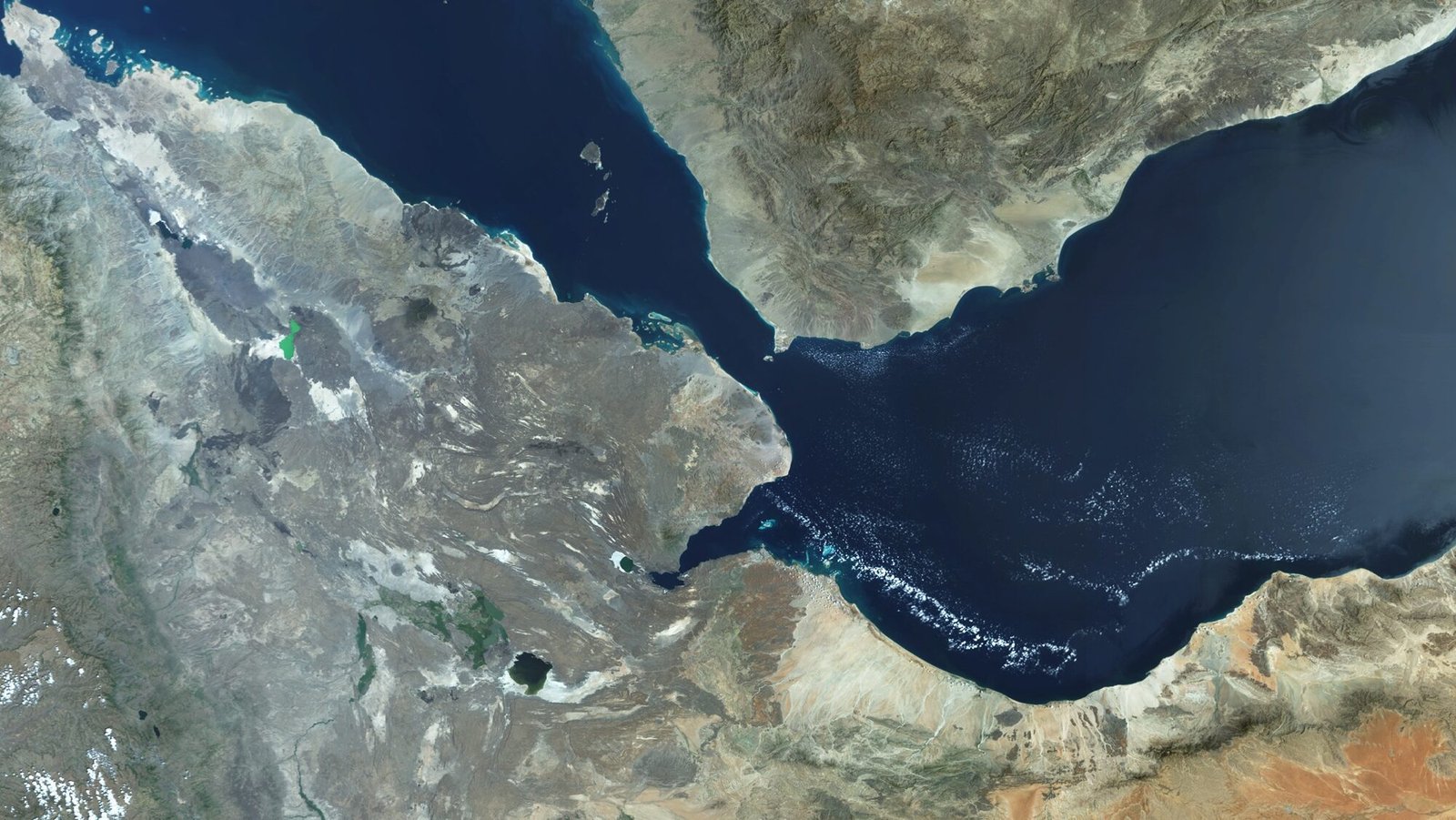
That is the calculation now surrounding the narrow passage linking the Red Sea to the Gulf of Aden and the Arabian Sea, as fears grow over a possible escalation around the Strait of Hormuz. Analysts say the Houthis may be willing to fire missiles, launch drones, or threaten Israeli-linked shipping, but a full attempt to close or seriously obstruct Bab el Mandeb remains less likely because of the wider costs it would impose.
The comparison with Hormuz is tempting but incomplete. Hormuz is the main artery for Gulf energy exports, carrying around one-fifth of global oil and petroleum liquids consumption. Bab el Mandeb does not match Hormuz in oil volume, but it remains strategically vital as the southern gate of the Red Sea, connecting the Indian Ocean to the Suez Canal and, from there, to the Mediterranean and European markets. A disruption there would not replicate the scale of a Hormuz closure, but it could still affect oil shipments, fuel supplies, container traffic, insurance costs, delivery times, and the economic stability of countries dependent on the Red Sea-Suez route.
Recent instability has already shown how quickly insecurity around Bab el Mandeb can reshape global shipping. In 2024, oil trade flows through the strait averaged 4 million barrels per day through August, down from 8.7 million barrels per day in 2023, as attacks and security risks pushed vessels away from the area, according to US Energy Information Administration data. UN Trade and Development has also warned that Red Sea disruptions have contributed to rerouting, higher costs, and uncertainty across maritime trade, which carries more than 80% of world trade by volume.
Egypt has already paid a steep price. Suez Canal revenue fell to $3.991 billion in 2024, down from a record $10.25 billion in 2023, according to figures reported by the Associated Press. The International Monetary Fund also reported that Suez Canal trade dropped by 50% year over year in the first two months of 2024 as ships rerouted away from the Red Sea.
For Saudi Arabia, Bab el Mandeb is tied to the security of its Red Sea coastline and to its ability to move crude through alternative routes if the Gulf becomes too exposed. For China and Asian importers, the passage is part of the wider architecture of energy and trade flows linking the Indian Ocean to the Mediterranean.
That leaves the Houthis with three broad options: rhetorical escalation, limited attacks, or a far more dangerous attempt to obstruct the strait itself. The first two would allow the group to signal alignment with Iran and its regional allies while keeping escalation within familiar bounds. The third would turn a confrontation with Israel and the United States into a direct threat to the economic interests of Saudi Arabia, Egypt, China, Europe, and the wider shipping industry.
These risks are not theoretical. On June 8, Yemen’s Iran-aligned Houthi movement announced a ban on Israeli maritime navigation in the Red Sea and warned of possible escalation against ships linked to Israel. The threat did not apply to all commercial shipping, but Reuters reported that it raised concern because previous Red Sea attacks had already created uncertainty over ship identification, insurance risk, and possible rerouting around Africa.
Abdulghani Al-Iryani, a researcher at the Sana’a Center for Strategic Studies, said the Houthis are under pressure to act but are also aware of the price they could pay if they overplay their hand.
The Houthis are under tremendous pressure to do something. They have been trying to avoid it all this time.
“The Houthis are under tremendous pressure to do something. They have been trying to avoid it all this time. In this instance, the potential benefit is very limited, both in terms of military benefits for Iran and for the Houthis, and the cost is huge for the Houthis,” Al-Iryani told The Media Line.
That cost, he explained, is not only military. It is also diplomatic, particularly in relation to Saudi Arabia. After years of war, the Houthis have sought to preserve the possibility of a favorable arrangement with Riyadh. A major disruption of Bab el Mandeb could threaten that track.
They would lose their chance, which has been tantalizing for a few years now, to make a favorable deal with Saudi Arabia
“They would lose their chance, which has been tantalizing for a few years now, to make a favorable deal with Saudi Arabia,” he said.
In Al-Iryani’s assessment, the more likely scenario is not a full Houthi attempt to close the strait, but a limited move designed to show participation without triggering maximum retaliation.
“I think the most likely scenario is that, if they feel they have no choice but to do something, they will make a token contribution to the military efforts with Iran. They may fire a few missiles, maybe sink a couple of vessels linked to Israel, but nothing so drastic that it would cause economic pain to Saudi Arabia and make Saudi Arabia upset,” he said.
The Houthis may be part of Iran’s regional camp, but Al-Iryani argues that they should not be understood simply as a proxy Tehran can activate at will. Iran’s network, in his view, functions more through aligned interests than direct command.
“Actually, it is working the axis of resistance as much as they expected it to work, because Tehran never considered these groups proxies. Tehran considered them allies. They expected them to act in their own self-interest.”
For Al-Iryani, that means the Houthis may serve Iranian interests without being under Iranian command. Their role is shaped by overlap, not obedience. They share strategic ground with Tehran, but their calculations remain rooted in Yemen’s local power struggle, their own survival, and their relationship with Saudi Arabia.
The Houthis, he added, are particularly different from Hezbollah and some Iraqi militias because of their religious and political structure. While they receive support from Iran and share ideological and strategic ground with the axis, their center of authority remains local.
“That is much less the case for the Houthis, because unlike Hezbollah and the Iraqis, the Houthis do not consider Khamenei to be their spiritual leader. They are not Twelvers; they are Zaydis,” Al-Iryani said.
“It is true that there is a small faction of field commanders who have converted to Twelver Shiism, but the majority are still Zaydis, and they consider their spiritual leader to be Abdul-Malik al-Houthi. So they will only do what they see as being in their self-interest.”
That local calculus also affects how the Houthis can frame any new confrontation to their domestic audience. According to Al-Iryani, defending Iran is not an easy cause to sell in Yemen, where historical memory and public sentiment toward Iran are more complicated than the Houthis’ current alignment may suggest.
“The Houthis cannot show their popular base in Yemen that they should suffer in support of Iran. During the Iran-Iraq war, the vast majority of Yemenis, almost unanimously, supported Iraq against Iran. Tens of thousands of Yemenis actually fought that war on the side of Iraq,” he said.
“So it is very hard for the Houthis to sell the idea of sacrifice in defense of Iran.”
The Palestinian issue is different. Yemenis, he said, are deeply emotionally connected to Palestine, giving the Houthis a broader mobilizing narrative when their actions are framed around Gaza or Israel rather than Iran itself.
“Again, it is not the same as the Palestinian issue. The Palestinian issue is very, very emotional for Yemenis,” he said.
A Yemeni analyst and journalist who spoke to The Media Line on condition of anonymity offered a similar assessment, while stressing that the Houthi movement, formally known as Ansar Allah, should not be underestimated.
“The situation of Ansar Allah, the Houthis, is not significantly different from before. Their current involvement may appear more influential than before, but this is due to several factors, including political alliances with some neighboring countries, the extended period of relative calm, and the group’s increased strength,” he said.
The analyst also rejected the idea of the Houthis as merely a tool in Iran’s hands.
“In my personal opinion, Ansar Allah has proven itself to be an ally, not merely a proxy or a puppet to be manipulated when needed,” he said.
Even under this framework, he argued, closing Bab el Mandeb would be unlikely because of the damage it could cause to actors beyond Israel or the United States.
Closing Bab el Mandeb remains highly unlikely because of the potential harm it would cause to their international allies, whether Ansar Allah’s allies or Iran’s allies
“Closing Bab el Mandeb remains highly unlikely because of the potential harm it would cause to their international allies, whether Ansar Allah’s allies or Iran’s allies,” he said.
The analyst later said Houthi engagement in the Red Sea could still affect China, Egypt, Saudi Arabia, and other countries Iran does not want to alienate. That, he suggested, makes full closure a risky option even for a group that has proved willing to disrupt shipping.
For the anonymous analyst, the Houthis remain a strategic pressure card, especially against Saudi Arabia. Their ability to threaten Red Sea shipping and Saudi economic interests gives Iran leverage even if the group does not fully enter the war.
Still, he argued that the Houthis themselves may prefer restraint after years of conflict.
“The Houthis want to have a bit of rest because they were exhausted,” he said.
The question, then, is whether extreme action would serve the Houthis’ interests. Both analysts say a limited show of force remains more plausible than a full maritime shutdown.
Al-Iryani said the Houthis would likely try to delay any major decision and wait to see if a ceasefire or diplomatic exit emerges.
“I really think that the Houthis will try to delay any decision they may have to make and hope that there will be a ceasefire,” he said.
“If a ceasefire does not come, and they feel they have to do something, they will do something symbolic just to please the axis of resistance and part of their base.”
Asked directly whether he believed the Houthis would try to seize or close Bab el Mandeb, Al-Iryani said the move would be too costly.
The anonymous analyst also said he did not expect the Houthis to become heavily involved unless Saudi Arabia openly sided with Washington in a way that would be perceived as direct participation. He said such a scenario remained unlikely.
The economic risk remains severe even if the most extreme scenario does not materialize. Al-Iryani warned that disruptions to maritime chokepoints should not be understood as producing a gradual, linear rise in prices. The real danger, he said, comes when markets and reserves reach a critical point.
“If that happens, people do not understand. They think it is linear, that the price will follow a linear path. The fact of the matter is that there is a critical point. That is when the strategic oil reserves of the U.S. and China are depleted. Then the crisis will be many, many times greater than the original crisis. The situation will become very critical,” he said.
“If you close the Bab el Mandeb Strait just as the reserves are depleted, we are going to have a catastrophe in oil prices.”
The anonymous analyst gave an even starker warning about the vulnerability of the Gulf if Iran is hit directly, saying oil prices could rise as high as $200 per barrel. Such a spike would represent a severe global price shock.
Beyond the maritime question, Al-Iryani said the current confrontation may have strengthened the Iranian regime rather than weakened it. His point was not that Tehran can simply order the Houthis into battle, but that Iran’s regional camp may be more durable than outside pressure assumes.
“I think the Iranian regime is now much stronger. Historically, the system in Iran operated on three legs: the temple, the bazaar, and the sword. It was the balance between the three that shaped most of the states in Iran. Then the mullahs came, and the temple became number one, which was a historical shift.”
That durability, however, does not erase the Houthis’ local vulnerabilities. In Yemen, Al-Iryani said, the group’s control does not mean it enjoys broad affection from the population.
“The Houthis are much more hated in Yemen than Hezbollah is in Lebanon. The reason the Houthis are in control is because they are the government. They control state institutions, especially coercive institutions,” he said.
“They are hated. And when people fight with the Houthis, it is because the Houthis have found them. The only way they can survive is by serving in the army.”
A real attempt to shut Bab el Mandeb would raise the stakes far beyond the symbolic level, threatening Saudi Arabia, Egypt, China, global shipping companies, and energy markets at once. That is precisely why it remains such a dangerous but difficult card for the Houthis to play.
The most likely scenario may not be a second Hormuz in the Red Sea, but a controlled escalation: enough for the Houthis to show they are part of the axis, not enough to burn the Saudi channel or provoke a wider confrontation that could isolate them.
Bab el Mandeb gives the Houthis leverage. Using it fully could also expose the limits of that leverage.