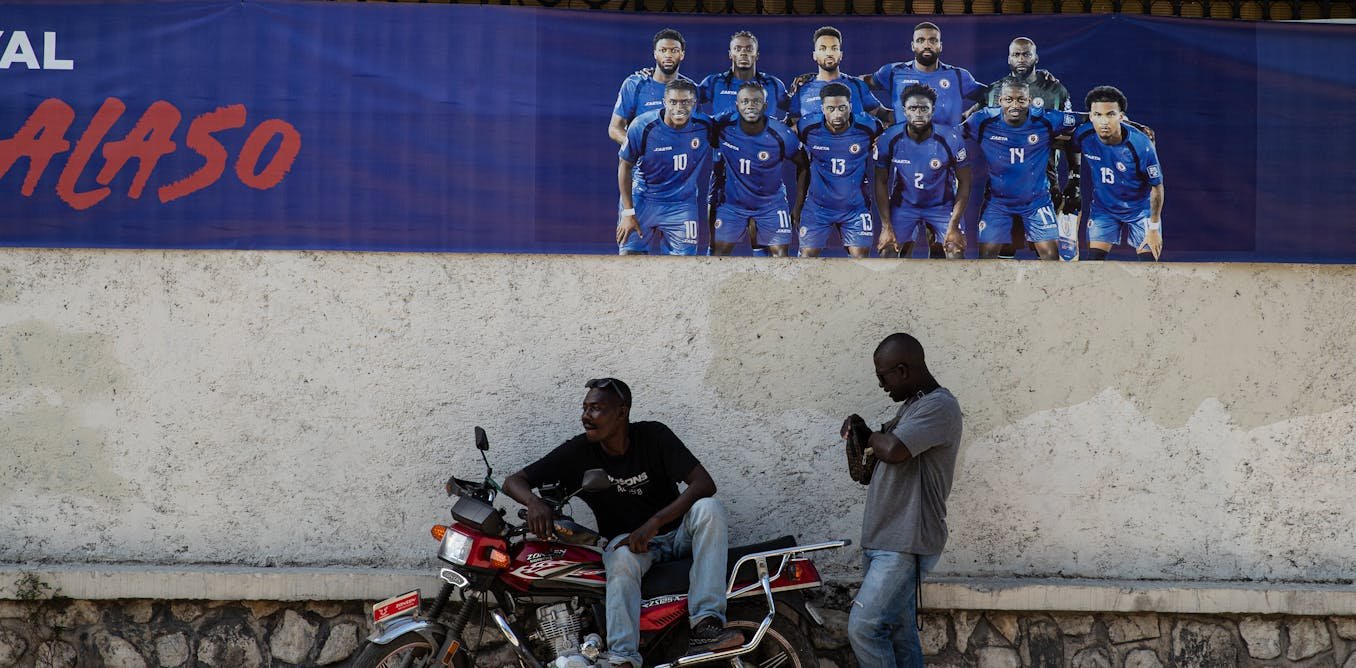
When Haiti’s soccer team lines up against Scotland on June 13, 2026, its players will be representing the Caribbean nation at a World Cup for the first time since 1974. They will also embody the complexities and possibilities of Haiti and its diaspora.
Of the 26 players selected for the squad, only 10 were born in Haiti. And just one, Woodensky Pierre, plays for a Haitian club. Twelve were born in France of Haitian parents, one in Canada, one in Switzerland and two in the United States.
The team is both a symbol of national pride and a condensation of battles Haitians have long fought for dignity and self-determination. Soccer commentator Nico Cantor captured this powerfully when he effused about the deep meaning of Haiti’s qualification for the World Cup on Nov. 18, 2025, exactly 222 years after revolutionary leader Jean‑Jacques Dessalines fought a famous battle against the French on the way to independence. “Their national team has given Haiti something to be proud of,” Cantor said. “It is historic for many reasons.”
Imagined communities and 11 named players
During the World Cup, individual actions can catapult a player to the status of national icon or never-forgotten villain. But we also see teams either connect and pull together or fragment and fall apart. It can become a powerful metaphor for the fate of nations themselves, resonating with a broader human experience.
How does this dynamic shift when a team, like Haiti, consists of players whose personal stories are ones of migration to another country, but who have chosen to represent the nations of their parents in international competition?
Haiti is not alone. Since 2004, FIFA has allowed players who have played for the national team of one country to switch to another if they do so before their 21st birthday. In 2020, the rules were further loosened so that players can change in some contexts after that age.
Haitians at the World Cup
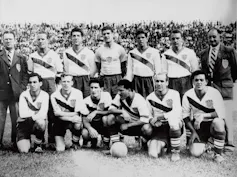
The broader history of Haitians at the World Cup has long been shaped by diasporic movement. At the 1950 World Cup, when a scrappy U.S. team composed mostly of immigrants famously defeated England 1-0, it was a Haitian man, Joe Gaetjens, who scored the crucial goal.
Decades later, Jozy Altidore, a child of Haitian immigrants, played in every game for the U.S. during its 2010 World Cup run.
Until now, Haiti’s national teams have appeared in only two World Cups. Most recently, the country’s team qualified for the 2023 Women’s World Cup, overcoming many obstacles in the process. Like the men’s team in this year’s competition, the women could not train or play games at home in Haiti. But playing for Haiti helped their star player, Melchie Durmonay, begin a professional career in France, where she plays for the leading team, Olympique de Lyon, and is considered one of the best players in global women’s soccer.
The men’s team has previously competed only in the 1974 tournament. On that occasion a team made up of players who had all been born in Haiti shocked an Italy team famed for its impregnable defense. Early in the second half, Haiti’s Emmanuel Sanon broke away to catch a masterful pass downfield, dribbled expertly around an Italian defender and powered the ball into the goal.
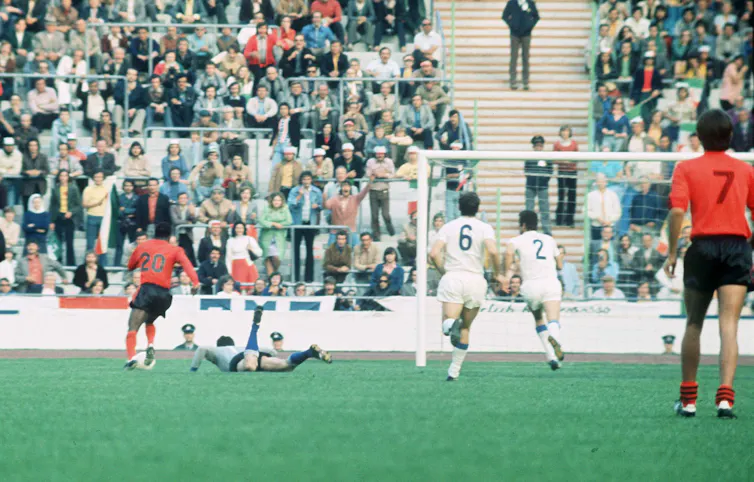
It remains the most celebrated goal in Haitian football. And although Haiti lost that game 3-1, Sanon became a national hero. He went on to a professional career in Florida in the 1980s and later managed the Haitian national team.
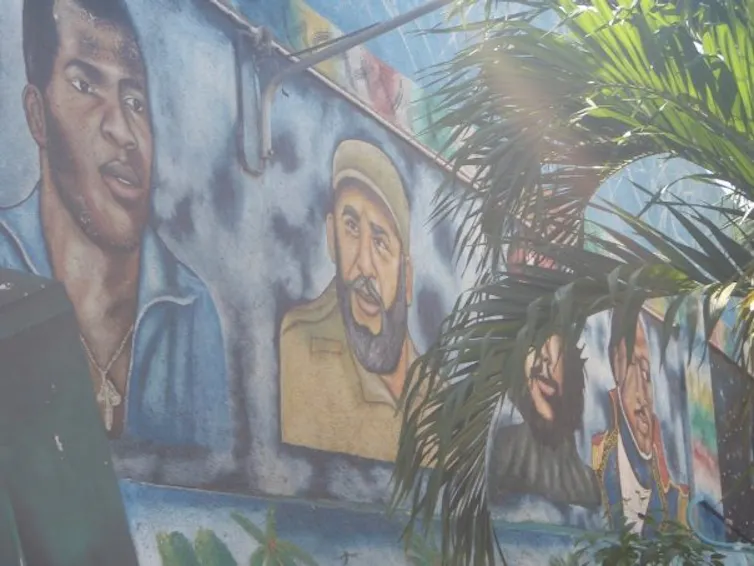
When he died in Orlando in 2008, he was buried and received a state funeral in Haiti. A soccer park is named after him in Miami’s Little Haiti in recognition of his place in the country’s history.
A diaspora on the pitch
The life histories brought together for the 2026 tournament capture the broader story of Haitian migration, but they also illustrate the different kinds of opportunities young athletes have in different countries.
Some of Haiti’s players, like Hannes Delcroix, have had access to the most elite and well-resourced structures in global soccer. He was born in the Artibonite Valley in Haiti but as a child moved with his parents to Belgium. There, he trained at the youth academy of the Belgium professional team Anderlecht and also played on Belgium’s international youth teams. He now plays professionally in Switzerland.
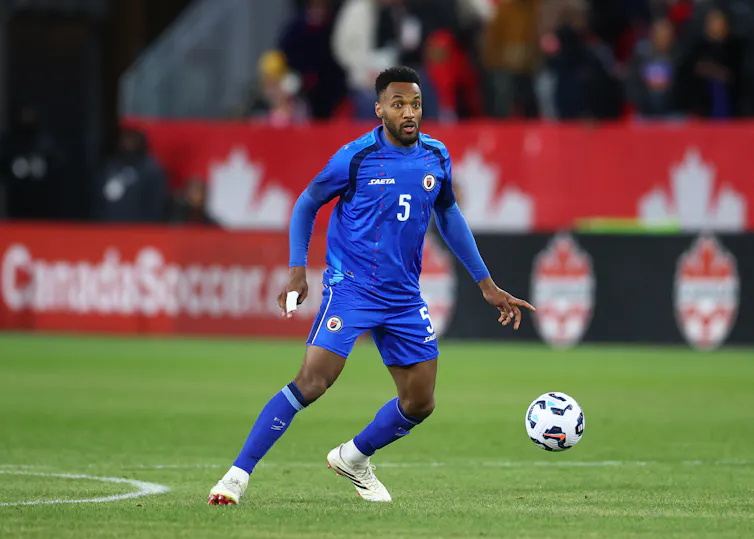
But it is France’s soccer infrastructure that has in many ways most deeply shaped the trajectories of Haiti’s team. The Haitian diaspora in France is much smaller than in the U.S. – it is estimated at around 100,000 – but its children have had access to one of the most successful systems for soccer training in the world.
Facing many social and economic barriers, children of immigrants, many of whom live in the housing projects in the suburbs of Paris and other French cities, often see an athletic career as their best chance for success. And the country invests heavily in sporting infrastructure with high level of state investment at the local and national level. As a result, immigrant communities in France have become some of the most remarkable generators of soccer talent in the world. Two of the standouts of the French national team – Ousmane Dembele and Kylian Mbappé – are products of the French soccer system. and both are sons of African immigrants. Meanwhile, 75 players born in France will be playing on non-French national teams.
Paths to the World Cup
Haiti’s talisman and top scorer, Duckens Nazon, was born in a Parisian suburb and played with a series of French professional teams before being recruited to the English team Wolverhampton Wanderers in 2017. His stint there was brief, and he has since moved a few times, playing professionally in Iran for Estaghlal this past year and having to make a harrowing escape from the war there in order to be able to play in the World Cup.
The strong representation of Franco-Haitian players, and the relatively small number of those born in the U.S., speaks volumes about the difference in the infrastructure and structure of opportunity around soccer in the two countries.
The U.S. is home to the largest Haitian diaspora in the world, with a population of approximately 1.1 million registered in the 2021 census. Actual numbers – both then and now – are likely larger. Yet only two players born in the U.S. are on Haiti’s World Cup squad: Derrick Etienne Jr., born in Richmond, Virginia, and Duke Lacroix, born in New Jersey.
In both cases, the players were able to find their way to the pathways for professional sport that exist in the U.S. – notably elite universities – that are not available to many other children of Haitian immigrants.
Frantzdy Pierrot, one of the team’s stars, is part of a more recent history of migration from Haiti to the U.S.
He was born in Cap Haïtien in 1995 but migrated to Melrose, Massachusetts, as a child. After high school there, he played at Northeastern University and then Coastal Carolina University before embarking on a professional career that has taken him to England, France, Israel and Turkey. On May 26, 2026, the governor of Massachusetts celebrated his achievements by declaring that day Frantzdy Pierrot Day in the state.
A global Haiti
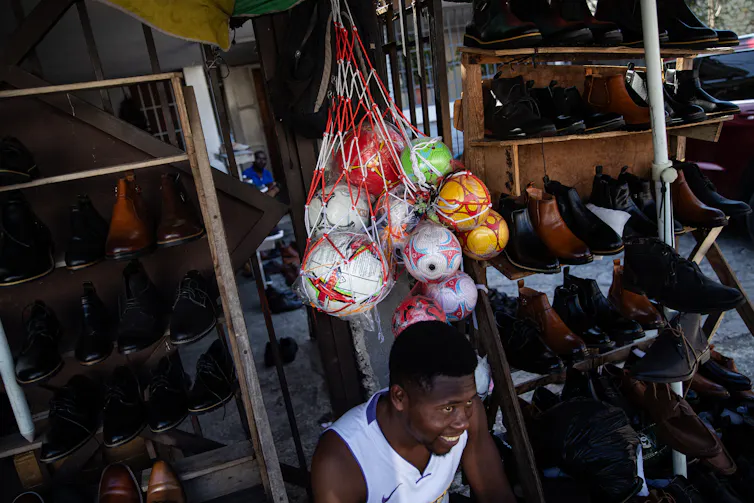
Whatever happens on the pitch for Haiti this tournament, their games are going to be an occasion for unity and celebration.
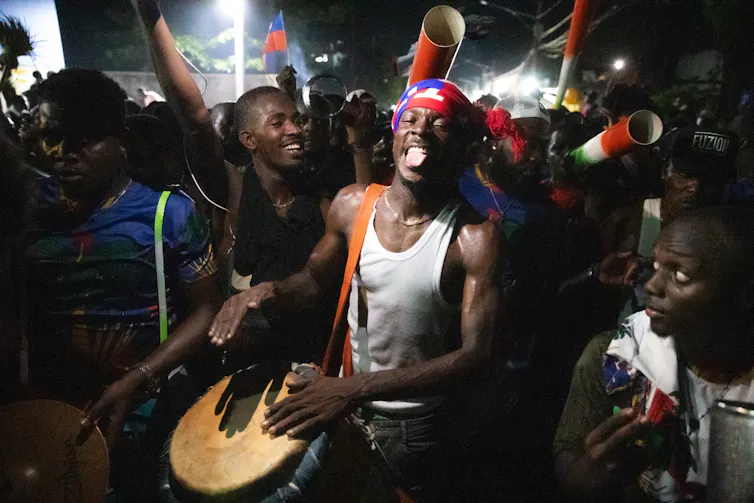
Haiti team’s fans are legendary for their passion. One of the most intense victory celebrations I have witnessed took place outside a stadium in Harrison, New Jersey, in June 2019 when Haiti defeated Costa Rica in a Gold Cup group match. The parking lot filled up for many hours afterward, with Rara music and dancing.
Sadly, a visa ban against Haiti means that few Haitians will be able to travel from their country to the U.S. to watch their team play.
But on June 13, Haiti itself will be at a standstill during the games, and across the diaspora – in Boston, New York, Houston, Montreal and Paris, but also in the Bahamas, Brazil, Chile and other parts of Latin America – crowds will gather to be together in pride.
Many others, me included, will join in supporting Haiti out of solidarity, taken by this story of possibility. And if, like Sanon in 1974, one of Haiti’s new generation of players breaks through and scores a goal, the celebration will be truly global.