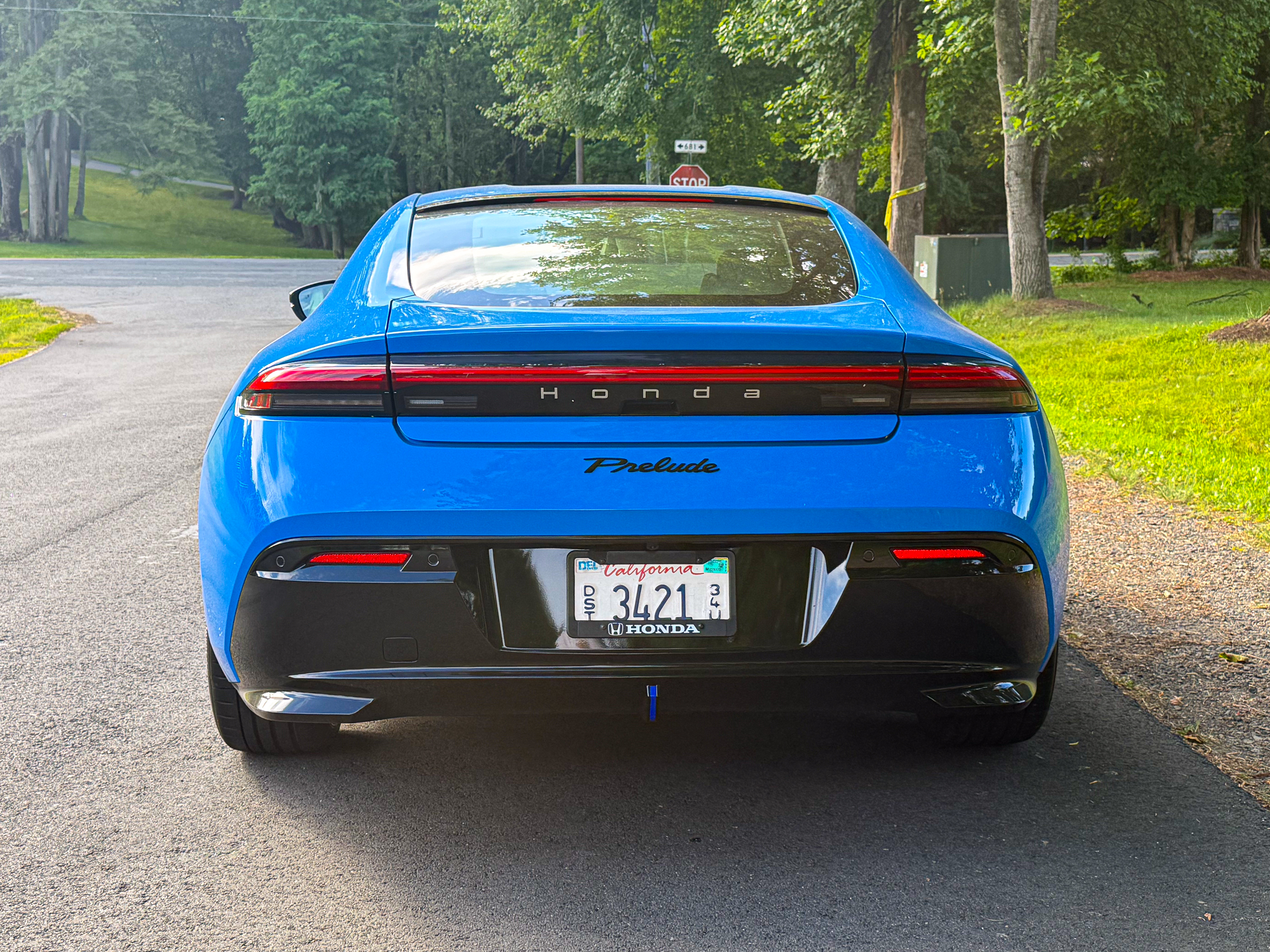
You can tell Honda was trying to manage expectations when it emailed me to stress that “the Prelude is not a sports car.” And I can understand why. On paper, the specs make the sleek coupe—technically a three-door hatch—seem underwhelming. Especially if you start comparing it to alternatives.
A Mazda MX-5 or Subaru BRZ weighs hundreds of pounds less, and the Subaru packs more power than the Prelude’s 200 hp (149 kW). A Volkswagen Golf GTI weighs about the same as the Prelude at 3,261 lbs (1,479 kg), but it delivers 20 percent more power and offers rear seats that actually accommodate adults. But after a week with the bright blue Prelude, it’s hard to care about the specs. This might be one of the best cars we’ll drive all year.
Then again, looking back across the previous five generations, the Prelude was never really a sports car. It has always been a technology showcase for Honda, introducing features like fuel injection, four-wheel steering, variable valve timing, and active torque transfer. For the sixth-generation Prelude, the headline feature is Honda’s S+ shift, which adds some sporty character to the OEM’s four-cylinder hybrid.
Fuel sipper
Most of the time, the front wheels are driven by the Prelude’s 181 hp (135 kW), 232 lb-ft (315 Nm) electric traction motor, which is powered by either the 1 kWh battery for a pure EV drive or the 2.0 L four-cylinder Atkinson cycle engine via a second electric motor/generator unit that converts the engine’s output into electrical energy for use by the traction motor. But like the Chevrolet Volt and some other hybrids, the gasoline engine can directly drive the front wheels at highway speeds, where it’s more efficient.
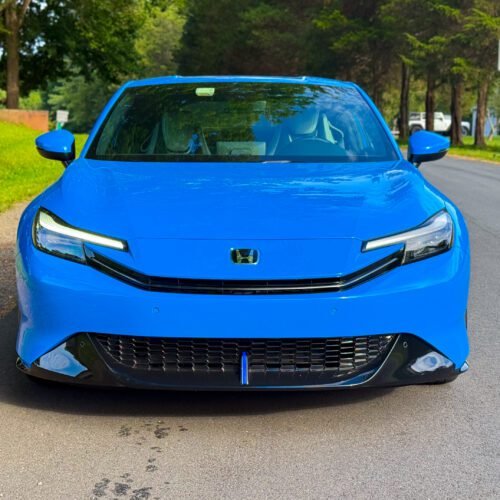
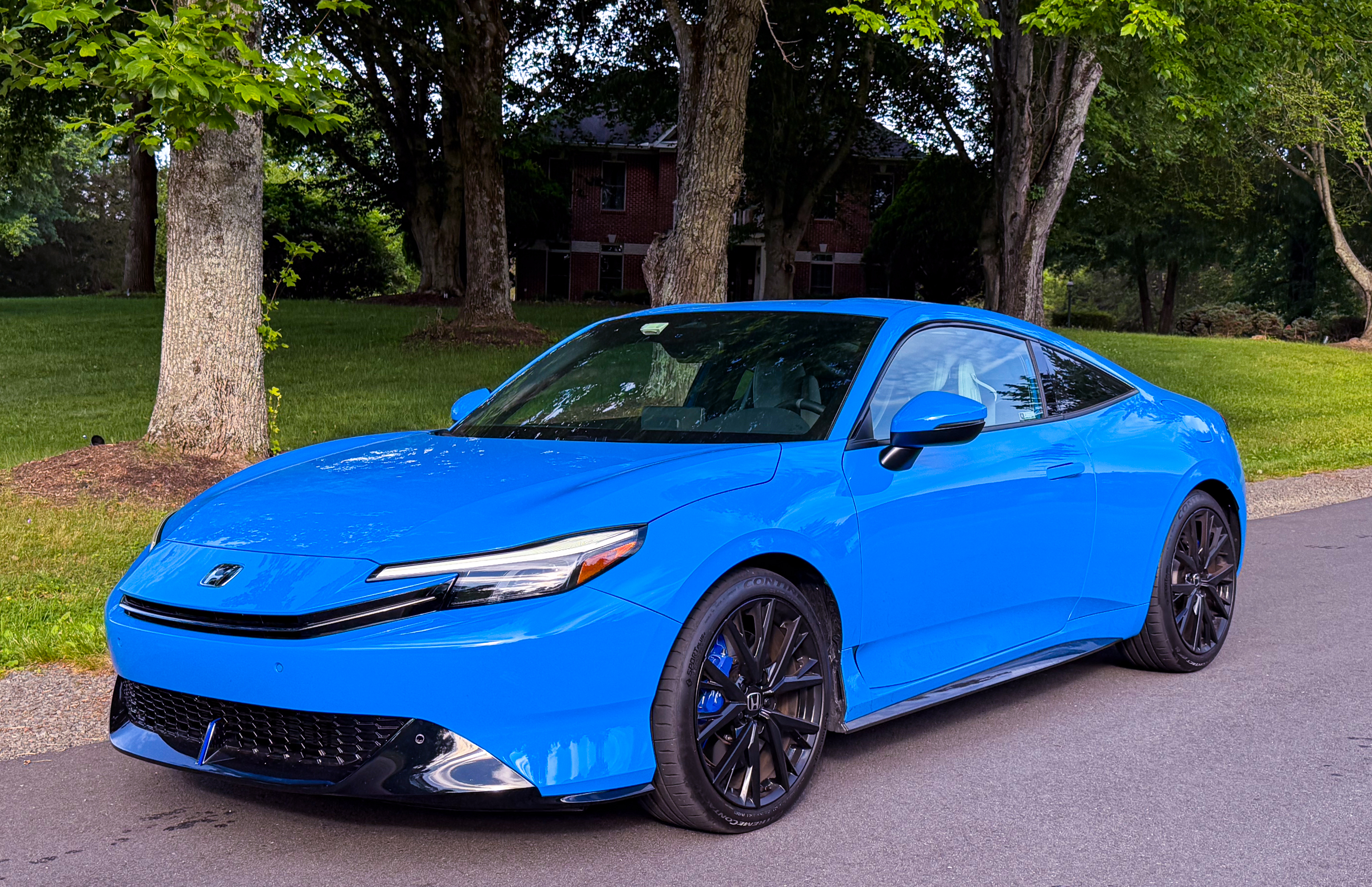
And efficiency is the name of the game, resulting in a combined 44 mpg (5.3 L/100 km). On a full tank, that means 466 miles (750 km) between fueling stops—talk about a proper grand tourer. And if you leave the drive mode set to Comfort and never touch the paddles behind the steering wheel or the big round S+ button on the center console, the new Prelude might just be a slightly less efficient two-door Toyota Prius lookalike. (At least head-on—I still don’t know how Honda’s designers got away without a cease and desist from their colleagues at Toyota for using a near-identical front.)
In Comfort mode, the ride is soft, the powertrain is quiet, and the engine cuts out whenever possible. Toggle into GT, and the Prelude’s adaptive dampers stiffen up a little, the steering gets weightier, and if you engage S+—which mimics an eight-speed gearbox by changing throttle and regenerative braking maps—the shifts become a little jerkier to provide the driver some feedback.
Sport takes this further; the engine remains running to feed energy into the battery or motors at a moment’s notice, and in S+, the shifts become more deliberately violent (although only a little—we’re not talking sequential crash box or anything), and the powertrain is at its (still not obnoxious) loudest.
I found GT to be the car’s sweet spot. The throttle response is good—better than a turbocharged non-hybrid, perhaps not quite as sharp as the sportiest EVs. The S+ mode’s party trick of replicating a paddle-shift transmission works well on twisty roads, providing an extra layer of driver engagement. Most of the time, though, I left S+ unengaged and simply used the steering wheel paddles to adjust the amount of lift-off regenerative braking, which can be as little as 0.2 g for coasting or as much as 0.2 G, which is less than you’d find in most battery EVs but is still strong enough to replicate the effect of engine braking.
Type-R goodies
There’s more to the drive experience than just an efficient but involving powertrain. The front and rear tracks have been stretched like the Civic Type-R, which donates its front dual-axis and rear multilink suspension to the Prelude, as well as its adaptive dampers, which have been recalibrated for a more comfortable ride. (The stiffest setting in the Prelude is slightly softer than the softest setting in the Type-R.)
Consequently, there’s plenty of grip, especially on the ($1,200) optional summer tires fitted to our test Prelude. The hybrid powertrain encourages a driving style that maintains momentum rather than using a point and squirt approach, and there’s so much front grip that you can corner quicker than you expect, with nary a squeal or noise from the tires as you carry your speed through the apex. And while the curb weight is a good deal more than a Miata or BRZ, compared to the usual diet of crossovers and EVs, the Prelude feels remarkably lithe and nimble.
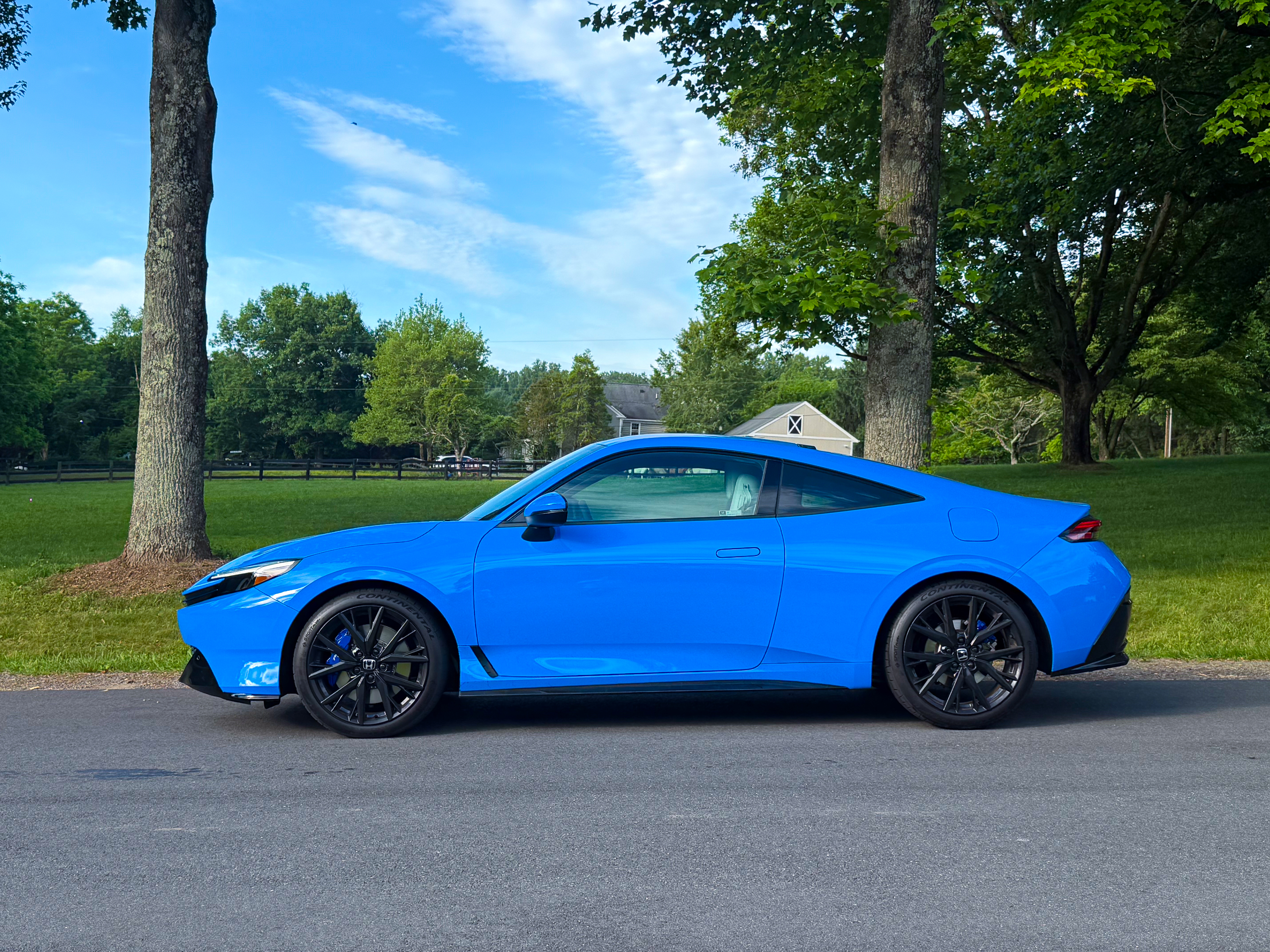
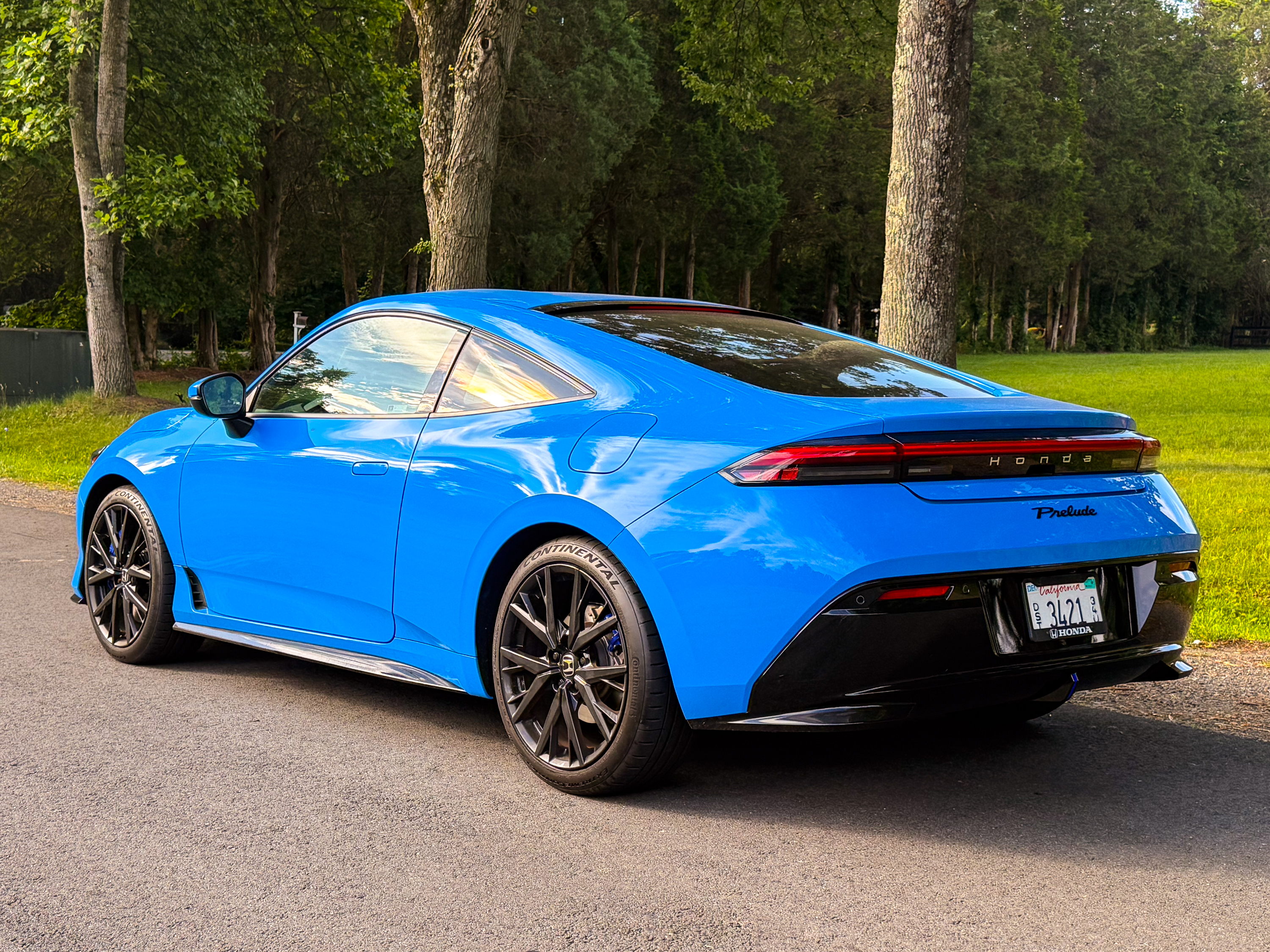
If you’re an introvert, though, this might not be the car for you, especially in the optional ($455) Boost Blue Pearl you see here. I’m not sure what I last drove that garnered as much attention as the Prelude, but the styling appears to be a hit, generating questions from other drivers in traffic and from bystanders whenever I parked. People like this shape, it seems. Things are pretty good on the inside, too, at least from the front.
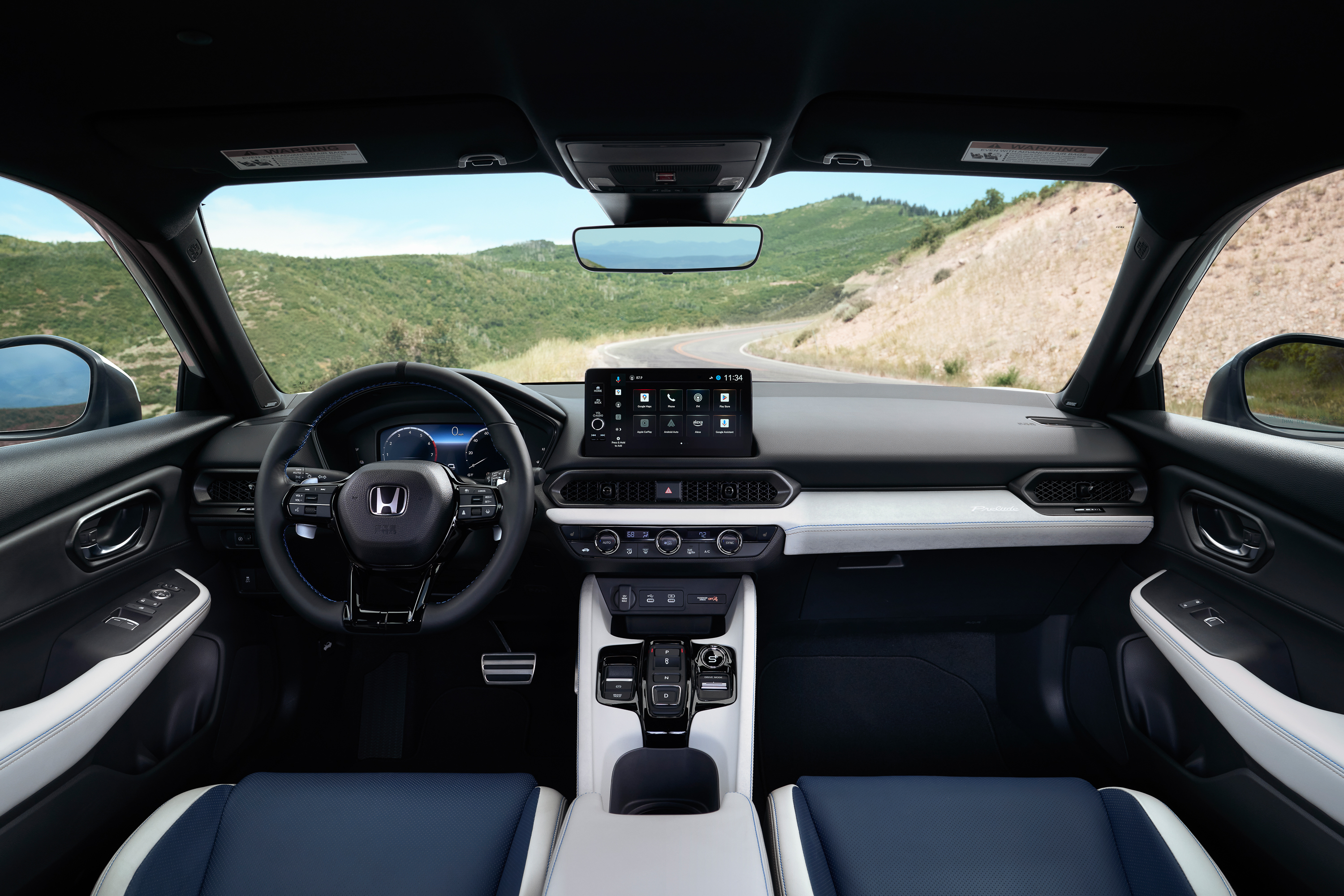
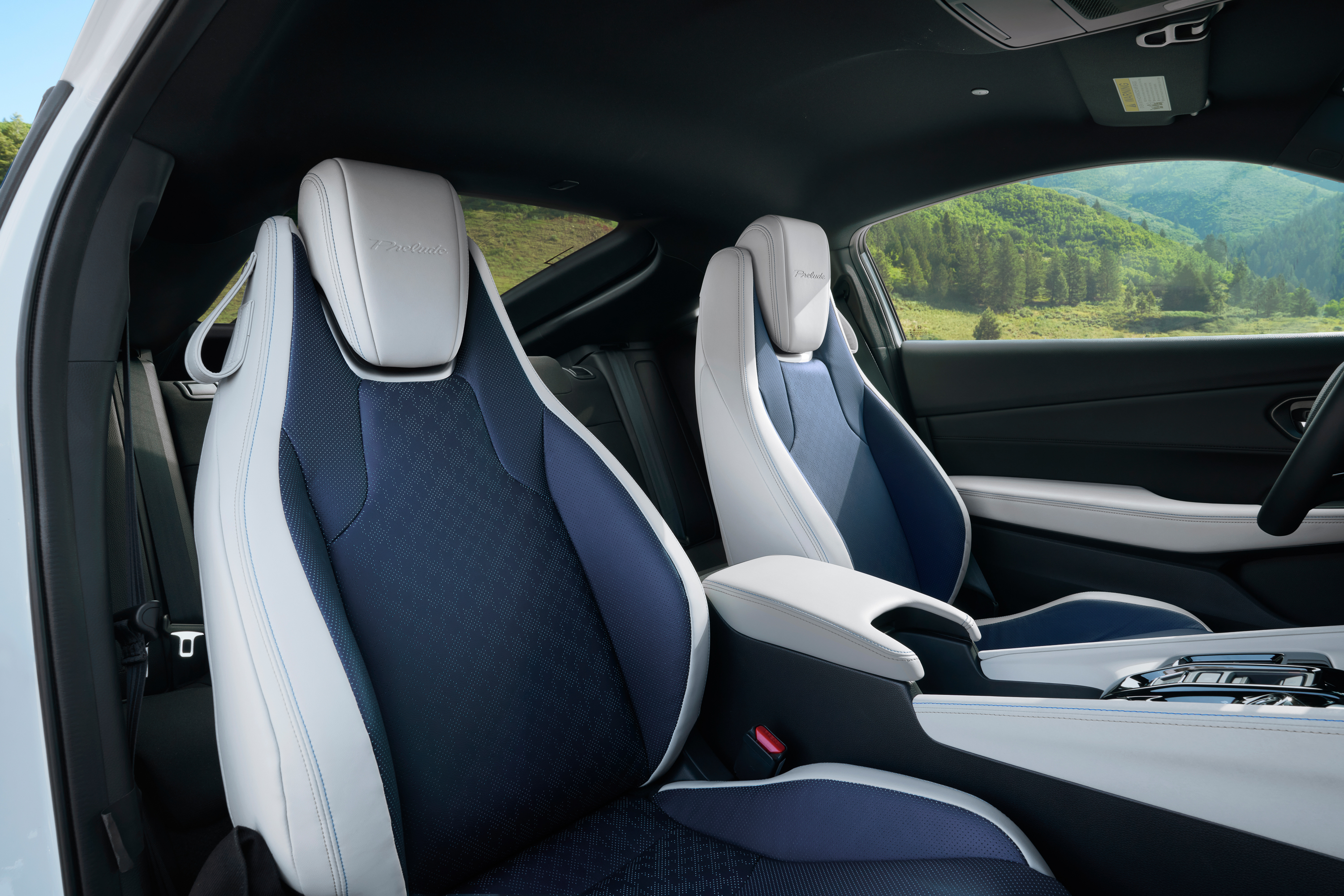
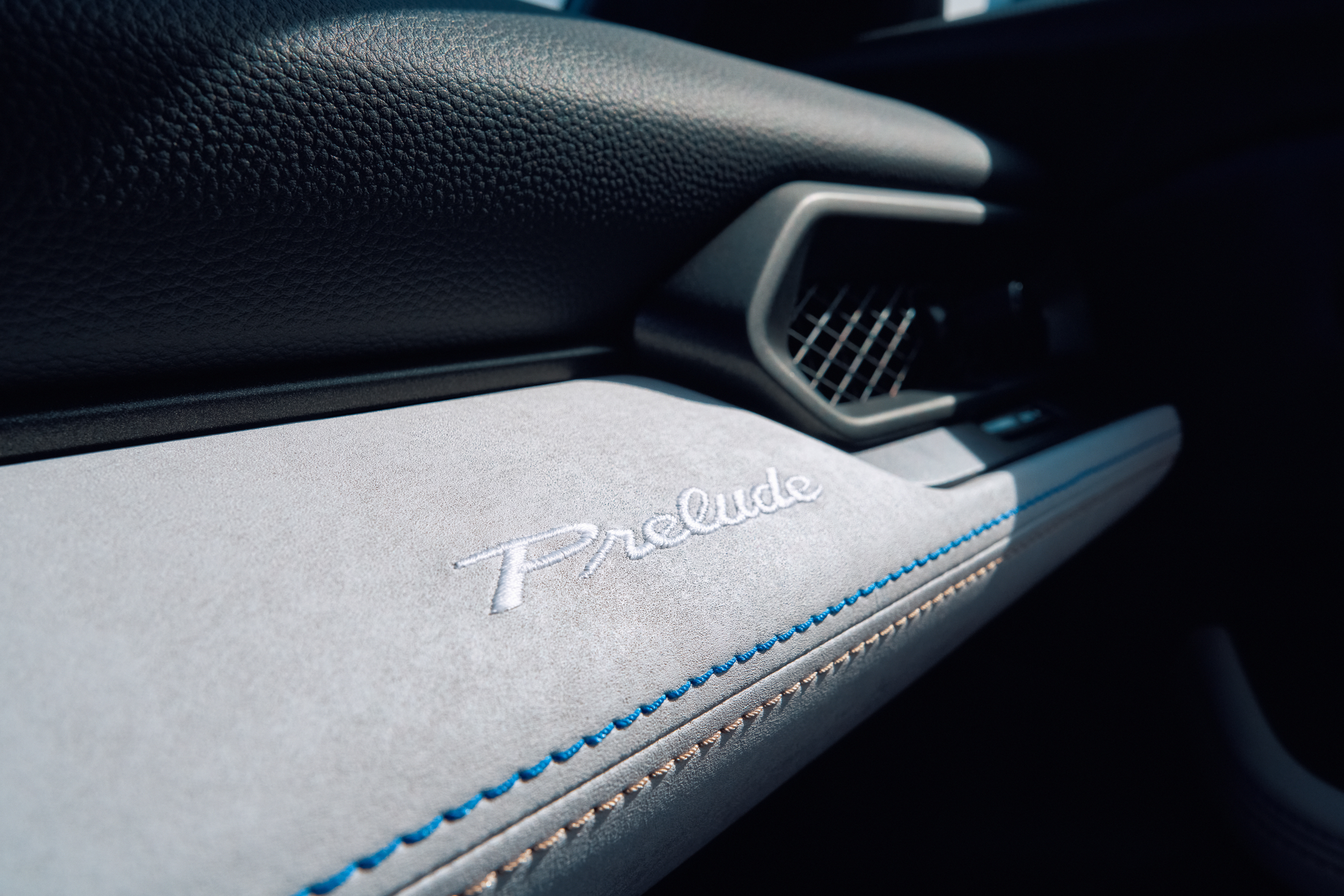
There’s a sportier steering wheel and sporty seats, but the rest of the cockpit borrows from the Civic. That’s no hardship—far from it, as there are discrete buttons and dials for all the controls. The smallish infotainment system is the only touchscreen you’ll find, and you never need to use it to adjust the temperature, change the volume, or handle any of the other functions that some automakers have frustratingly relegated to screens or capacitive panels. I’d prefer the infotainment screen to be slightly angled toward the driver, but that’s a minor quibble at this point.
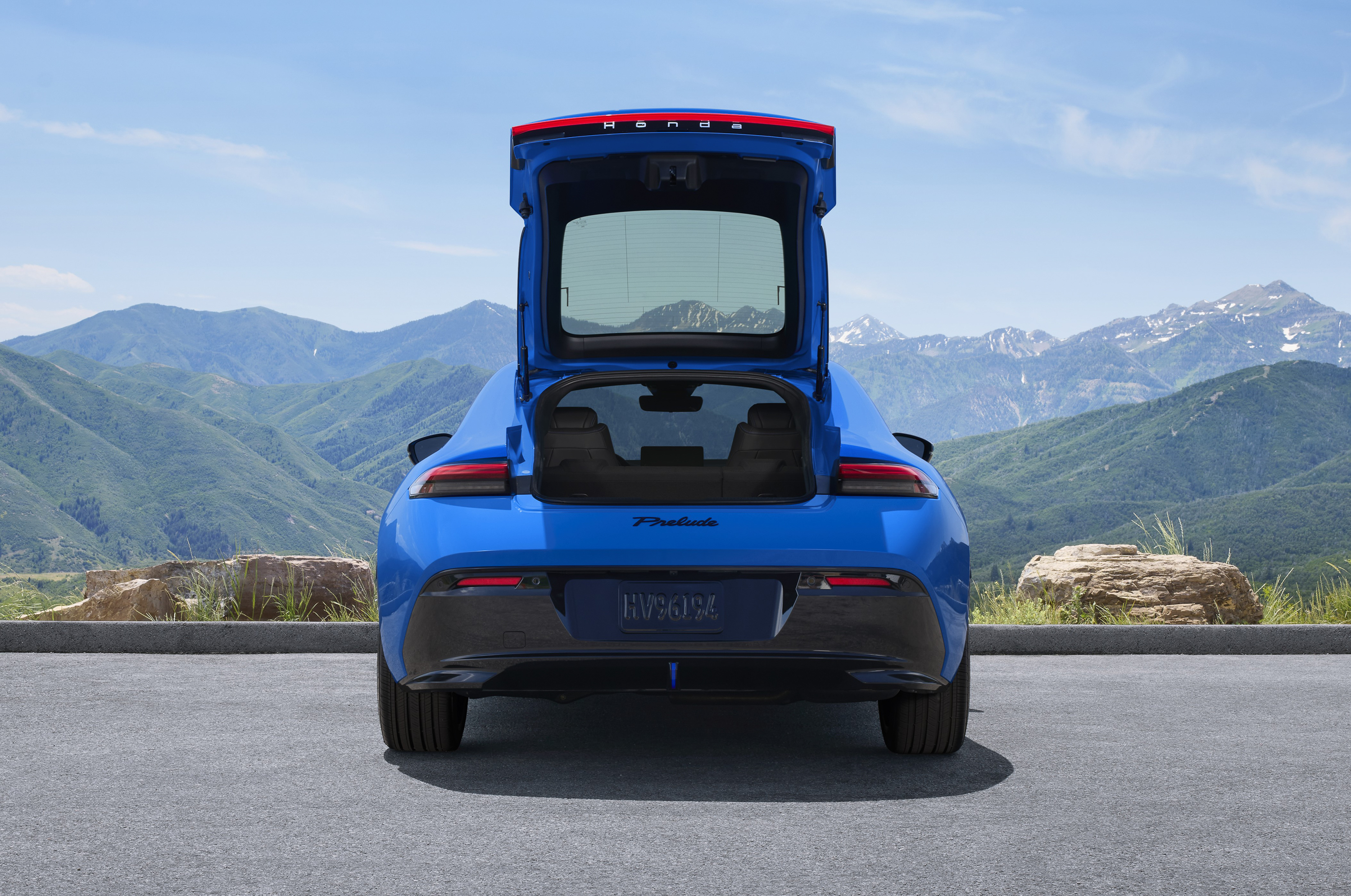
The back seats are more occasional—think of them like the ones in the back of a Porsche 911, there for small children, small pets, more luggage, or emergencies. But the rear hatch provides plenty of room for the relatively shallow 15.1 cubic feet (427 L).
I’d buy one
I wasn’t expecting to be as smitten with the Prelude as I was. It’s not quite the last word in handling that an MX-5 or BRZ is, and a Golf GTI is both more powerful and more practical. But none of those cars can get anywhere near the Prelude’s efficiency, while the coupe gives up little in terms of driver engagement.
Throw in those looks and a $42,000 MSRP that includes tons of equipment as standard, and it’s quite the proposition. In fact, the new Prelude would be at the top of my list if I were looking for a new car. The car won’t be very common, though—Honda plans to sell only about 4,000 a year.