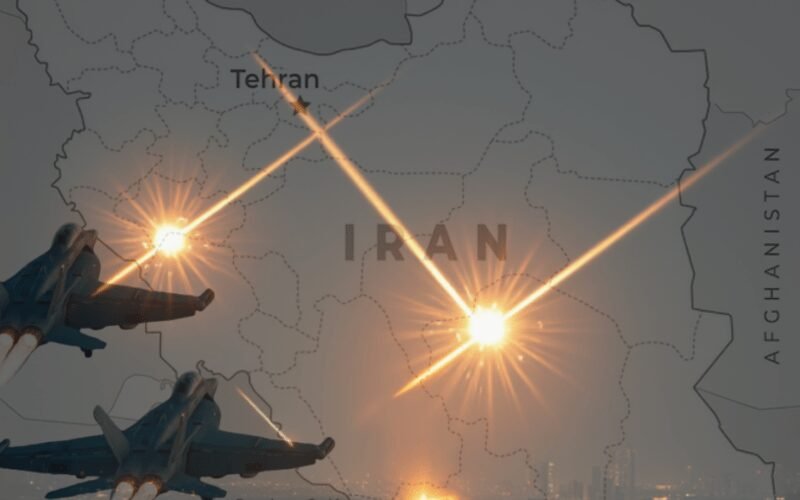
Israel and Iran exchanged fresh attacks on Monday, marking a significant escalation in tensions and raising concerns over regional stability and global energy supplies.
The Israeli military confirmed that its air force struck several targets at the petrochemical complex in Mahshahr, in southwestern Iran. Iranian authorities said the Karun petrochemical plant near Bandar-e-Mahshahr sustained damage from an Israeli projectile. Following the attack, Iranian state media reported that the Mahshahr Special Petrochemical Economic Zone was being evacuated.
The strike is believed to be the first direct hit on Iranian energy infrastructure since U.S. President Donald Trump announced a ceasefire in April.
In response, Iran’s Islamic Revolutionary Guard Corps said it had launched attacks against the Nevatim and Tel Nof air bases in Israel, describing the strikes as retaliation for attacks on radar sites inside Iran. The IRGC said it was prepared for “any scenario” and capable of conducting widespread operations on multiple fronts.
The Israeli military later reported detecting additional missile launches from Iran and said its air defence systems were working to intercept the incoming threats.
The renewed hostilities were felt across Israel, where U.S. Ambassador to Israel Mike Huckabee said Iranian missiles had targeted the country. Posting on social media, Huckabee reported hearing “loud booms overhead” while sheltering during the attacks.
The escalation comes despite diplomatic efforts by Washington to prevent a wider conflict. According to U.S. and Israeli officials, Trump and Israeli Prime Minister Benjamin Netanyahu spoke by phone on Sunday. A U.S. official quoted by Axios said Trump urged Netanyahu to avoid further military action because negotiations were close to producing a potential agreement.
Hours before the latest strikes, Trump told the Financial Times that any new attacks by either side would not affect ongoing diplomatic efforts and stressed that he remained in control of U.S. policy.
The fighting also rattled global energy markets. Brent crude oil rose more than $3 a barrel to $96.24, while U.S. crude climbed to $93.41. The gains reversed losses recorded at the end of last week, as traders reacted to the renewed military confrontation and concerns about potential disruption to Middle Eastern energy supplies.
Before Sunday’s exchange, Iran had not directly attacked Israel since the ceasefire that took effect in April, although the Iran-backed militant group Hezbollah had continued launching attacks against Israel from Lebanon.