For two years, images of dead Palestinian children, flattened neighbourhoods and starving civilians flooded television screens and social media feeds around the world. What once shocked global audiences gradually risked becoming routine. The war in Gaza — from October 2023 until the ceasefire of October 2025 — left behind extraordinary destruction and an uncomfortable question: had mass suffering itself become normalized?
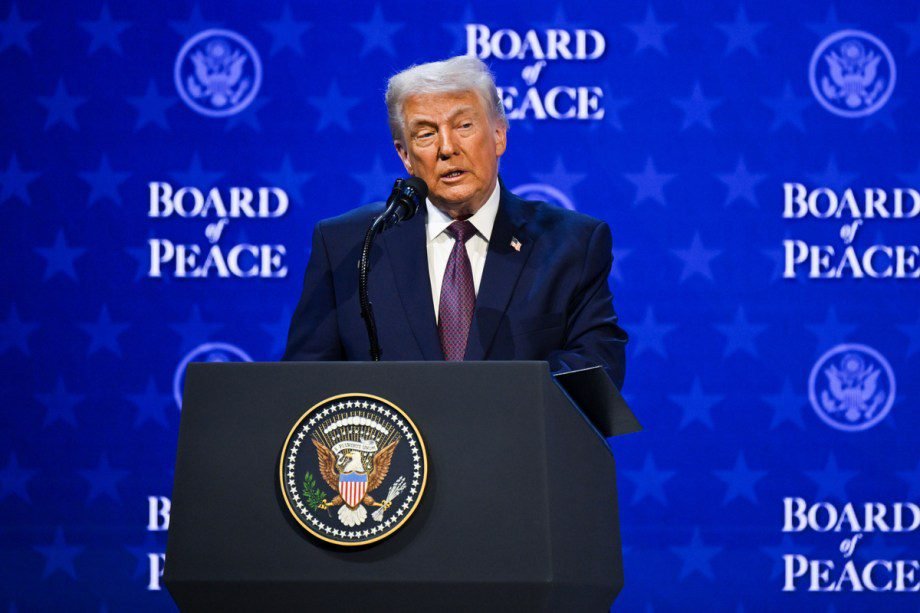
Is the world now witnessing, in near silence, the live-streamed genocide of the Palestinian nation simply because it feels powerless to stop it? Or because global attention has shifted elsewhere, particularly toward the US-Israeli confrontation with Iran? Whatever the answer, one disturbing reality has emerged: many governments appear willing to believe that Washington has genuinely pursued peace and reconstruction in Gaza, and that the issue is somehow moving toward resolution. This perception has been carefully cultivated through diplomatic language, media narratives and political manoeuvring surrounding Donald Trump’s so-called “Board of Peace” initiative — process critics argue relied less on transparency than on political deception designed to create the illusion of progress while the destruction of Gaza continued.
While a ceasefire was declared by the US president in October, Israeli forces never truly stopped killing Palestinian civilians or tightening conditions that deepened hunger and deprivation across Gaza.
Air strikes, sniper attacks, raids and restrictions on humanitarian aid continued to claim lives almost daily, even as international attention shifted elsewhere. For many Palestinians, the ceasefire existed more in political statements and media headlines than in reality. The language of “peace” and “stability” contrasted sharply with conditions on the ground, where destruction, displacement and starvation remained part of daily life.
The continuation of violence after the October 2025 ceasefire exposed the fragility — or perhaps the illusion — of the agreement itself. Reports by international media outlets, UN experts and Palestinian officials documented, almost daily, Israeli attacks, civilian deaths and continued humanitarian suffering even after the truce formally took effect. For Palestinians trapped inside Gaza, the difference between “war” and “ceasefire” often appeared largely semantic. The bombs became less frequent at times, but fear, displacement and insecurity never truly disappeared.
For many Palestinians, the idea of a ceasefire became increasingly difficult to distinguish from the continuation of war. Life in Gaza remained defined by uncertainty, with families moving between temporary shelters, searching for food, and trying to survive in conditions where basic safety was still absent. The promise of reconstruction was repeatedly invoked in international reports, yet on the ground, little tangible recovery was visible. Instead, the daily reality oscillated between moments of relative calm and sudden violence, reinforcing a pervasive sense that the conflict had not truly ended but had merely shifted form—instead of killing hundreds a day, killing dozens.
Humanitarian assistance, meanwhile, became another contested space within the conflict. The emergence of new aid structures, including the Gaza Humanitarian Foundation, was presented by its backers as an attempt to improve delivery and coordination in an environment of collapse. Yet it also raised difficult questions about neutrality, access, and accountability in the distribution of life-saving resources. Critics and observers have pointed to broader concerns about how aid systems function in conditions of ongoing conflict, where control over food, medicine and shelter can become entangled with political and military realities. In such a context, humanitarian relief itself risks being perceived not only as a lifeline, but also as part of the wider architecture of power shaping life and survival in Gaza.
This transformation of Gaza into a managed humanitarian catastrophe serves a broader, more cynical objective.
By condoning and redirecting the narrative from sovereign rights and political solutions to “coordination” and “aid structures”—which are hardly happening anyway—the international community effectively treats the Palestinian people as a population to be fed and monitored, rather than a nation seeking liberation.
This bureaucratic approach to genocide ensures that the “normality” of destruction remains undisturbed. It allows the world to look at Gaza through the lens of a logistics problem—counting calories and truckloads—while the actual mechanisms of displacement and erasure continue to operate under the cover of diplomatic silence and the distractions of the war on Iran.
The “Board of Peace” initiative acts as the administrative department of this ongoing illusion, supported by an increasingly AI driven machinery of automated narrative-shaping. By framing the post-October 2025 landscape as a “reconstruction era,” Washington provides the necessary diplomatic cover for the erasure to continue. This narrative is amplified by coordinated bot networks that flood digital spaces with “humanitarian metrics” to manufacture a false global consensus of progress. Investigative reports suggest these systems use algorithmic displacement to bury evidence of ongoing military raids beneath a layer of automated “stability” reports. This process has effectively re-engineered the very concept of a peace initiative: it no longer functions to resolve conflict, but as a digital tool for managing international optics, allowing perpetrators to claim they are building a future while they are, in fact, finishing the destruction of the present.
Ultimately, the “normalization” of Gaza’s destruction represents a fatal threshold in modern geopolitics. If the international community successfully transitions from a discourse of human rights to one of mere humanitarian management, it formally cements the “illusion of progress” as a permanent substitute for justice. By accepting a reality where a nation is “fed and monitored” while its land is erased and its people are displaced under the cover of diplomatic distractions, we are witnessing more than the death of a ceasefire; we are witnessing the obsolescence of international law itself.
Gaza is no longer just a conflict zone; it has become the testing ground for a world in which law, order, and accountability are no longer the norm but the exception—a world where genocide does not necessarily have to be stopped, but simply administered until it is no longer headline news.
The views expressed in this article belong to the author and do not necessarily reflect the editorial policy of Middle East Monitor.