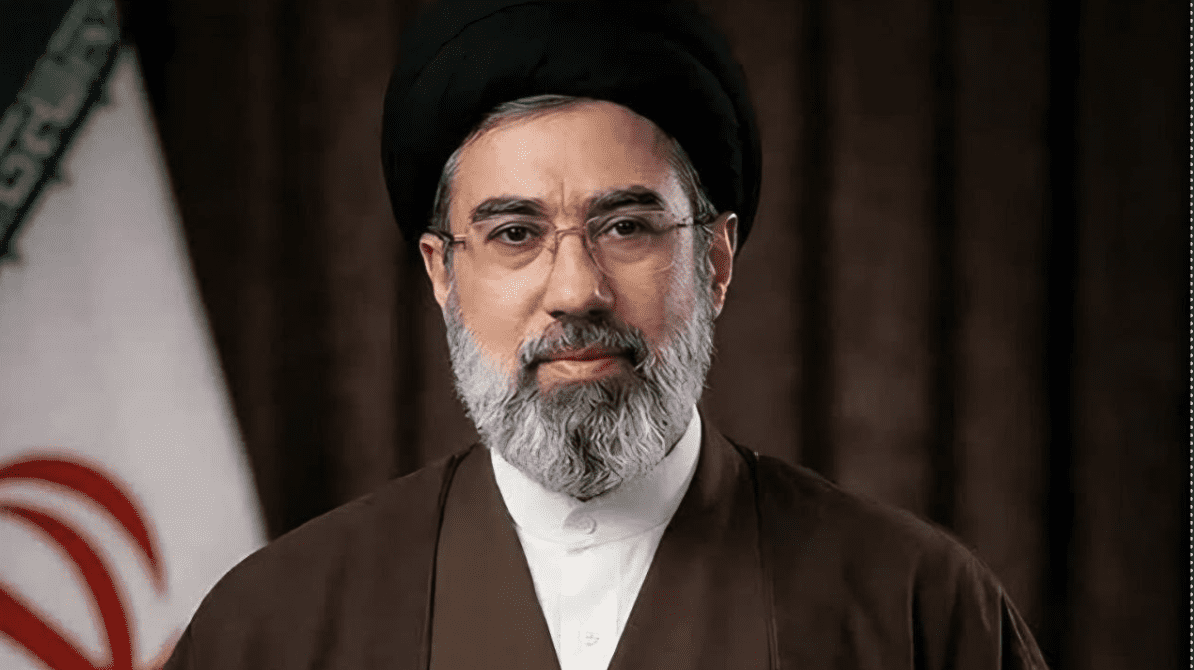
Verified information within Iran suggests that Mojtaba Khamenei effectively has no role in the leadership structure of the Islamic Republic
With each passing day, doubts and speculation surrounding the existence of a leadership under Mojtaba Khamenei continue to intensify. While earlier information published by The Media Line indicated that he had been severely injured and hospitalized in the intensive care unit of a secret Islamic Revolutionary Guard Corps compound, new information that has been verified after several days, despite the complete internet blackout in Iran, suggests that Khamenei effectively has no role in the leadership structure of the Islamic Republic.
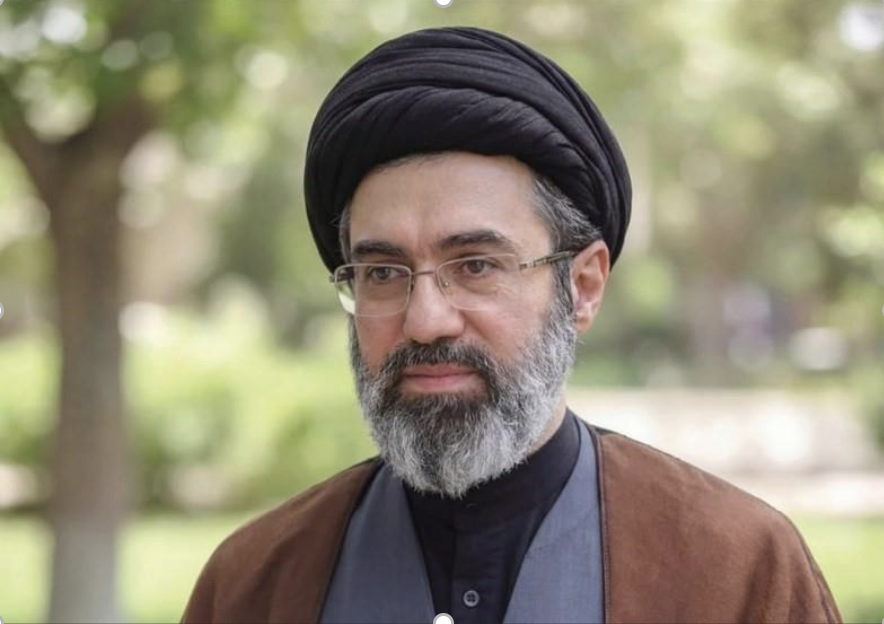
Verified information within Iran suggests that Mojtaba Khamenei effectively has no role in the leadership structure of the Islamic Republic. (Tasnim)
In addition, an informed source at Sina Hospital, the initial location to which he was transferred after the attack on the leadership compound on Feb. 28, told The Media Line that the possibility of Khamenei surviving missile strikes that “reduced everyone present in the leadership compound to ashes” resembles more of a miracle than reality.
Nevertheless, multiple accounts exist regarding his transfer to Sina Hospital, major surgery, and even a missile strike on that hospital itself, followed by his relocation to another secret hospital. Combined with intelligence released by the United States and Israel, these accounts suggest that Khamenei at least survived the first days following the attack on the leadership compound.
However, in recent days, numerous rumors have once again spread in Tehran claiming that he is dying. Some even say the regime is preparing its supporters for the announcement of his death. Reports published by various sources, including the director of Sina Hospital and surviving officials from the leadership compound, which described his injuries as superficial wounds, appear so unrealistic, particularly given that no image or even voice of the absent leader has been released, that they have fueled further doubts about whether Khamenei is actually alive.

Unlike his father, Mojtaba Khamenei has no executive background, and his influence within the Revolutionary Guards and the security apparatus has declined in recent years. He also lacks any real understanding of Iran’s contemporary, diverse, and at the same time deeply hypocritical society, having spent virtually his entire life within religious seminaries. (ATTA KENARE/AFP via Getty Images)
But even assuming Khamenei is alive and physically present in the leadership arena, the nature of his views is completely different from—and even more reactionary than—those of his father. This difference in outlook became so significant that it even drew the attention of American lawmakers during a congressional questioning session with the commander of CENTCOM, Brad Cooper.
Unlike Ali Khamenei, who, during his youth and middle age, associated with intellectuals, artists, and literary figures and claimed expertise in Persian literature, Mojtaba Khamenei is deeply dogmatic, closed-minded, and backward-looking. He represents the continuation of the clerical tradition that, after the establishment of the Islamic Republic, produced a generation of clerics fundamentally different from the first generation of clerics who rode the wave of the 1979 revolution, seized the leadership of the new regime from others, and consolidated their rule through deception, manipulation, repression, and mass killings.
Ali Khamenei, unlike the well-known clerics of 1979, was known only in his birthplace and hometown, Mashhad, within religious circles opposed to the Shah’s government. However, his longtime associate Ali Akbar Rafsanjani, who was close to Khomeini, brought him to Tehran and into the Revolutionary Council to leverage both his oratory skills and his connections with various political groups. For years, Khamenei maintained ties with the Tudeh Party and the Fadaian (Majority) Organization, both of which provided him with reports about opposition activities until the Islamic Regime eventually decided to suppress these pro-Soviet groups as well.
He was also a more effective speaker than many other clerics, yet deeply vindictive and inflexible. His appointment as leader—considering his executive background, his influence within the Revolutionary Guards, and efforts led by Rafsanjani to unify the regime’s competing factions—was a move that secured the survival of the government after Khomeini’s death.
Mojtaba Khamenei is an entirely different figure. While Ali Khamenei claimed education in Iranian literature and contemporary poetry, and although many people and intellectuals considered Khomeini’s speeches incomprehensible, after Khomeini’s death, the regime published a volume of poetry and claimed he had written the poems. Khomeini’s unfamiliarity with poetry and literature was so obvious that few believed it, but the episode demonstrated how regime propaganda attempts to portray the leader of the Islamic Republic as a cultured intellectual.
Throughout his life, Mojtaba Khamenei has had no association with artists or intellectuals. Even the literary style of the few surviving speeches or writings attributed to him from earlier years is entirely clerical in tone. He is fundamentally alien to Iran’s social culture and has grown up inside a religious bubble. Moreover, despite his previous influence within the security, intelligence, and Revolutionary Guard apparatuses, he has in recent years been pushed to the margins and occupied with religious seminary activities.
Unlike his father, he lacks speaking skills, is extremely shy and socially withdrawn, and some domestic and foreign sources have claimed that he also has homosexual tendencies—something that is not uncommon among clerics in Iran.
These striking differences from his father make it highly advantageous for the Revolutionary Guards, assuming Mojtaba Khamenei remains alive, to exploit the absence of a leader. Unlike his father, he has no executive experience or command over current affairs and can easily reproduce whatever directives the Revolutionary Guards dictate. Nevertheless, very few people believe he actually writes his own statements.
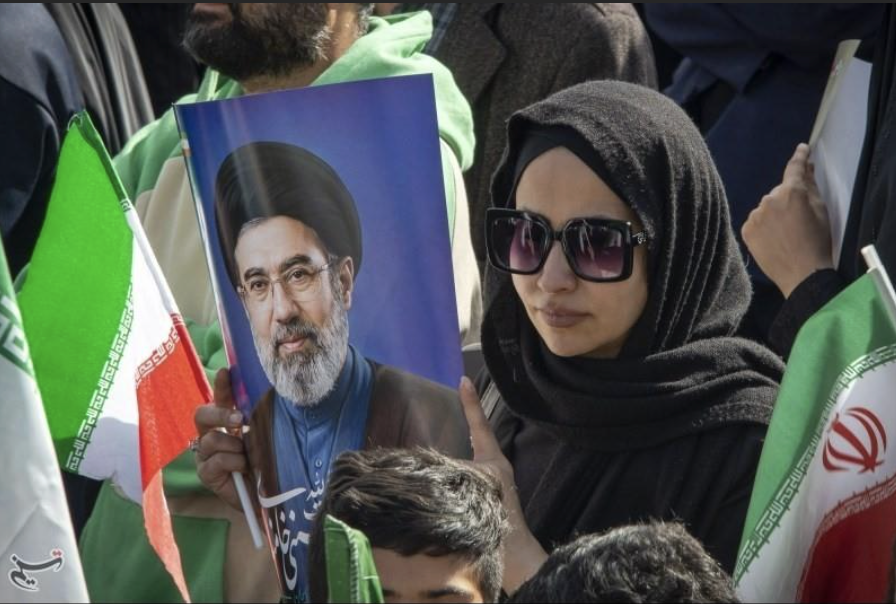
An informed source told The Media Line that, in reality, no individual leader exists, and that a five-member council, in coordination with the heads of the three branches of government, makes the principal decisions, while Khamenei’s office writes texts and statements attributed to him in place of an actual leader. (Amir Sadghian/Tasnim)
The Media Line previously published a report about Mojtaba Khamenei’s first statement following his appointment to leadership and exposed its bizarre mistakes, showing first that the statement was clearly not written by a single person, and second, that it contained glaring textual and spelling errors, indicating that its authors did not even have time to proofread it.
See related story: Errors in Mojtaba Khamenei’s First Message Dictated by IRGC Raise Questions About His Condition
We also know that the Assembly of Experts played no meaningful role in elevating Mojtaba Khamenei to leadership, and evidence of Ali Khamenei’s opposition to his son succeeding him and to the hereditary transfer of leadership had already been released by individuals close to the former leader of the Islamic Republic.
An informed source who until recently maintained close ties with the regime’s military apparatus, but has since distanced himself from it, told The Media Line, despite the difficulties of communicating with Iran: “Mojtaba Khamenei is a fabricated leader created by the Revolutionary Guards. In reality, there is no such thing as a leader in the political or religious sense. The Revolutionary Guards are the ones running the country.”
According to this source, all decisions related to leadership are made by a five-member council within the Revolutionary Guards, composed of Ahmad Vahidi, the commander of the Revolutionary Guards, and four other commanders and officials representing the military structure: intelligence (the three-member deputies’ council), the Quds Force (Qaani), the ideological-political division (Shahroudi), and the commander of the Khatam al-Anbiya Headquarters (Abdollahi Aliabadi).
The new leadership office, headed by Mehdi Khamoushi, a former official in Ali Khamenei’s office, is responsible for attributing the decisions of this five-member council to the leader while consulting with some of the regime’s principal figures, such as Parliament Speaker Mohammad-Bagher Ghalibaf and Chief Justice Gholam-Hossein Mohseni-Eje’i, and in a limited number of cases, President Mahmoud Pezeshkian or his deputy Mohammad Reza Aref.
However, according to this source, the regime, as a religious government, cannot sustain this situation in the medium term. Yet the continuation of wartime conditions allows it, for now, to continue governing under an absent leader.
The concept of an absent leader or hidden imam is not unfamiliar within Shiite culture. Even in contemporary history, Massoud Rajavi, the leader of the religious organization rivaling the Khomeini-Khamenei faction, has also been absent for more than two decades. Although many believe he has been killed or has died, supporters of the Mujahedin-e Khalq still cite his statements, declarations, and even audio messages. Nevertheless, for some who were familiar with his voice in the early 1980s, both his voice and his language now sound entirely different.
The Islamic Republic likewise appears to have copied this method from its rivals.
Even assuming Mojtaba Khamenei emerges from the shadows in the coming months and the government, after several months, manages to bury ashes presented as the remains of its deceased leader, he will never become a leader like his father.
He has no influence within the government, the religious establishment, or, above all, the Revolutionary Guards, which have effectively seized complete military control of the state. Rather, he is merely a puppet of the Revolutionary Guards.
As a result, his leadership in a government that claims to represent Shiism carries neither religious nor political legitimacy.