“It’s an ideal time for Saudi Arabia because of the Hajj season, and an ideal time for the United States because of the FIFA World Cup,” Mahdi Ghuloom, a Bahraini analyst, told TML
[ISTANBUL] A 60-day ceasefire extension and a framework deal between the United States and Iran are nearly complete. The agreement would restore the number of ships transiting the Strait of Hormuz to prewar volumes within 30 days, require Washington to lift its naval blockade of Iranian ports within the same period, and release part of Iran’s frozen funds in the first phase, according to Iran’s semiofficial Tasnim news agency.
Iran would continue to exercise sovereignty over the strait “in various ways,” Tasnim said, and any reopening would depend on Washington meeting other commitments in the proposed memorandum of understanding. Tehran’s position on its stockpile of highly enriched uranium remained unresolved Sunday. Iranian outlets said the nuclear issue fell outside the initial framework. Tasnim, citing an informed source, said Pakistani mediators warned that the memorandum of understanding could fail if Washington continued to obstruct.
President Donald Trump posted on Truth Social Sunday that “final aspects and details of the deal are currently being discussed, and will be announced shortly,” and said the agreement was “largely negotiated.” Qatari Emir Tamim bin Hamad Al Thani publicly endorsed Pakistan’s mediation in a Saturday phone call with Trump. Pakistan’s Defense Minister Khawaja Asif told Geo News the effort was “moving towards a positive outcome.” Turkish President Recep Tayyip Erdoğan said Ankara was ready to support a deal.
The Gulf has not been a stakeholder in the deal negotiations
“It’s an ideal time for Saudi Arabia because of the Hajj season, and an ideal time for the United States because of the FIFA World Cup,” Mahdi Ghuloom, a Bahraini analyst at the Observer Research Foundation Middle East in Dubai, told The Media Line. “But the concern is that the interests of the Gulf have never really been in the full picture of the Trump administration, and not just in terms of starting the war, but the way that the Gulf has not been a stakeholder in the deal negotiations.”
He continued, “Iran has been experimenting with testing what threshold it can push in attacking the Gulf without breaking down the ceasefire. Iran has, unfortunately, played its cards very well in leveraging the Hormuz Strait. It’s not very clear that the strait will return to prewar levels in terms of free flow of goods.”
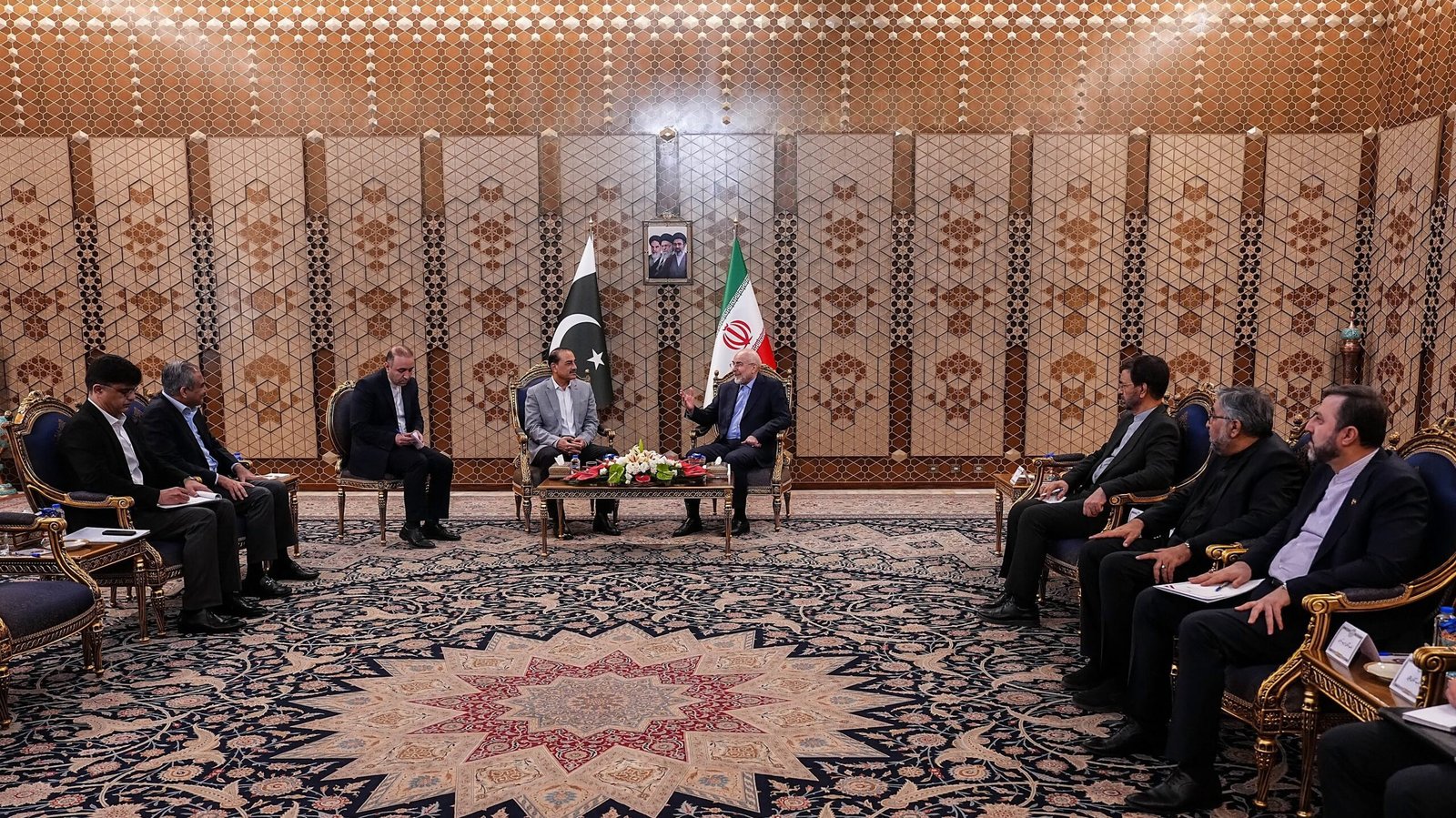
Prime Minister Shehbaz Sharif of Pakistan posted on X Sunday that his country hoped to host the next round of talks “very soon,” before arriving in Beijing with Foreign Minister Ishaq Dar for a four-day visit. Pakistan’s army chief Field Marshal Asim Munir met Iran’s Foreign Minister Abbas Araghchi in Tehran on Friday, with a Qatari delegation arriving the same day in coordination with Washington.
Iranian hard-liners pushed back. The commander of the Basij Mohammad Rasulullah Corps in Tehran, the paramilitary force under Iran’s Islamic Revolutionary Guard Corps (IRGC), warned in a televised interview that if the enemy “makes a mistake,” the armed forces would respond “harder, more painfully, and more decisively than before.”
[The Strait of Hormuz] will not return to its previous state
An IRGC statement Saturday again named “the destruction of Israel” among its forthcoming objectives. Iranian parliamentarian Ali Khazaei said the Strait of Hormuz “will not return to its previous state.” Hossein Shariatmadari, editor of the hard-line Iranian daily Kayhan, said Tehran retained “the right to charge tolls on ships in the Strait of Hormuz.” Iranian President Masoud Pezeshkian said Sunday that Iran would take no major decision outside the Supreme National Security Council or without the approval of Supreme Leader Mojtaba Khamenei. US and Israeli strikes killed his father, Ali Khamenei, on February 28; Mojtaba succeeded him on March 8.
On May 5, Iran launched the Persian Gulf Strait Authority, which requires ships to submit a 40-question permit form and pay fees of up to $2 million before transit, according to an analysis by Frédéric Schneider on Wednesday for the Middle East Council on Global Affairs in Doha. Iran’s parliament is advancing a Hormuz sovereignty bill to write the permit system into domestic law. The US Treasury Department has warned that submitting the form may expose shipping companies to sanctions. Forty-five ships have crossed the strait since the April 8 ceasefire, roughly 3.6% of the prewar monthly average, Schneider wrote.
Araghchi has spoken of reopening “with technical constraints,” a reference to the naval mines Tehran laid in the strait during the war. US assessments put the number between 10,000 and 12,000; Iranian figures suggest about 5,000. Iran itself does not know where all the mines sit. Britain’s Armed Forces Minister Al Carns boarded the RFA Lyme Bay in Gibraltar this week, where Royal Navy sailors are loading mine-hunting sea drones equipped with sonar for an international clearance operation led by the United Kingdom and France. The mission cannot deploy until a peace agreement is reached.
Pakistan, Qatar, Saudi Arabia, Egypt, and Turkey have signed on as guarantors of the deal. Saudi Arabia and Qatar have publicly endorsed Pakistan’s role; the United Arab Emirates has not. Abu Dhabi said this week that the drones striking its Barakah nuclear power plant last Sunday flew from Iraqi territory, with Iranian-backed militias the likely perpetrators.
Qatar took a public role despite Iran’s March strike on Doha. “Iran’s attack violates the core principles of stability within the region,” Prof. Steven M. Wright of the Qatar Leadership Centre in Doha told The Media Line. A UAE security source said on background that Qatar’s vulnerability to Iran and lost gas revenue drove its push to mediate.
The UAE defense ministry said Iran fired more than 550 missiles and 2,200 drones at Emirati territory during the war. On May 7, the ministry disclosed an Egyptian Air Force Rafale detachment based in the UAE, where UAE President Mohammed bin Zayed Al Nahyan and Egyptian President Abdel Fattah el-Sisi inspected Egyptian pilots in an Abu Dhabi hangar. Cairo rarely stations fighter aircraft abroad. Days later, Netanyahu’s office announced that the Israeli prime minister had paid a secret wartime visit to the UAE and met Al Nahyan, calling the trip a “historic breakthrough.” The UAE called the report “entirely unfounded.”
Saudi Arabia and Iran kept coordinating on the Hajj. Saudi Interior Minister Prince Abdulaziz bin Saud, who chairs the kingdom’s Supreme Hajj Committee, met Iran’s Hajj head Alireza Rashidian in Jeddah on May 20. Iran will send about 30,000 pilgrims on direct flights this season, a third of its 87,550 quota. The Saudi Ministry of Hajj said Iranian pilgrims would be “generously welcomed.” Hajj begins in mid-June. Iran’s national team will also play at the FIFA World Cup, which opens the same week across the United States, Mexico, and Canada and runs through July 19. Twelve Muslim-majority countries qualified, including Iran, Saudi Arabia, Qatar, Egypt, Morocco, Algeria, Tunisia, Jordan, Iraq, Senegal, Turkey, and Bosnia and Herzegovina. Iran plays Egypt in the group stage.
Egypt’s Foreign Minister Badr Abdelatty spoke with Araghchi on Friday and Saudi Foreign Minister Prince Faisal bin Farhan on Saturday. Both warned against “uncalculated escalation,” the Egyptian foreign ministry said. The White House said Friday that President Trump would return to Washington after his New York speech rather than spend the weekend at Bedminster.
“The leadership you are now dealing with is the direct cost of an attempted and failed regime change,” retired Lt. Gen. Muhammad Saeed, the Pakistan Army’s chief of general staff until 2023, told The Media Line. “New people are taking the decisions. Earlier, the leadership had decades of experience in statecraft. In a highly centralized system, the consultations are not that wide.”
Tehran’s new leadership “has hardly any experience of statecraft and difficult foreign policy decisions,” Saeed said. “If the IRGC is dictating them, given that special forces worldwide and particularly the IRGC have a particular mindset, they are not going to back down from new demands.” Any settlement, he added, “has to be structured in a manner that does not constitute total surrender for the Iranian state.”
“Pakistan will be mediating as of today and in the future also,” Saeed said. “But on the guarantees the Iranians are seeking, no war in the future, no coercion, no sanctions, China would be in a better place to seek those guarantees for Iranians.” On the nuclear question, he added, “China might be persuading Iranians to come to some understanding on the future of their nuclear program, perhaps on US and Western terms.”
The Saudi daily Okaz reported Friday that Pakistan is counting on Beijing to push the agreement and that Iran’s highly enriched uranium remains the central question. A Pakistani source quoted in the report described the framework as “a phased agreement between the two parties” and said, “reducing the gaps is not easy because both parties have a high ceiling of demands.”
“Iran has very difficult relations with every state in the Middle East,” Saeed said. “They will take a long time to reset every country in the region. Whatever they had through China’s intervention with the Saudis is now out of the window.”
Ajay Bisaria, former Indian High Commissioner to Pakistan, wrote in The Tribune on May 15 that Pakistan’s army claims Munir has “skillfully made Pakistan relevant again to its three principal benefactors: the US, China, and Saudi Arabia.” Bisaria added that Munir now accumulates roles “military supremo, chief economic planner, chief regional peacemaker that in a functioning state would be distributed across accountable institutions.” Israeli officials have questioned Pakistan’s credibility. In April, after Asif called Israel “cancerous” and “a curse for humanity” on X, Israeli Foreign Minister Gideon Sa’ar called the comments “blatantly antisemitic.”
Sen. Lindsey Graham of South Carolina, a Trump ally and longtime Iran hawk, told the Senate Appropriations subcommittee on May 12 he did not “trust Pakistan as far as I can throw them” and called for replacing Islamabad as mediator. Graham warned on X last Sunday that any deal perceived as strengthening Tehran could embolden Hezbollah in Lebanon and Shia militias in Iraq and leave Gulf oil infrastructure vulnerable.
Harsh V. Pant, head of foreign policy at the Observer Research Foundation in New Delhi, told The Media Line that the Pakistani military’s role as a mediator serves its domestic political needs. “There is a defense policy problem wherein the military wants to rule in Pakistan, and for that, they need to always make India the bogeyman.” Pakistan’s role as a mediator would not last beyond President Trump, Pant said, and US-India ties would eventually return to form.
Pakistan, which buys 90% of its fuel from the Middle East, is running through its emergency cash reserves. The reserves will fall to $6.8 billion by year-end, and the war could collapse the $7 billion International Monetary Fund loan that has kept Pakistan afloat. Pakistani economist Kaiser Bengali told Al Jazeera the country is “in a state of absolute dependency.”
No one has really come out of this as a winner
“No one has really come out of this as a winner,” Ghuloom concludes. “Iran has suffered many losses politically, including its supreme leader, many commanders and political figures, and now has to focus domestically to ensure that people are at least appeased to a certain extent and not risk another uprising. For the US, its objectives have not been achieved in the way it wants to. For Israel, I wouldn’t rule out a continuation of war in the near future or some distant future.”