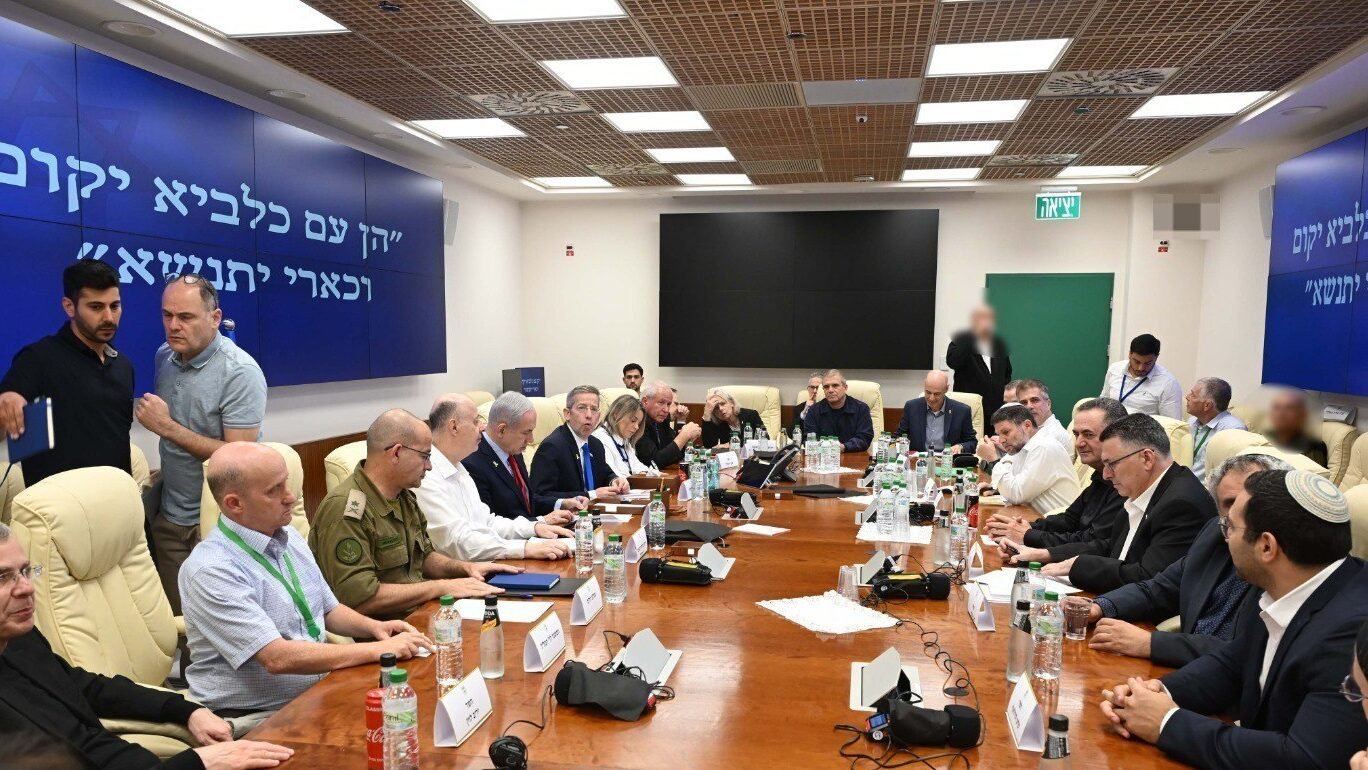
Prime Minister Benjamin Netanyahu will convene a limited security cabinet meeting Sunday evening to discuss the emerging US-Iran agreement, amid Israeli concerns over provisions in the proposed memorandum of understanding that would halt fighting with Hezbollah and delay detailed nuclear negotiations.
An aide to one of the ministers attending the meeting confirmed the gathering to The Times of Israel, adding that a time had not yet been set.
According to Kan, Netanyahu is concerned about at least two elements of the proposed arrangement: a requirement to end military operations against Lebanon and the postponement of substantive discussions regarding Iran’s nuclear program until a second phase of negotiations.
The memorandum of understanding under discussion would extend the ceasefire for 60 days and require Iran to reopen the Strait of Hormuz, while the United States would end its naval blockade. During the 60-day period, the US would discuss lifting sanctions against Iran, while American troops would remain in the region until negotiations conclude.
Fighting between Israel and Hezbollah would be halted according to the agreement, although Israel would retain the ability to respond militarily if Hezbollah launches attacks.
Israel was not included in Saturday’s “phone summit” involving the United States and leaders from Saudi Arabia, Qatar, the UAE, Bahrain, Kuwait, Oman, Egypt, Jordan, and Turkey regarding the updated memorandum of understanding. Reuters reported that Pakistan also participated in the call.
Israeli broadcaster N12 reported that Netanyahu believes the proposal could be unfavorable to Israel. An Israeli official cited in the report said US special envoy Steve Witkoff strongly supported the agreement and “wants a deal at almost any price, and is placing immense pressure on Trump not to resume the war.”
Two American officials told The New York Times that Iran had agreed as part of the developing arrangement to relinquish its stockpile of highly enriched uranium.
According to the report, the proposal does not specify how Tehran would surrender the material, and discussions on implementation were postponed to the next round of nuclear talks.
The report said Iran initially resisted including uranium provisions in the first stage of the agreement, but American officials conveyed through intermediaries that military operations would resume without such an understanding.