These days, one would be forgiven for forgetting that SpaceX is, at its core, a rocket company.
Consider the company’s mega deals over the last year. SpaceX paid $17 billion—more than it has spent developing every one of its rockets—to EchoStar for wireless spectrum to boost its Starlink network. It revealed plans to launch 1 million orbital data centers. SpaceX merged with xAI in a deal that valued Elon Musk’s artificial intelligence firm at $250 billion, and it announced plans to become a major computer chip manufacturer. And earlier this month, SpaceX sold an enormous amount of ground-based compute to Anthropic.
As a result of all this activity, an impending IPO will value the company at something like $1.5 or $2 trillion. That’s trillion, with a t.
So yes, one might reasonably ask what SpaceX does these days. Because all the buzz, all the Wall Street euphoria, and all the financial frisson are only tangentially related to what SpaceX cut its teeth on during its first 25 years: becoming the globally dominant player in launch. It largely concerns telecommunications and AI data services.
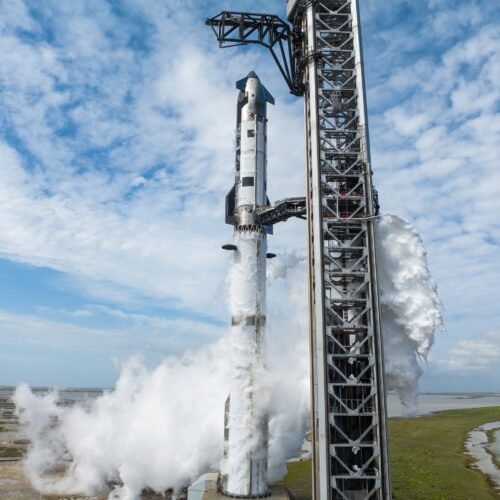
And yet everything SpaceX aspires to accomplish in the next quarter of a century, all of its enormous valuation, is predicated on a new launch vehicle. A rocket that, to date, has a decidedly mixed record of success. A rocket that has not flown in seven months. A rocket that, finally, may return to the skies on Wednesday.
We are speaking, of course, of Starship—a truly revolutionary rocket. If it works. And after a long period of development and three years of test flights and setbacks, it kind of has to.
“Test Like You Fly”
A few weeks ago, SpaceX released a visually stunning video that takes viewers inside its massive new Starfactory in South Texas and provides up-close views of its rockets and engines.
The “Test Like You Fly” video also outlines the development of the third iteration of the Starship rocket, V3, highlighting both advances and setbacks encountered along the way. SpaceX is distilled to its core as the exceptional engineers who are designing and testing a radically new rocket talk about the very difficult problems they’re trying to solve.
“We are not breaking laws of physics; we are just trying to leverage them as effectively as we can,” explains Jacob McKenzie, the company’s vice president for the Raptor rocket engine that powers both the first and second stage of Starship.
McKenzie says SpaceX built 600 Raptor engines as part of its V2 Starship program, a remarkable number that underscores the investment the company is making to develop a rocket that has yet to reach orbit or deliver a single payload. (To put this into perspective, NASA is spending $3.5 billion to procure two dozen comparably powered, expendable rocket engines.)
By some estimates, SpaceX has now invested $15 billion in the Starship rocket program over the last decade, funding 11 test flights, a sprawling spaceport in South Texas, a massive new factory there to support a high production rate, and expanding facilities in Florida alongside the company’s existing infrastructure in the state.
It has not gone particularly smoothly. The company conducted its initial Starship test flight in April 2023. I’m not sure anyone expected that, three years and nearly a dozen flights later, the company would still be firmly in test mode.
But it turns out that building the world’s largest and most powerful rocket and optimizing it for rapid reuse is a difficult, time-consuming task. Even for a company that prides itself on moving fast and trying to achieve the near impossible.
A very difficult 2025
SpaceX performed six test flights in 2023 and 2024, and by November of the latter year had made substantial progress. The company demonstrated the ability to launch and capture the Super Heavy first stage and completed a safe flight of the upper Starship stage, including re-lighting its Raptor engine in space, before making a controlled splashdown in a precise location.
That month, the then-general manager of the Starbase facility in South Texas, Kathy Lueders, said the company aimed to dramatically increase the vehicle’s launch cadence in 2025. “Elon would say, next year, he would love to have us have 25 missions a year,” she said during a community event. The company also planned to “capture” a Starship upper stage and conduct an orbital refueling test in that time frame.
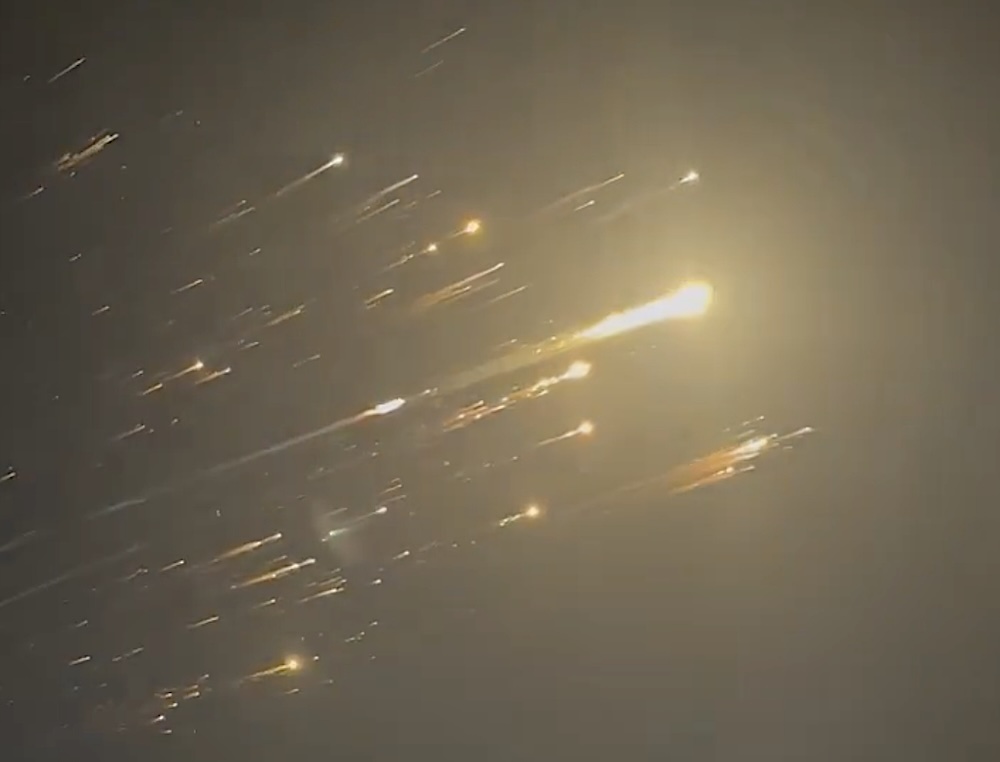
None of that happened.
The first half of 2025 was a disaster for the program. During three consecutive flights, SpaceX lost control of the Starship vehicle during ascent, often showering debris below. No one on the ground was injured, but the reentering pieces of Starship made for powerful imagery, and not in a good way for the company. The third flight of the year, the program’s ninth overall, represented a nadir for the program. In this May 27th flight, not only was the upper stage lost, but the Super Heavy booster stage also failed to make a safe return.
After standing down for three months, SpaceX returned and completed two largely successful flights of its V2 Starship before the end of the year. This provided valuable data to inform the ongoing development of the newer V3 rocket.
Even though Starship would fly no more in 2025 after the fifth flight in October, there were still setbacks. In November, during a test to ensure the V3 booster could hold pressure, the vehicle unexpectedly exploded. This booster was lost. It seemed like a fitting end to a challenging year.
This year starts slowly
Since its most recent test flight seven months ago, SpaceX has focused on building a second launch tower at Starbase with more rugged ground systems while completing the development of the V3 vehicle for flight. Time has slipped away as the launch team has encountered more issues; winter tumbled into spring, and now summer is mere weeks away.
In early February, the next V3 booster successfully passed pressure testing. After it was moved to the launch pad, SpaceX planned to ignite 10 engines up to full power. But just after ignition, due to an automatic abort from the ground systems, a hard shutdown was commanded. This ended up damaging half of the Raptors.
Then, in mid-April, the company moved this booster with a full complement of 33 engines to the launch pad for another static fire test. This time, a ground-side sensor reported an issue with pressure in the manifolds, which distribute propellant to the vehicle. This may have been a spurious reading, but it ended the test early, just 1.88 seconds after ignition.
The company finally completed a successful, full-duration static fire test in early May.
“This is such a wild ride,” said Jenna Lowe, senior manager of Starship operations, in the new video. “The highs are high. The lows are low.”
The new rocket
In many ways, this is a brand new rocket. It incorporates hundreds of lessons learned from V1 and V2 of the vehicle and seeks to improve overall performance, reliability, and robustness. This is the vehicle that should hopefully allow SpaceX to start deploying large Starlink satellites into orbit and demonstrate in-space refueling that is critical for NASA’s Artemis Moon goals.
For the booster stage, the changes begin at the bottom and continue all the way to the top.
SpaceX says that for this third version of the Raptor rocket engine, it has reduced the mass to 1,525 kg from 1,630 kg and that overall vehicle-level mass savings are nearly 1 ton per engine through simplification of the engine itself, vehicle-side commodities, and supporting hardware. The entire fuel transfer system has been redesigned. This should be more reliable and will allow simultaneous startup of all Raptors.
The number of grid fins has been reduced from four to three, and they have been lowered on the vehicle to protect them during hot staging—when the Starship upper stage ignites its engines while still attached to the booster stage. The ring hardware to support this hot staging is now integrated into the booster stage, so it will be reusable.
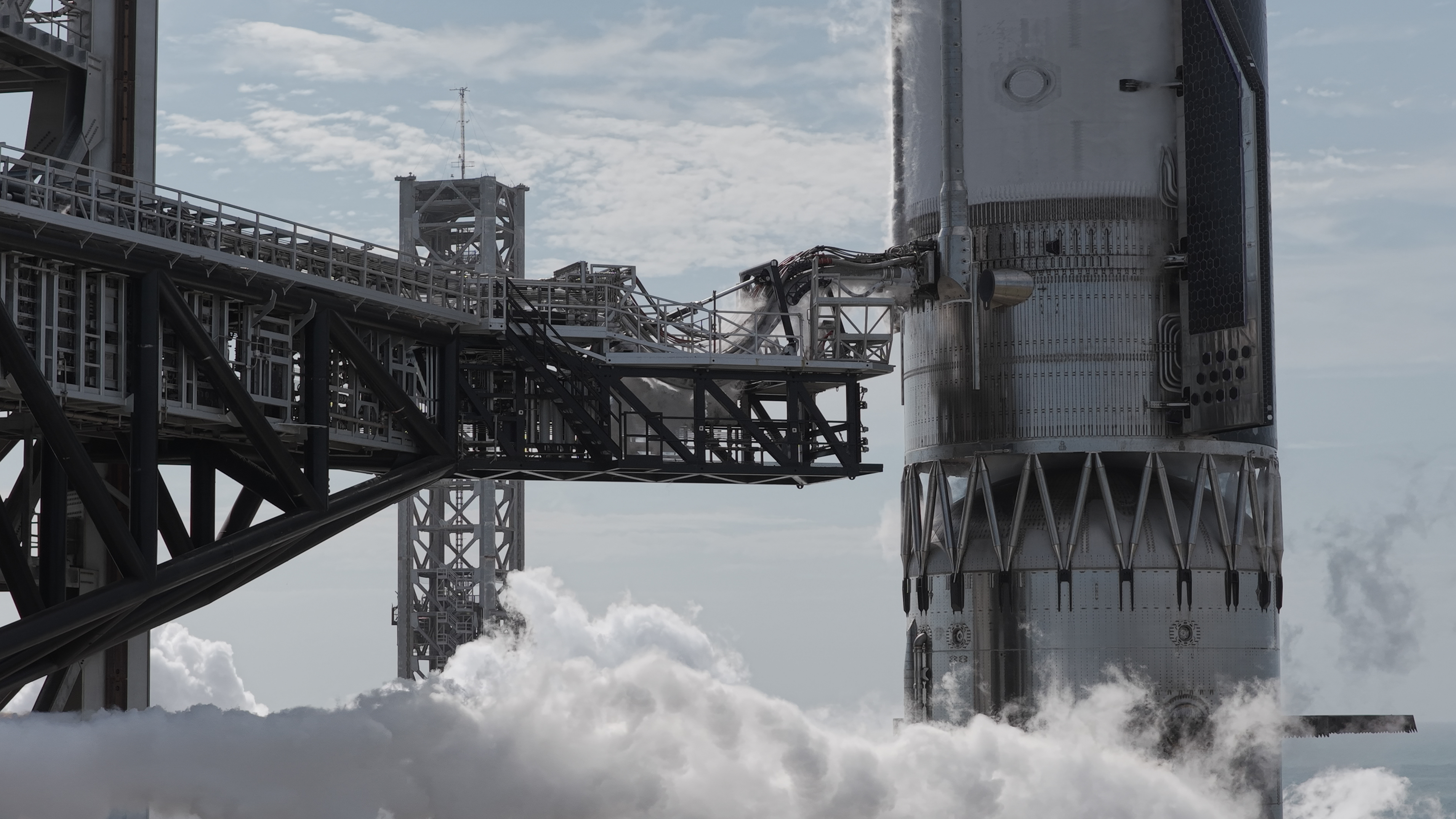
For the Starship upper stage, SpaceX has done a “clean sheet” redesign of the propulsion system, which was so problematic during the vehicle’s V2 flights.
“These changes enable a new Raptor startup method, increase propellant tank volume, and improve the reaction control system used for steering while in flight,” the company said. “The propulsion updates also reduce contained volumes in the aft end of the vehicle that could trap propellant leakage.”
SpaceX has also built a new and improved launch pad, with larger propellant storage capabilities that should support faster fueling operations.
The upcoming V3 test flight is significant in that it will put all of these changes and their integration into a new rocket and launch pad to the ultimate test. If things go badly, it could spur a repeat of 2025 at a time when SpaceX (becoming a public company) and NASA (in a tight race with China back to the Moon) can ill afford further significant delays.
Falcon 9, it’s time?
Teething challenges notwithstanding, SpaceX is increasingly counting on Starship to be the bedrock of its launch initiatives.
After conducting 165 Falcon 9 launches last year, the company anticipates flying the workhorse rocket fewer times this year. SpaceX has also stopped flying the Falcon 9 from one of its two Florida pads, Launch Complex-39A at Kennedy Space Center. This facility will now focus on Starship launches.
Additionally, last month, SpaceX retired one of its two Florida-based seagoing landing platforms from service for future use as a transporter to ferry Starships and Super Heavy boosters from SpaceX’s factory in South Texas to Florida.
This is a bold bet because, after a decade and a half, the Falcon 9 has become the most successful launch vehicle in the world, setting records for reuse, longevity, price, and cadence. Because of its reusable first stage and payload fairing, SpaceX has pared back internal launch costs to about $15 million. This affords the company a huge advantage over Starlink competitors who, for a similar launch capability, must pay four to six times this amount. SpaceX charges a base price of $74 million for a Falcon 9 launch to external customers.
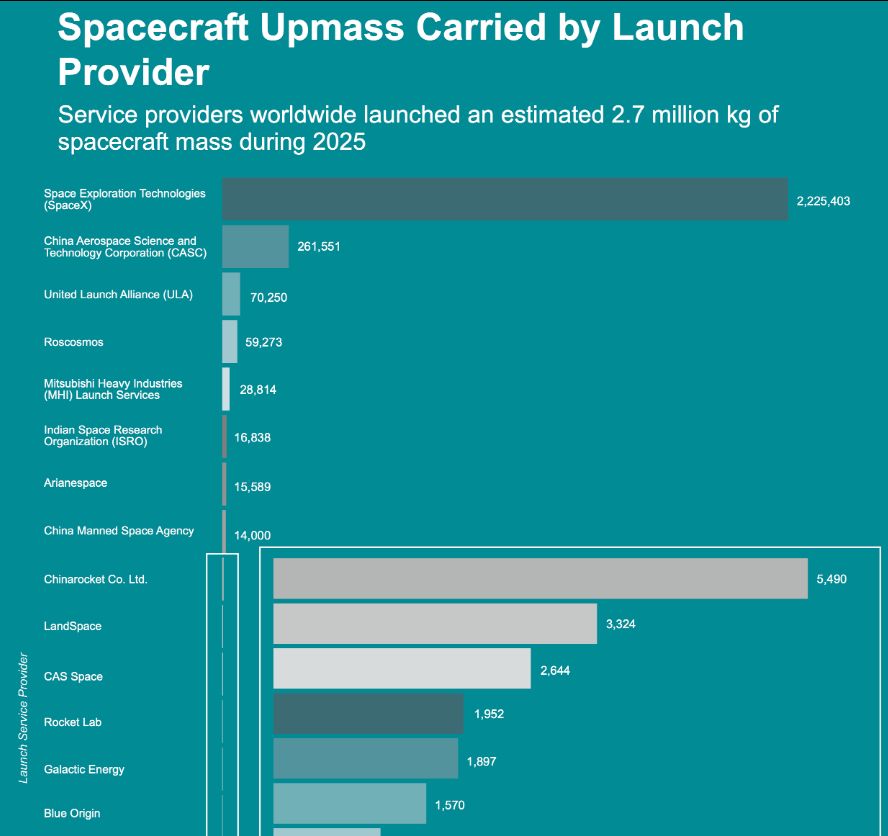
Even so, the company has no lack of takers. The Falcon 9 remains the most in-demand rocket in the Western world as competitors like United Launch Alliance’s Vulcan rocket (side-mounted boosters) and Blue Origin’s New Glenn (upper stage) have seen their cadence slowed by technical issues. Arianespace has had better success with the new Ariane 6 rocket, but it’s only targeting a cadence of six to eight launches a year. There is little capacity left for any of these vehicles for the remainder of the decade.
Newer medium-lift vehicles, such as Rocket Lab’s Neutron or Relativity Space’s Terran R, are likely at least 12 months from their debuts and then will require years to scale up to a higher cadence.
Despite its high flight rate, the Falcon 9 manifest is largely filled out for the next two years. The market, quite simply, is consuming available launch capacity faster than it is being created. So as much as SpaceX wants to obsolete the Falcon 9 rocket, it remains essential to almost everyone outside of China and Russia.
Waiting for Starship
Many other people are counting on Starship beyond the walls of the Starfactory in South Texas.
Tom Patton, an author at The Journal of Space Commerce, recently wrote about the need for Starship to reach a “commercial” cadence for many space businesses to achieve their aims. These space companies, particularly those interested in large constellations of orbital data centers and other satellites, are basing their business models on a commercially available Starship.
The promise of a commercial Starship is twofold. First, it will ease the current launch-capacity crunch by carrying several times the mass of a Falcon 9 payload in a single mission. And second, its price is potentially much sweeter. The Falcon 9 rocket brought launch costs per kilogram down into the low thousands of dollars. Starship could bring them into the low hundreds of dollars, nearly an order of magnitude.
But first, Starship V3 must fly successfully and then become orbital. After that, SpaceX will begin deploying its larger Starlink satellites and start working toward orbital refueling. NASA then has dibs on lots of flights in 2027 and 2028 when Starship is slated to fly as part of Artemis III, make a demonstration landing on the Moon, and then fly an actual lunar landing with humans. Including refueling launches, this accounts for dozens of missions, and the company has recently signaled to NASA that it will prioritize the government program.
So where does that leave customers beyond NASA and SpaceX’s internal Starlink payloads? Patton estimates that Starship may not become widely available for commercial purposes until 2028 or 2029.
SpaceX could beat that estimate, of course. Wednesday’s flight of V3 could knock it out of the park. SpaceX has been building the capacity to mass-produce Starships and fly them frequently. If everything goes well, the company could reach a sub-monthly launch cadence before the end of this year. But what if something goes wrong? Everything just slips further into the future.
So the stakes surrounding this Starship launch are really quite high. The US commercial space industry is depending on lower launch costs and higher capacity. NASA’s lunar ambitions, to a great degree, hinge on its success. And the stakes are highest of all for SpaceX.
Starlink direct-to-cell? Orbital data centers? SpaceX’s fantastic valuation after its IPO? An eventual city on Mars?
All of these rely entirely on Starship fulfilling its promise of rapid, low-cost, reusable launch. Starship must not just work; it must work far, far more efficiently than any rocket ever built, while simultaneously being the most colossal thing our species has ever launched into space.