Russia’s inability to conquer Ukraine is spurring unusually harsh public complaints over both the lack of military progress and the growing economic costs of the war, a pair of failures being blamed on President Vladimir Putin’s leadership.
The damage caused by bombardments by low-flying armed drones hitting targets deep into Russian territory has brought the reality of the conflict to places that had seemed beyond direct effects of the war. Attacks on oil infrastructure and other industrial facilities forced the government to search for ways to defend areas that had been thought safe.
A war that was supposed to be over in a few days but has instead lasted longer than Russia’s four-year involvement in World War II is inciting bouts of mutual recrimination among government officials.
Close Russian observers of military affairs blame the country’s misfortunes on arrogance and disdain for the enemy. “The main mistake was that the intelligence services believed that Ukrainian state institutions were weak and corrupt,” suggested Russian military journalist Andrei Soldatov. “Nor did they anticipate the reaction of Ukrainian society in general.”
Yuri Kotenok, a prominent Russian war correspondent, added that excessive self-confidence led leadership to ignore visible deficienies of Russia’s armed forces: “Our level of planning, intelligence, and coordination is still far below par and something needs to be done about it,” he wrote.
Dissatisfaction has moved from punditry into general public opinion. Victoria Bonya, an exiled former reality TV star, created a sensation when she issued a detailed complaint about Russia’s situation on an internet podcast. Her 18-minute Instagram video garnered 30 million views.
Directly addressing Putin himself, she said, “The people are afraid of you, artists are afraid, governors are afraid.” She then listed an array of problems that needed fixing, some of which had been directly caused by the war while others had simply been ignored by an uncaring government:
- internet blackouts,
- the squeeze on small businesses from high prices and wartime taxes,
- floods in western Russia,
- oil pollution in the Black Sea,
- illicit livestock slaughters in Siberia.
Soon afterward her video appeared, a pair of businesswomen went online to lament the collapse of their retail outlets, due both to shortages of goods and to the inability of customers to buy whatever might happen to be available.
Putin responded sympathetically – which was unusual for him – but he blamed others. He acknowledged that officials were placing obstacles in the way of business and he told authorities to communicate better.
“His reaction was unprecedented, both in terms of the high-level feedback to a grassroots initiative and also for his careful criticism of the security services, which Putin usually shields from any blame,” noted a report by the Carnegie Russia Eurasia Center, a research group based in Berlin.
“Finding himself losing his balance, Putin is trying to get back on even ground,” the analysis surmised.
These shivers of internal discord have given rise to rumors that Putin’s seemingly unassailable position in power is under threat, perhaps via a coup d’etat.
Expressions of discontent don’t yet appear likely to result in political change, observers in and outside of Russia contend. They attribute relative stability to either the mythical passivity of the Russian population in the face of official incompetence or to fear of punishment by a state that habitually provides provides dissidents one-way tickets to Siberian prison camps.
That said, authorities have seemed concerned enough to squelch any activity that might enliven public opposition to the war. This month, an independent Russian online publication reported on how authorities last year quickly kept news from spreading about an anti-war activist in the city of Kaliningrad who set himself on fire in protest.
He had spraypainted message on the snow at the foot of a World War II monument that read “No to War,”according to Important Stories, an online Russian journal.
Police found out about the suicide and rushed over to scoop up his charred remains and scatter the frozen message. The only record of the event was a short intelligence report someone spirited out of a security office.
The possibility that the country’s suffocating security system might fail to head off political unrest has induced a kind of paranoia within the Kremlin. Last month, Putin ordered the placement of electronic surveillance systems in the homes of close associates, according to sources in Moscow. Visitors to Kremlin offices must be screened twice upon entering, and those tasked with working close to Putin are banned from using phones with internet access for fear of hacking.
Even members of Putin’s household staff including official photographers, chefs and housekeepers have been told to avoid traveling on public transport for fear of being attacked or kidnapped.
Such concerns may reflect rivalries that are appearing among some of Putin’s closest associates. Putin chaired a recent Kremin meeting during which Valery Gerasimov, the army’s chief of general staff, accused the country’s top intelligence agencies of failing to provide information and manpower needed to avert assassination attempts on top army officers. A spate of killings had happened last year.
Alexander Bortnikov, who heads the Federal Security Service, the post-USSR version of the KGB, shot back that it was up to the Defense Ministry to organize protection for key personnel. He was backed along those same lines by National Guard Director Viktor Zolotov.
Russian reports say Putin and his family have stopped taking refuge in their usual country residences near Moscow and at Valdai, a lakeside summer resort located between St. Petersburg and the capital. It’s not clear, though, whether that reflects Putin’s concerns about internal unrest or about some sort of Ukrainian attack – or perhaps both
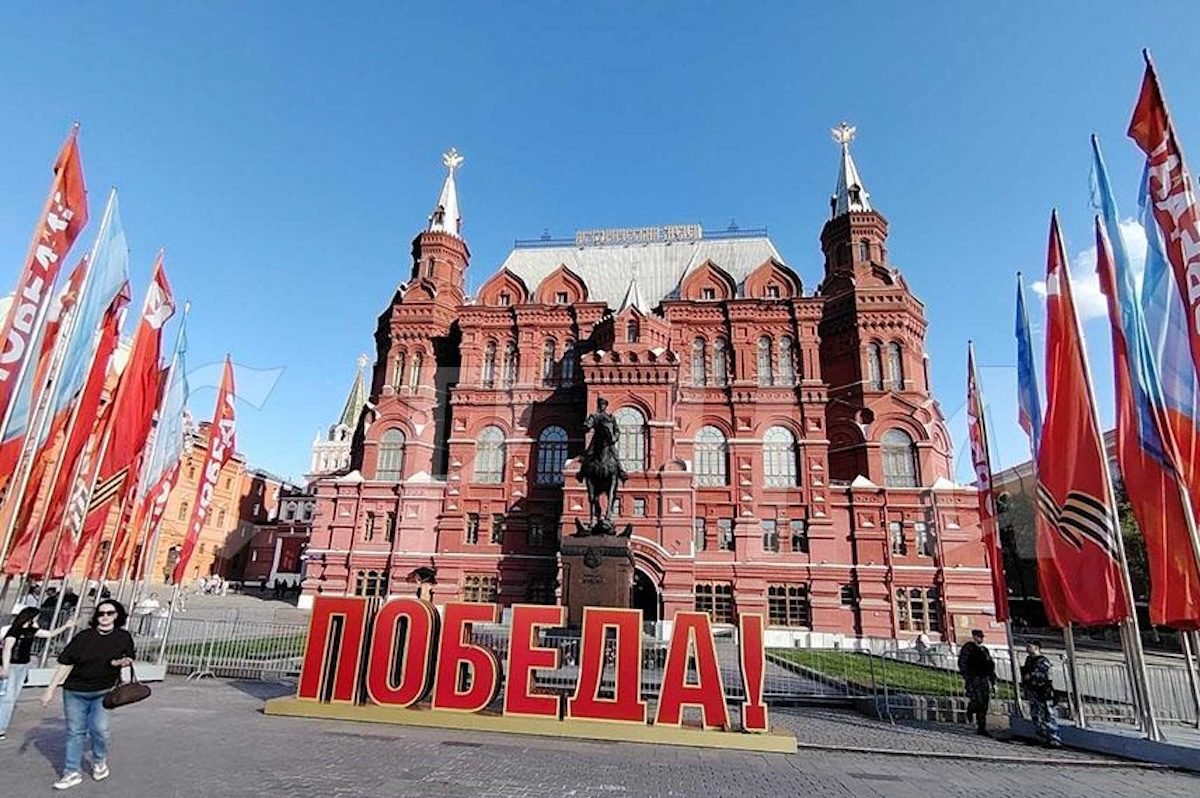
As this weekend approached, Ukraine’s burgeoning drone threat was hanging over Moscow’s annual celebration of the Soviet victory over Nazi Germany. The centerpiece of the May 9 Victory Day affair is usually a parade of goose stepping soldiers that runs through Red Square in the company of tanks, armored vehicles and plenty of rockets.
But not this year: Putin himself, other government officials, foreign dignitaries and thousands of spectators will attend, but the parade itself was downgraded to include only marching military cadets under a jet fighter overfly.
Dmitry Medvedev, a former Russian president, warned Ukraine not to send drones to attack the Victory Day fete. He said that, “In the case of a real provocation on Victory Day, no one guarantees that May 10 will come in Kyiv.”
Friday afternoon in Washington, US President Donald Trump moved to avoid such an outcome by announcing a three day truce starting May 9 between Russia and Ukraine.
Both of the latter countries confirmed the news.