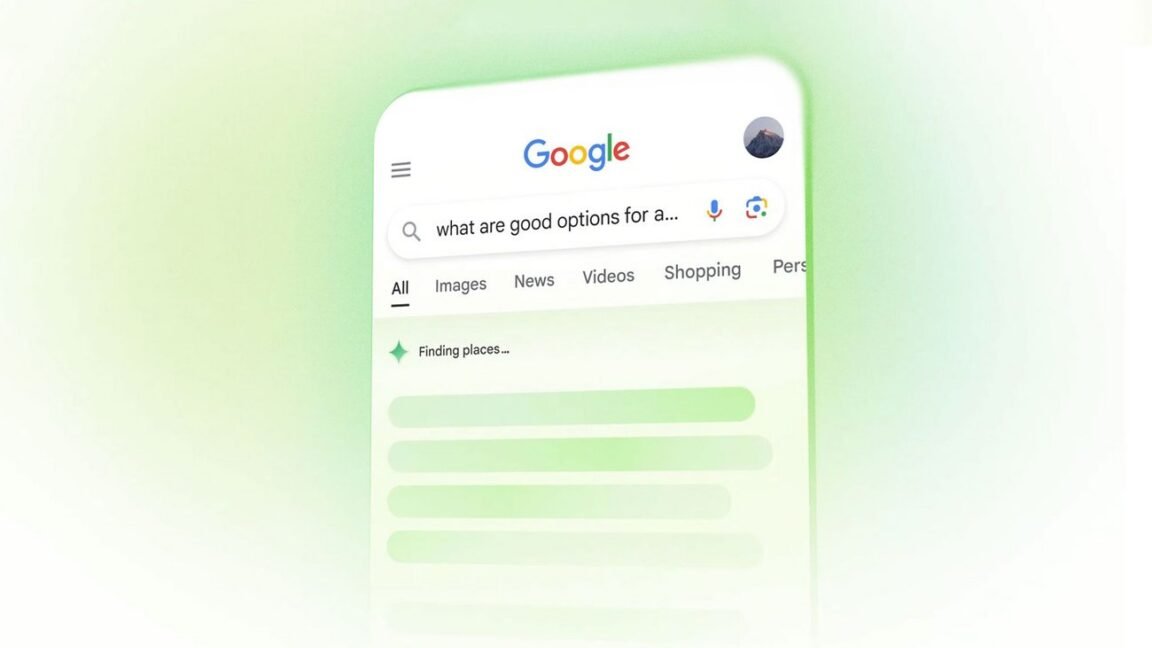
The top of a Google search page is prime real estate, but it has primarily been the domain of AI Overviews for the past two years. Websites that spent years optimizing for Google search haven’t exactly loved being pushed down the page by a chatbot and may blame AI Overviews for recent traffic drops. Google is not admitting fault, but it is rolling out a number of changes that will place more links to websites inside AI answers.
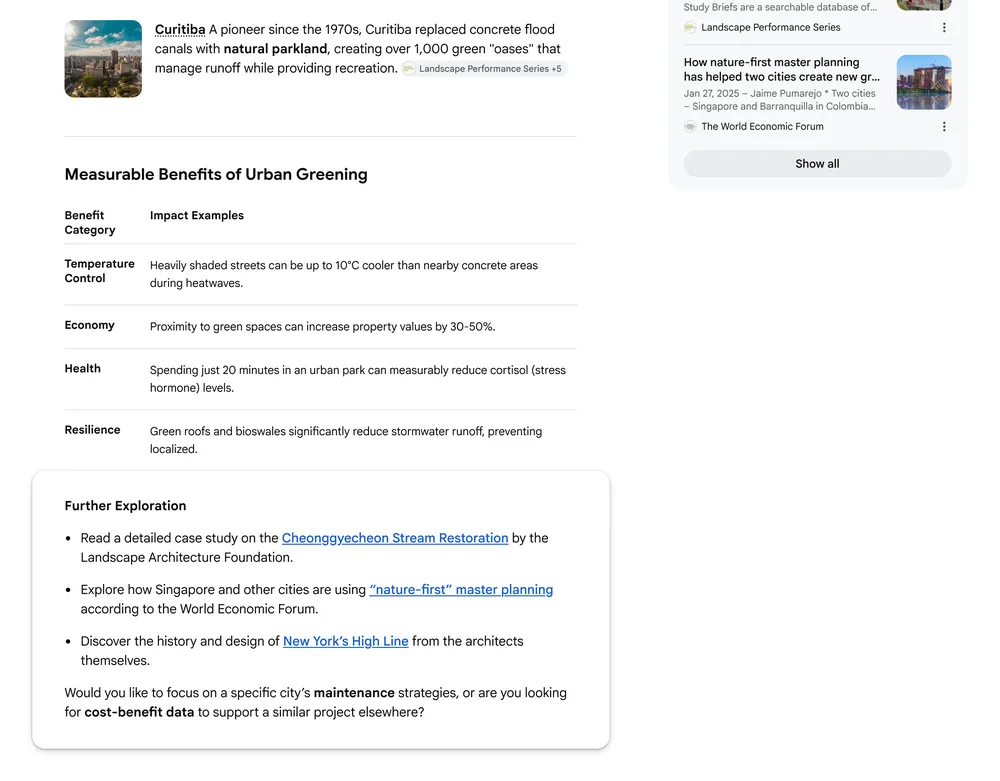
Google says many AI Overviews are “just the beginning of exploring a topic you’re interested in.” To support this supposed yearning to know more, AI Overviews and AI Mode will soon get a new section at the bottom called “Further Exploration.” The new exploration box will link to articles and analysis that is relevant to the query in a bullet point list. In the example below, a search for urban green spaces produces suggested links to content about specific projects in New York and Singapore. This is also where you may see the bait questions that are so common at the end of AI outputs.
Similarly, AI Overviews may include a section of “Expert Advice” that offers a snippet of content from around the web that is relevant to your search. This can include news and reviews from around the web, as well as discussions from public-facing forums and social media. Each one will include a link so you can “jump to the full conversation.”
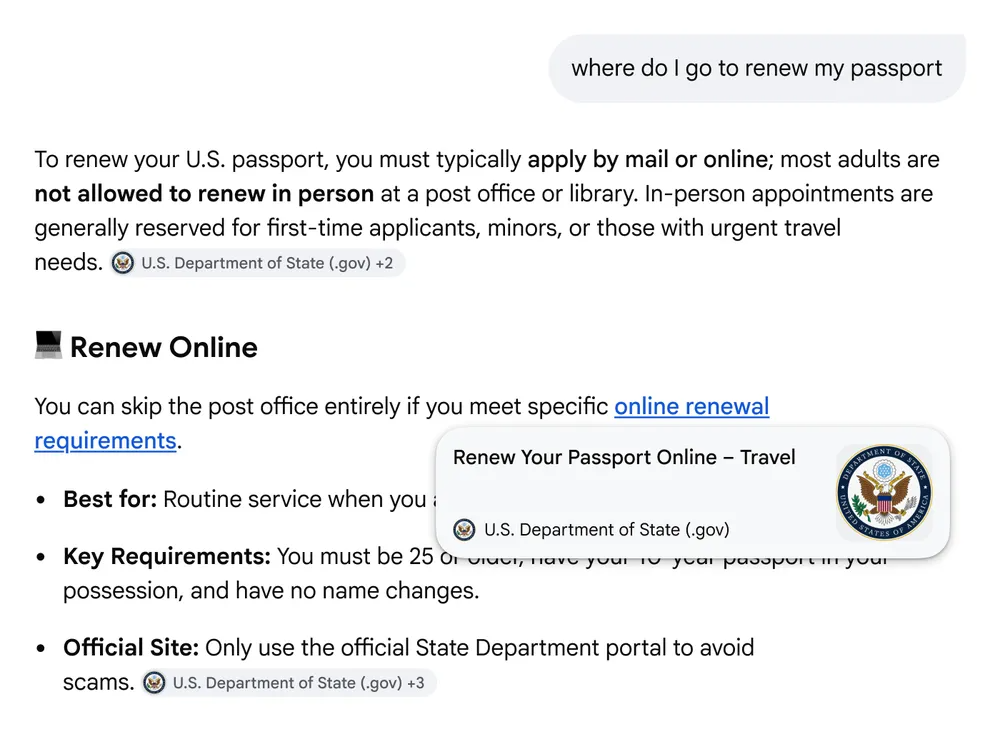
Google also promises that AI answers will include more links generally. These will continue to appear as small pills at the end of paragraphs. Clicking on them will show a list of sources that supposedly formed the foundation of the AI output. Hovering over links in AI Overviews and AI Mode will also produce a pop-up that gives you more information about the site before you click.
While most of the newly announced AI features will roll out soon, Google is still seeking partners to support one of them. Google is seeking publishers that are interested in testing a new form of subscription integration. The company says your favorite websites should appear more prominently in AI search, so it’s trying to make that happen in AI Overviews and AI Mode. This feature will use an API to link a reader’s subscription on a website with their Google account. Google says that early testing showed users were much more likely to click through when their subscribed websites appeared as links in AI answers. Interested publishers are invited to fill out a form to get more information.
Live by the web, die by the web
Google does not accept the conventional wisdom that AI search is reducing website traffic. However, various analyses have suggested that the chatbot is stopping users from leaving Google’s platform. That might be fine for Google right now, but Gemini only works as a search product if it has a vast sea of online data to summarize. As websites increasingly feel the squeeze of lower traffic (and advertising revenue), there may be less of that content available.
Google also has to be aware that the growing AI backlash goes beyond existential threats to the web—it’s also an immediate legal liability. Publishers, artists, and authors have filed lawsuits against the company alleging that Gemini is illegally using their content. Penske Media has alleged that searches with AI Overviews can reduce clicks by as much as 90 percent. Meanwhile, Google is under increased scrutiny in Europe now that the Digital Markets Act is in full effect, which could force it to create an AI Overviews opt-out for websites.
These changes may represent a bit of a course correction for Google after AI tools created too many zero-click searches. It’s unclear if just adding more external links to AI answers will get the job done, though.