A delegation of Italian lawmakers has traveled to Libya to explore potentially ramping up energy trade with the war-torn country to fill the gap caused by the war in the Persian Gulf.
It reflects growing interest from Europe and the United States in the country’s vast but under-exploited energy resources, heightened by the recent global energy shortage.
While Libya already exports some gas to Italy, flows have slowed to a trickle since the 2011 civil war that toppled Muammar Gaddafi, leaving the North African country wracked by paramilitary violence and divided between two warring administrations.
But the loss of around 10 percent of Italy’s gas supply following the bombardment of a major Qatari gas plant in mid-March is beginning to change the calculus for top officials across the country.
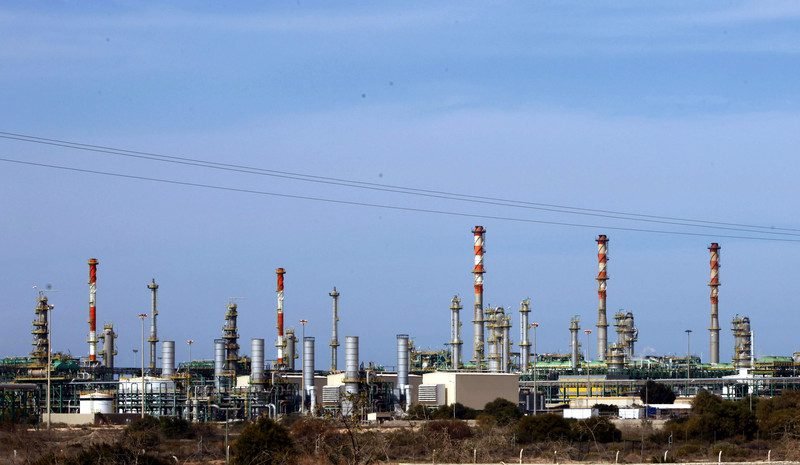
In particular, attention is turning to the Greenstream pipeline, a major undersea conduit capable of transporting up to 11 billion cubic meters of natural gas a year — around a sixth of Italy’s total annual demand — from western Libya to a terminal in Gela, southern Sicily.
The conduit, run jointly by Italian energy giant Eni and Libya’s National Oil Corporation, currently provides Italy with the excess gas that Libya doesn’t consume domestically. However, transit has fallen in recent years due to rising Libyan demand, and the pipeline currently operates at only 10 percent of capacity.
Total Libyan production is also underdeveloped, standing at 394 billion cubic feet in 2023, out of an estimated total 80 trillion cubic feet of reserves, the fifth largest in Africa.
But skepticism toward the country is thawing. Last month, a delegation of lawmakers in Italy’s influential parliamentary intelligence committee, Copasir, visited the cities of Tripoli and Benghazi — which represent the divided country’s rival seats of power — to assess its prospects. And their conclusions, while cautious, hint at a newfound optimism.
“We’ve got something that is directly connected with Italy without any other country in the middle that could create a problem,” League Senator Claudio Borghi, an influential figure in the Copasir delegation, told POLITICO.
He cautioned, however, that “it’s not something that you can do with the snap of a finger. You have to start working. And … that’s exactly what is happening.”
Specifically, Borghi said that two major, Eni-led infrastructure upgrades, expected to be completed this year, had the potential to improve flows through Greenstream within “months,” in part by reducing flaring, the wasteful practice of burning off unused natural gas during the extraction and production process. He argued this was possible without reducing output to Libya’s gas-dependent domestic market.
A person familiar with Eni’s operations confirmed that the company — which is part-owned by the Italian government and has a receptive audience in Rome — was “working to increase gas production in the country” via both Greenstream and in Libya more broadly. The person didn’t specify how long it would take or whether the company was seeking support from Rome.
Boosting inflows of Libyan gas could provide some much-needed relief for Italy in the wake of the Iran war, which has left Rome seeking new supplies from Algeria, Azerbaijan and Saudi Arabia to offset rising energy costs. Gas accounts for 40 percent of Italy’s energy mix, 16 percentage points more than the European average, and the loss of Qatari supplies has affected the country disproportionately.
Still, the Copasir trip was a bipartisan parliamentary initiative, and it’s not clear whether Rome will back Borghi’s conclusions. While Libyan officials across both administrations were keen to find ways to boost production, Italy’s trade minister, Adolfo Urso, has not yet formulated a view and is merely monitoring the situation, Borghi said.
“One thing is [monitoring] and another thing is having a clear view that this could be an investment area that could [bear] fruit,” the senator complained. He said he would nevertheless relay his impression of Libya’s potential to Matteo Salvini, the League’s leader and Giorgia Meloni’s vice premier.
The burgeoning interest was illustrated by a meeting on Thursday between Italian Prime Minister Giorgia Meloni and Abdul Hamid Dbeibah, the U.N.-backed, Tripoli-based leader of western Libya. The two leaders discussed “strengthening the partnership in the energy sector” between the countries, Dbeibah wrote on X. A spokesperson for the Italian government declined to comment.
The Copasir delegation itself is split on Libya’s potential. In an interview with POLITICO, Copasir Secretary Ettore Rosato — a lawmaker in the opposition Democratic Party — argued that sustainably increasing output would require investment over many years, with parallel investment in renewables needed to “avoid absorbing all additional production through domestic consumption.”
He agreed with Borghi that Libyan authorities were enthusiastic at the prospect of boosting Greenstream output, but said the Italian government was aware of the limited short-term potential of the infrastructure upgrades touted by Eni. “Let’s not fool ourselves into thinking they can produce positive effects in the short term,” he said.
The trip comes amid what diplomats and business leaders in the country have described to POLITICO as a broader U.S. push to unify the country and open it up for more energy trade, which has coincided with renewed — if cautious — engagement by Western energy giants, including Eni and France’s TotalEnergies, as well as several U.S. oil giants. Eni, for its part, discovered two large gas fields off the country’s coast.
Italy has featured heavily in the U.S.-led diplomatic effort, hosting meetings between the U.S. and senior Libyan officials from both administrations in Rome last year. Italian Foreign Minister Antonio Tajani himself endorsed the U.S. re-engagement when asked by POLITICO in February whether it would be beneficial to Italy’s energy sector.
“For us, the Americans are friends — to work with Americans in Libya is not a problem for us,” he said at an event in Rome. “My position is always in favor of more American involvement.” He added that engaging with Libya was vital to countering growing Russian influence in the east of the country, which is dominated by the Kremlin-backed warlord Khalifa Haftar.
Libya has also entered into the “orbit” of talks on diversification in Brussels, an EU official said, while cautioning that the country remains only a peripheral prospect due to its instability.
Via Politico