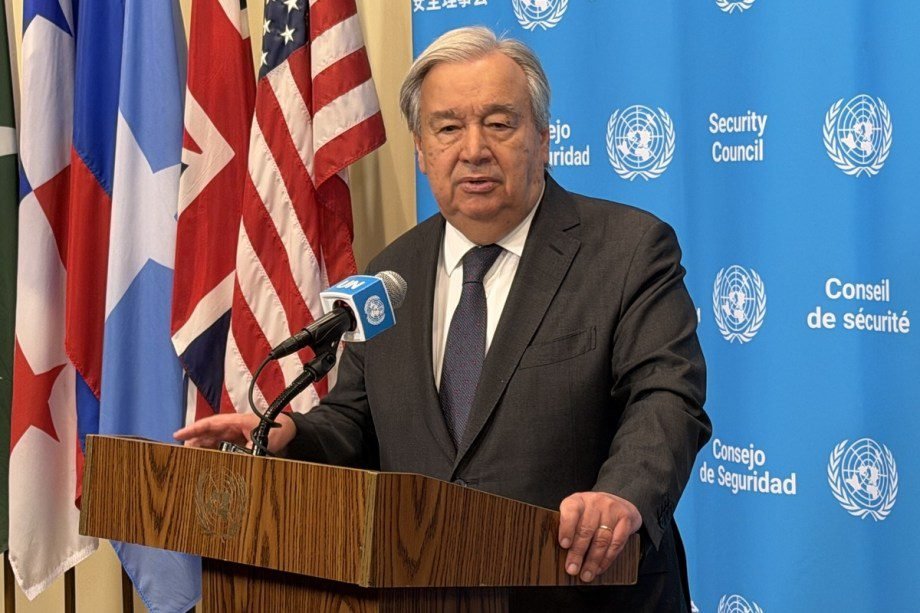
In March this year, UN Secretary General Antonio Guterres had stated that the UN is “cooperating actively with structures created by the Board of Peace.” By the time Guterres made his statement, US Board of Peace High Representative for Gaza Nickolay Mladenov had already warned, in February this year, that Hamas bears the burden of Israel’s full resumption of genocide in Gaza if it fails to disarm.
In a letter that was quoted yesterday in Israeli media, Mladenov and senior US official Aryeh Lightstone warned the Palestinian technocratic government, “Failure by Hamas to accept the framework within a reasonable timeframe, as determined by the Board of Peace and after consultation with the parties, shall render such commitments null and void.”
Two days before Mladenov’s warning was made public, a senior military official said that it was inevitable that Israel would resume “fighting” in Gaza if Hamas refuses to disarm. Israel has in fact not stopped colonising Gaza through violence – what we are seeing now is a slower form of genocide in the aftermath of a very visible genocide which world leaders and diplomats preferred to watch rather than stop.
Mladenov is aware that Israel kept killing Palestinians in Gaza after the ceasefire came into effect, that more buildings were detonated, that the Yellow Line keeps expanding in Gaza besides already occupying more than half of its shrinking territory.
Therefore, the pretence of a before and after the ceasefire does not hold. It is merely a convenient veneer for the Board of Peace’s next rhetorical step that asserts its agreement with genocide.
Israel violated the October 2025 ceasefire multiple times, so in a way the letter is not a warning of novelty. However, the text of the October ceasefire does not stipulate that Hamas should disarm for the ceasefire to hold; that was a clause for the second phase of the ceasefire. The US Board of Peace is therefore saying that Israel is exempt from upholding its obligations stipulated in Phase One if Hamas does not agree to a clause from Phase Two.
In the entire Western narrative of Israel’s genocide in Gaza, Mladenov is not employing a new tactic when blaming Hamas for refusing to disarm. However, exploiting the ceasefire text, which was based on the resumption of humanitarian aid and the return of Israeli hostages, is insightful in terms of how institutions hold the power to manipulate the parameters of international law, accountability and impunity. The October 2025 ceasefire text, which was not dependent on Hamas disarming, can now be discarded simply because the focus is on Phase Two and diplomacy will not check the specific stipulations of Phase One.
Mladenov and Lightstone, therefore, are legitimising institutional complicity with genocide.
This is one clear admission in which a body supposedly tasked with rebuilding Gaza and its governance will not hold Israel accountable for continuing to commit genocide.
By stepping back, the spectator tactic has now been fully employed by Mladenov and the so-called Board of Peace.
When has genocide even been advocated for so smoothly among diplomats? Guterres should take note of what he and the UN have supported.
The views expressed in this article belong to the author and do not necessarily reflect the editorial policy of Middle East Monitor.