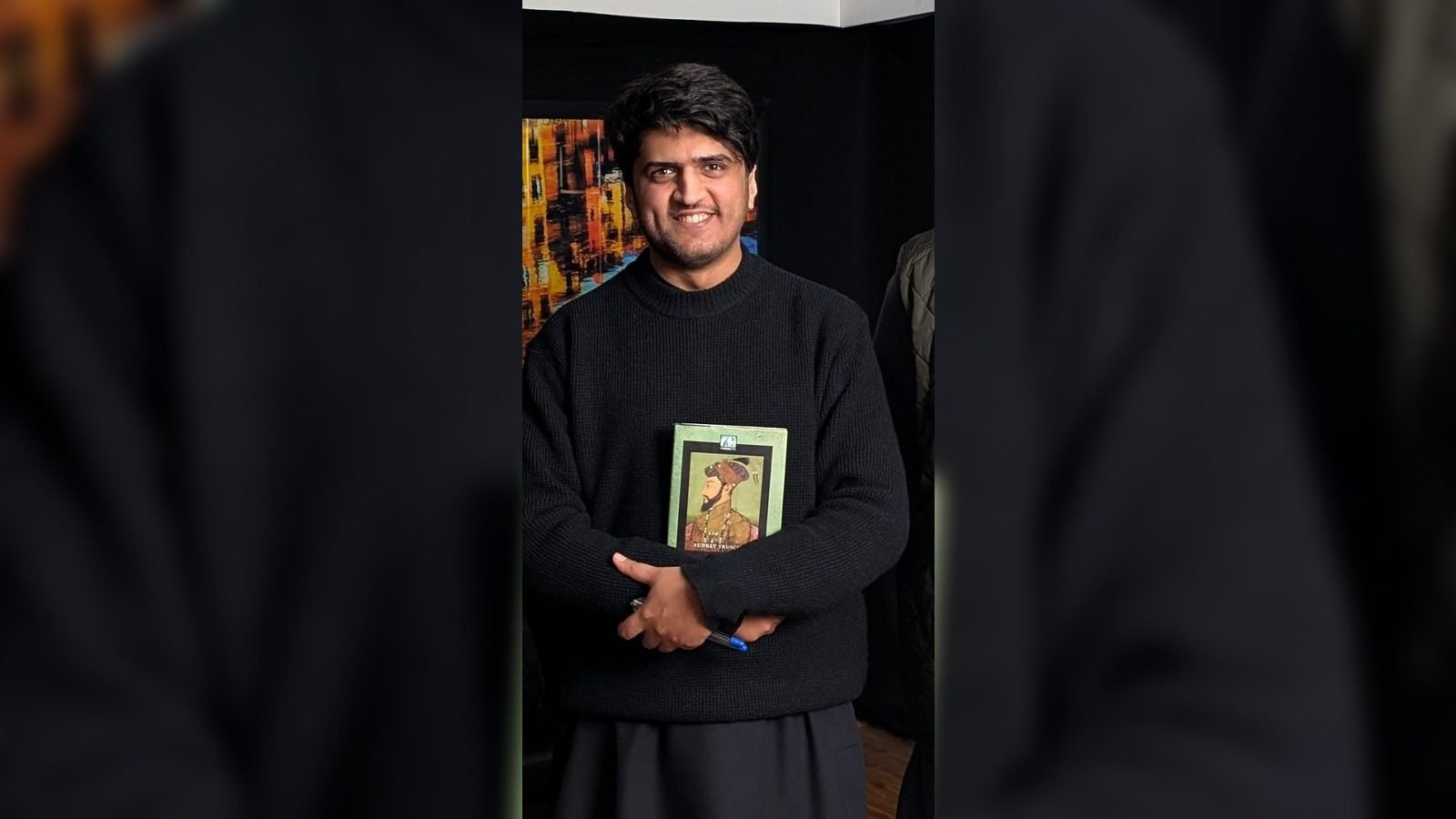
Supporters of Muhammad Saad bin Riaz say the accusations do not match his work as a researcher and journalist focused on regional conflicts and information warfare
[ISLAMABAD] Pakistani journalist and YouTuber Muhammad Saad bin Riaz has been sent to jail on judicial remand in Lahore after counterterrorism authorities accused him of promoting al-Qaida and possessing banned material, allegations his family, colleagues, and some analysts strongly dispute.
The case has opened a wider debate in Pakistan over whether authorities are confronting a genuine extremist threat or using broad counterterrorism powers in a way that risks undermining public trust, press freedom, and the credibility of intelligence-led policing.
Saad was presented on Monday before a Lahore anti-terrorism court after his physical remand expired. The Counter Terrorism Department (CTD) told the judge that its investigation had been completed and that no further physical remand was required. The court approved judicial remand and ordered Saad transferred to jail.
According to a person familiar with the court appearance, Saad was brought to court under tight security and was allowed to meet briefly with his family.
Pakistani counterterrorism authorities arrested Saad in Lahore during what they described as a joint intelligence operation. The official report accused him of encouraging people to join the banned al-Qaida organization and distributing prohibited literature.
According to the official account, the arrest took place on April 27 during a search operation near GPO Chowk on Mall Road in Lahore. Authorities alleged that five copies of a book about Osama bin Laden and an alleged al-Qaida membership card were recovered from his possession. It was not immediately clear whether Saad had entered a plea, and The Media Line could not independently verify the circumstances of his arrest or the alleged recovery of the materials.
Saad, 31, is a Lahore-based researcher and journalist who completed an M.Phil. in political science at Government College University and worked for the past two years with the EON News YouTube channel as a researcher and content strategist. The channel covers current affairs, regional conflicts, and political analysis.
The Media Line reached out to the CTD for an update on the case, but a spokesperson declined to comment, saying the matter is now before the court and no official position could be shared.
Saad’s wife, Ayesha Qayyum, and fellow journalists dispute the official account, alleging that he was not arrested while preaching for al-Qaida or carrying banned material but was instead detained from his residence late at night.
Those familiar with Saad describe him as a researcher and academic rather than an extremist sympathizer, pointing to his writings on conflicts in Kashmir, Gaza, Afghanistan, and Syria, particularly his focus on “narrative warfare” and information dynamics in conflict environments.
Having known Saad for nearly a decade, the allegations that he recruited for al-Qaida are deeply shocking
Dr. Usman A. Khan, a Lahore-based senior political analyst and Middle East expert, said the accusation was difficult to reconcile with his long personal familiarity with Saad. “Having known Saad for nearly a decade, the allegations that he recruited for al-Qaida are deeply shocking.”
Khan said Saad’s intellectual curiosity led him to build independent connections with Arab writers, researchers, and activists. After the fall of Bashar Assad in late 2024, he said, Saad hosted several Palestinian and Syrian voices on the EON podcast.
He also said Pakistan’s media landscape already includes voices sympathetic to Tehran and alleged that some people familiar with the case believe a CTD officer may have targeted Saad over his criticism of Iran. He said such a possibility, if substantiated, would carry troubling implications, including potential sectarian undertones.
Qayyum previously said Saad worked as a content strategist for the EON News YouTube channel and on Kashmir-related projects with individuals in state-linked circles, but she declined to provide further details. She also said he had been detained by the CTD around three years ago, when funds were withdrawn from his bank accounts, though she did not specify the charges.
The Media Line spoke with regional experts about whether the allegations against Saad fit broader trends involving al-Qaida and other armed groups in South Asia. Analysts offered sharply different assessments.
Dr. Muhammad Shareh Qazi, a Lahore-based foreign policy analyst, told The Media Line that “there is growing concern over a possible resurgence of al-Qaida,” though he said the group’s influence remains constrained by newer nonstate actors that have partly filled its space.
He said sporadic incidents linked to al-Qaida appear more like isolated expressions of extremism than signs of a broader comeback, making a large-scale revival unlikely to win sustained popular support.
Qazi said that it also limits al-Qaida’s ability to effectively leverage anti-Israel or pro-Palestinian narratives. He argued that the group’s prolonged failure to consistently capitalize on such issues has weakened its effort to project ideological relevance.
He said regionally autonomous groups such as Tehreek-e-Taliban Pakistan and its splinter factions continue to operate more aggressively, using diverse strategies that further diminish al-Qaida’s room for resurgence.
According to Qazi, the loss of central leadership and the absence of strong, direct backing from the Afghan Taliban have further constrained any meaningful revival prospects in South Asia.
In the South Asian context, Qazi said, the growing prominence of groups such as Tehreek-e-Taliban Pakistan and other nonstate actors operating across and around Central Asia has overshadowed al-Qaida, reducing it to “a residual entity from an earlier era.”
Alex Mishra, an independent foreign policy analyst and founder of American Situation Watch, a website focused on Afghanistan, counterterrorism, and US policy after the 2021 withdrawal, offered a different view, arguing that al-Qaida’s post-9/11 evolution has made it less centralized but still dangerous. He told The Media Line that al-Qaida has become “a more globally dispersed threat.”
Mishra said al-Qaida in the Indian Subcontinent has adopted a strategy of embedding members within regional insurgent and rebel formations. He also argued that the group has sought to exploit the Gaza conflict by using pro-Palestinian messaging to gain legitimacy and political traction.
Throughout 2024 and 2025, Mishra said, affiliates have used anti-Israel rhetoric to encourage lone-actor attacks in the United States and Europe. He said that approach extends beyond recruitment and could influence fundraising channels, charitable networks, and broader ideological penetration in political and social spaces.
Syed Khalid Muhammad, executive director of CommandEleven, a Pakistan-based intelligence, consulting, and research organization that provides geopolitical and threat analysis, said the CTD’s recent actions reflect excessive enforcement rather than sound intelligence work. He called the CTD’s current counterterrorism sweep “an overreach that isn’t intelligence-driven.”
Saad is pro-Pakistan and has no known ties to any terror group
He said Saad’s arrest over alleged links to terror groups illustrated that broader problem. Based on his organization’s detailed assessment, Muhammad said, “Saad is pro-Pakistan and has no known ties to any terror group.”
Rejecting the claim that Saad was arrested over his anti-Iran stance, Muhammad argued that Pakistan is currently playing a notable role in US–Iran mediation efforts and is reportedly facing pressure from American intelligence over terrorism-related arrests.
In that context, Muhammad warned that the CTD’s actions could damage Pakistan’s counterterrorism credibility and raise doubts among international partners. “Recent actions by the CTD could undermine Pakistan’s long-standing counterterrorism efforts and provide critics with grounds to question its reliability as a US security partner,” he said.
Muhammad said Pakistan’s counterterrorism policy has long lacked a consistent approach to extremist content and banned materials, pointing to “the absence of a coherent framework to curb the spread of extremism and extremist literature.”
Without a clearly defined policy, intelligence-based operations become more difficult to execute and even harder to justify when arrests are made
“Without a clearly defined policy, intelligence-based operations become more difficult to execute and even harder to justify when arrests are made,” Muhammad said.
For now, the case remains before the court, with the central facts still contested. Authorities say Saad was promoting al-Qaida and possessing banned material. His family, colleagues, and some analysts say the official narrative does not match the man they know or the circumstances of his detention. The gap between those accounts is now at the center of a case testing not only Pakistan’s counterterrorism claims but also public confidence in how those claims are made.