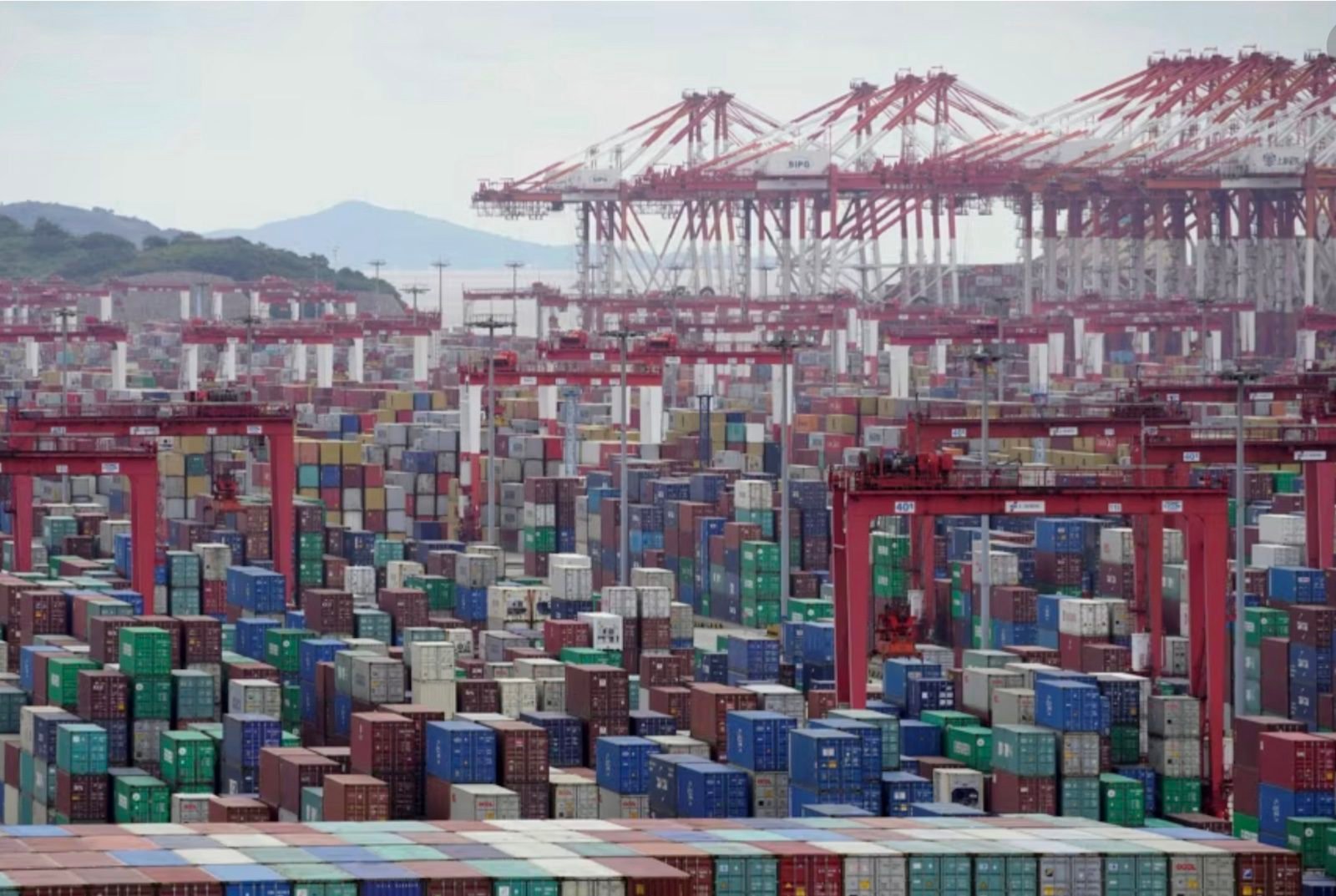
Asia became prosperous in an era of predictable globalization. Open markets, cheap energy, integrated supply chains and export-led manufacturing transformed once-poor economies into the world’s most dynamic growth centers. But the very interdependence that powered Asia’s rise is now becoming a source of systemic vulnerability.
The escalating instability around the Strait of Hormuz offers a stark reminder. Nearly one-fifth of the world’s oil passes through the narrow waterway, much of it destined for Asia. Even the threat of disruption is enough to drive up energy prices, weaken currencies, fuel inflation, and strain public finances across the region.
For Asia’s highly trade-dependent economies, geopolitical shocks no longer remain external events. They now penetrate directly into domestic economic stability. This is not merely an energy-security problem. It is evidence that globalization itself has entered a more fragmented and volatile phase.
For decades, Asia’s development model rested on a simple bargain: economies specialized in export-oriented production, integrated into global value chains and relied on external markets, capital, technology and energy to sustain growth.
Under relatively stable globalization, the strategy delivered extraordinary results. China became the world’s manufacturing center. South Korea evolved into a technological powerhouse. Southeast Asia emerged as a critical production hub. Hundreds of millions escaped poverty.
But a model built for an era of stability is struggling in an era of geopolitical rivalry.
The same interconnectedness that once transmitted efficiency now transmits shocks. Energy disruptions rapidly feed inflation. Financial tightening in the United States triggers capital outflows and currency depreciation across emerging Asia.
Trade restrictions and sanctions increasingly reshape investment decisions and industrial supply chains. Economic integration has become politicized.
South Korea illustrates the dilemma. The country imports more than 90% of its energy, much of it from the Middle East, leaving it acutely exposed to Gulf instability. At the same time, its semiconductor industry — the backbone of the Korean economy — sits at the center of intensifying US-China technological competition. Korean firms are no longer navigating markets alone; they are navigating geopolitical confrontation.
The problem extends far beyond Korea. India imports nearly 90% of its crude oil. Japan remains heavily dependent on external energy supplies. More than 70% of Middle Eastern oil exports flow to Asian markets.
Meanwhile, East Asia dominates global semiconductor production, while China controls much of the world’s rare-earth processing capacity. These concentrations once reflected economic efficiency. Today they represent strategic chokepoints.
Semiconductors, batteries, critical minerals, shipping lanes, and digital infrastructure are no longer simply commercial assets. They have become instruments of economic statecraft.
Washington now treats advanced semiconductors as strategic assets central to national security, while Beijing increasingly views technological self-sufficiency as an economic imperative. Supply chains that once reflected market efficiency are being reorganized around geopolitical alignment
The consequences are profound. Asia’s growth model was designed to maximize efficiency, not resilience. Supply chains were optimized for cost minimization. Energy systems prioritized affordability. Manufacturing networks concentrated production in the most competitive locations. In a stable global order, this logic worked exceptionally well.
But efficiency without resilience has become a liability. The emerging global economy is being shaped less by free-market integration than by strategic competition. Governments are intervening more aggressively in trade, technology, and industrial policy. Supply chains increasingly follow geopolitical alignment rather than pure market logic. Strategic sectors are being securitized.
This does not mean globalization is ending. Asia cannot decouple from the world economy, nor should it try. Its prosperity still depends on openness and international integration. But the region must adapt to a world in which interdependence carries both economic benefits and geopolitical risks.
That adaptation requires a fundamental shift in policy thinking.
First, Asian economies must diversify critical dependencies. Excessive reliance on single suppliers, markets, energy corridors, or technologies creates systemic exposure. The goal is not autarky, but strategic flexibility.
India’s push into renewable energy, Japan’s diversification of liquefied natural gas imports, and efforts by several Asian economies to broaden semiconductor supply chains all reflect growing recognition that concentration risk has become a national-security issue.
Second, governments must prioritize resilience alongside efficiency. For decades, redundancy was viewed as wasteful. Today it is increasingly essential. Strategic reserves, diversified logistics networks, domestic technological capabilities, and more robust infrastructure may reduce short-term efficiency, but they increase long-term stability.
Third, macroeconomic adaptability has become critical. Economies that depend heavily on external capital and volatile trade flows require stronger financial buffers, more flexible policy tools, and greater institutional capacity to absorb shocks. In a world of repeated disruptions, resilience is no longer only about supply chains; it is also about governance.
None of these adjustments will be easy or cost-free. Building resilience often means accepting higher production costs, slower optimization, and more active state intervention. Yet the alternative is increasingly dangerous: remaining deeply exposed to geopolitical disruptions that governments cannot control.
Asia’s challenge is therefore not whether to remain integrated into the global economy. It is whether it can remain prosperous in a world where globalization itself has become more fragmented, politicized, and unstable.
The era that powered Asia’s rise was defined by expanding trade, relatively predictable rules, cheap energy and deepening economic interdependence. That era is fading. A new one is emerging — shaped by strategic rivalry, supply-chain insecurity, technological competition, and recurring geopolitical shocks.
Asia cannot retreat from globalization, nor can it afford to cling to an outdated model built solely around efficiency and external dependence. The region’s future growth will depend on its ability to redesign economic systems for a more volatile age: diversifying critical dependencies, strengthening resilience and building greater strategic autonomy in key sectors.
The deeper shift is unmistakable. Asia’s rise was built in a period when economics largely operated above geopolitics. That separation is now collapsing. Energy flows, semiconductor supply chains, critical minerals, financial networks and advanced technologies are increasingly becoming instruments of strategic competition.
In this new global order, resilience is no longer a complement to growth. It is the foundation on which sustainable growth itself will depend.
Golam Rasul is a scholar and policy commentator working on sustainability, political economy, globalization, and development transitions in Asia. My commentary has appeared in East Asia Forum, South Asia Monitor and leading South Asian newspapers.