
President Donald Trump on Thursday moved to capitalize on a US Supreme Court decision weakening the federal Voting Rights Act as he urged one governor to gerrymander his state and praised another for suspending an approaching primary.
The court’s decision on Wednesday struck down Louisiana’s congressional map as unconstitutional and empowered other Republican states, for partisan advantage, to break apart districts where most residents are black.
The opinion could reinvigorate Trump’s push for states to redraw their maps to give Republicans an edge in the November midterm elections. The president’s party typically performs poorly in the midterms and Trump’s approval has fallen in polls, making Democrats hopeful they can retake the US House.
Louisiana Governor Jeff Landry and state Attorney General Liz Murrill announced on Thursday that the state’s congressional primary election, set for mid-May, would be suspended. The pause gives state lawmakers time to draw a new map aimed at ousting at least one, if not two, black Democrats.
Trump thanked Landry on his social media platform, Truth Social, for “moving so quickly to fix the Unconstitutionality” of the state’s map. In a separate post, Trump wrote that he had spoken with Tennessee Republican Governor Bill Lee, who faces calls to immediately gerrymander the state.
“I had a very good conversation with Governor Bill Lee, of Tennessee, this morning, wherein he stated that he would work hard to correct the unconstitutional flaw in the Congressional Maps of the Great State of Tennessee,” Trump wrote.
A spokesperson for Lee didn’t immediately respond to a request for comment.
The redistricting rush
Historically, states draw new maps once a decade after each census but eight states have now broken that norm after Trump urged Republicans to gerrymander.
Texas, Missouri, North Carolina, Ohio and Utah have drawn fresh GOP-leaning maps, as well as Florida, whose legislature approved a gerrymander hours after the Supreme Court’s decision. California and Virginia have enacted new maps favorable to Democrats.
Before Wednesday, the redistricting war was essentially a wash. But the court’s decision gives Republicans more options to gain the upper hand this year, if states can move quickly.
Alabama, Georgia, Missouri and Tennessee are among the red states with upcoming primaries where lawmakers could theoretically still act. In some states — like Tennessee — top Republicans haven’t ruled out action. In others, like Alabama, GOP leaders have ruled out or played down the possibility of action this year.
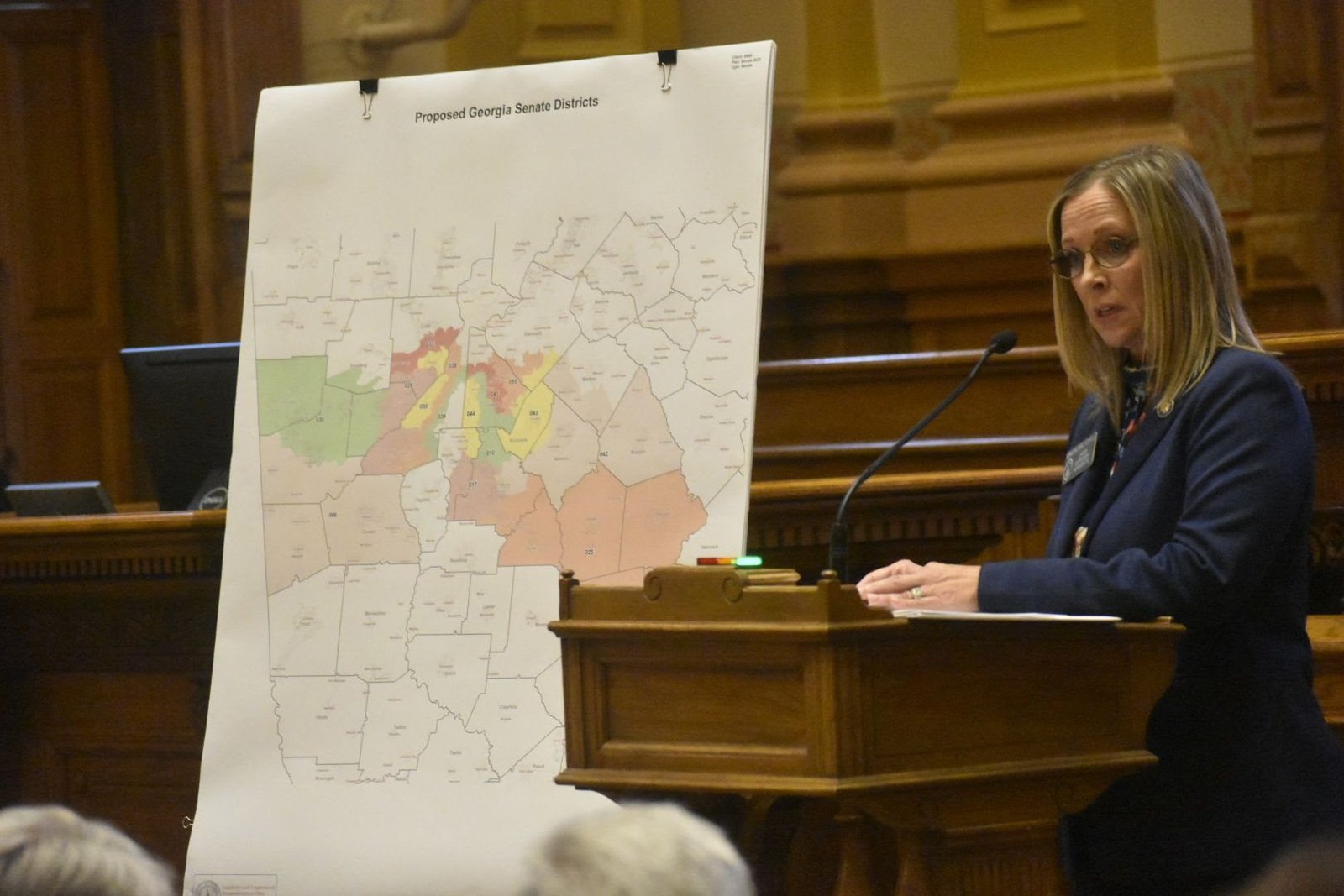
Some Georgia Republicans, including Lieutenant Governor Burt Jones, immediately called for new maps to be drawn in response to the decision – but it’s likely too late to change the maps that will be used in this year’s midterms. Candidates qualified under the current district boundaries last month, and voting has already started for the May primaries. But Georgia’s maps could look different in 2028
US House Speaker Mike Johnson, a Louisiana Republican, urged states to gerrymander their maps before the midterm elections.
“I think all states that have unconstitutional maps should look at that very carefully and I think they should do it before the midterms,” Johnson told CNN on Thursday.
Dems also talk gerrymandering
Democrats have also floated the possibility of additional gerrymanders — whether this year or ahead of the 2028 election.
New York Governor Kathy Hochul said on social media after the court’s decision that she would work with the legislature to change the state’s redistricting process. New York currently uses a commission system to draw maps, limiting opportunities for partisan gerrymandering.
At a news conference hosted by the Congressional Black Caucus on Wednesday, Representative Terri Sewell, an Alabama Democrat, suggested she would support additional Democratic gerrymanders.
“It values partisan politics over discrimination,” Sewell said of the court’s decision. “It’s really, really, really — I mean, it takes us back. So to the extent it’s urging, it’s inviting red states to totally take away all of the Democratic seats and be totally red, it also encourages blue states to do exactly the same.”