The UN on Thursday said aid agencies are still unable to bring in materials needed to build durable shelters in Gaza, as Israel’s restrictions continue amid worsening humanitarian conditions in the enclave, Anadolu reports.
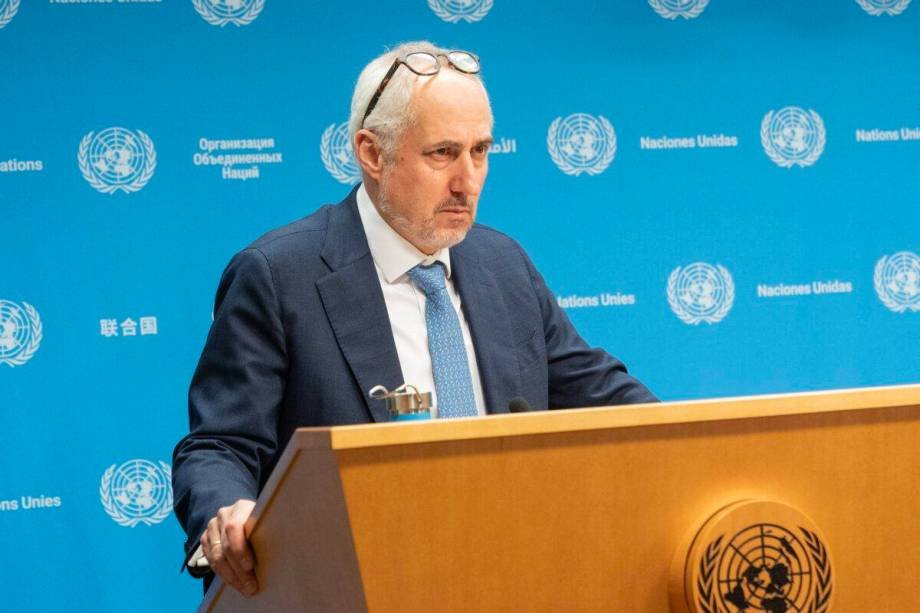
UN spokesman Stephane Dujarric said there has been “no progress” in efforts to allow the entry of more durable shelter supplies.
“We’re able to bring tarpaulins, blankets, sheets—whatever. We’re not able to bring anything that will let us build durable shelter,” he told reporters.
Asked about Israel’s position, Dujarric said: “They’re saying ‘No’ on this and other items, notably material needed to repair generators to clear rubble. We need more material on that.”
He said UN teams and partners on Thursday visited four displacement sites in eastern Gaza, where around 600 families are living in “harsh conditions and heightened risk,” sheltering in overcrowded tents and heavily damaged buildings with no alternative arrangements.
“The teams identify the need to provide more clean water, sanitation, and hygiene support; to provide shelter and other essential items so as to expand food and health services, and also to strengthen education support,” he said.
“These unacceptable conditions continue to disrupt people’s access to water sources, damage networks and storage, and increase reliance on water trucking and other short-term and more expensive measures,” he added.
Julius Van der Walt of the UN Mine Action Service (UNMAS) told reporters at the briefing that nearly 1.9 million people in Gaza — out of a population of 2.1 million — have been displaced, many multiple times, as explosive ordnance continues to kill and injure civilians and hinder humanitarian operations.
The Israeli army launched a genocidal war on Gaza in October 2023, killing more than 72,000 people, injuring over 172,000, and causing massive destruction.
A ceasefire agreement was reached in October 2025, though Israel continued its attacks and maintained restrictions on the entry of food, medicine, and shelter materials into Gaza, where almost the entire population faces severe humanitarian conditions.