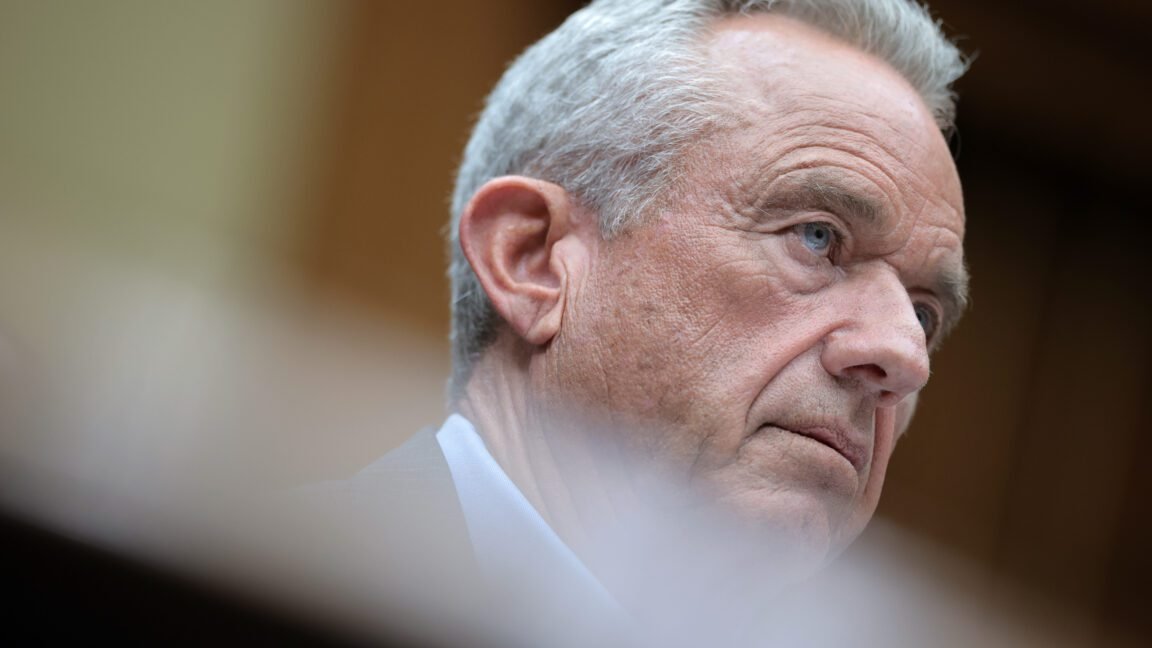
After some uncertainty—and a little drama—the Trump administration is appealing a ruling by a judge last month that temporarily halted anti-vaccine changes Health Secretary Robert F. Kennedy had implemented at the Centers for Disease Control and Prevention. Those changes include filling a key vaccine advisory panel with dubious anti-vaccine allies and unilaterally slashing childhood vaccine recommendations.
On March 16, US District Judge Brian Murphy issued a temporary injunction on those changes, essentially blocking the appointment of Kennedy’s advisors, nullifying all votes they made on federal vaccine policy, and undoing the changes to the CDC childhood vaccination schedule. Murphy ruled that Kennedy’s advisors were unqualified, and their appointment and the changes to vaccine recommendations violated federal procedures. The ruling stems from a case brought against Kennedy and the Department of Health and Human Services (HHS) by the American Academy of Pediatrics (AAP).
Prior to the ruling, lawyers for the government argued that Kennedy’s actions were “unreviewable” and his authority was such that he could advise Americans to actively inject themselves with measles virus rather than the vaccine if he wanted. Murphy rejected that argument in his ruling and found the AAP would likely succeed with their claim that Kennedy’s changes were illegal.
The temporary injunction essentially froze the CDC’s vaccine advisory panel—the Advisory Committee on Immunization Practices (ACIP)—which was scheduled to meet later in March to discuss alleged COVID-19 vaccines injuries. That meeting did not occur. The committee is also scheduled to meet in late June with no agenda set.
Drama
Days after the ruling, Robert Malone—a former researcher turned outspoken anti-vaccine activist and conspiracy theorist who served as Kennedy’s ACIP vice chair—got into a public spat with an HHS spokesperson and dramatically resigned from the committee in anger. It started when Malone posted on social media:
ACIP has been disbanded. The government’s response to the AAP lawsuit and judge Murphey’s[sic] injunction is to disband and then recreate a new ACIP committee, as this will take less time than would be required to file and prosecute an appeal. There will be no action from the government to respond to the defamatory characterization of the former ACIP members.
Hours later, HHS spokesperson Andrew Nixon contradicted the claim, telling Ars Technica in a statement: “Unless officially announced by us, any assertions about what we are doing next is baseless speculation.”
Malone then resigned, saying, “After Andrew trashing me with the press, I am done with the CDC and ACIP. That was the last straw. Suffice to say I do not like drama, and have better things to do.”
While the notice of appeal filed late Wednesday conflicts with Malone’s initial assertion, he may not have been entirely wrong in indicating that Kennedy intended to create a new ACIP. Earlier this month, Kennedy rewrote ACIP’s charter, granting himself the ability to appoint anti-vaccine allies without expertise in vaccines and immunizations to the panel. He also shifted the panel’s focus to alleged vaccine injuries and risks, aligning it with the views of anti-vaccine activists.