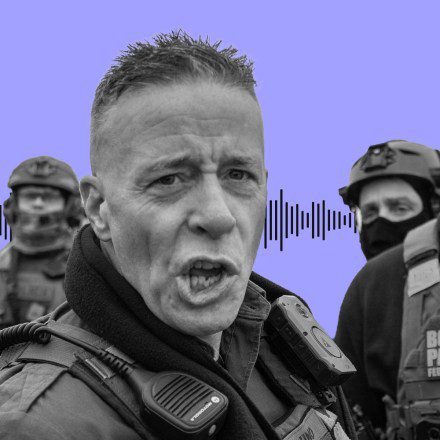
A seventeen-second video shows a dark-haired man rapping his pale knuckles gently below the tinted windows of a silver minivan. He stands back, shoving his hands into the pockets of his puffer coat, his boyish face twisted into a severe expression. The car drives off, and the camera pans to follow it down the suburban Minneapolis road. No words are spoken.
Splashed across the screen, a bright red and white caption reads, “ICE was circling a local elementary school. I knocked on their door to have a conversation, but they ran away instead.”
The man is Matt Little, 41, a former mayor and state senator from nearby Lakeville seen as the front-runner to replace outgoing Democratic Rep. Angie Craig in Minnesota’s 2nd Congressional district.
He’s staking much of his campaign on one of the most politically salient issues in the Twin Cities. In a series of videos pinned to his campaign Instagram under the name “GET ICE OUT,” Little documents himself at protests and in encounters with immigration enforcement agents. “When I’m elected to congress,” wrote Little in a January post, “we will hold ICE accountable.”
Not everyone in his district is buying it.
“For me, it smells like, ‘I’m going to try to use this to bolster my chances in a time of crisis,’” Paul Peterson, a local ICE rapid responder, told The Intercept. “Never let a good crisis go to waste, right?”
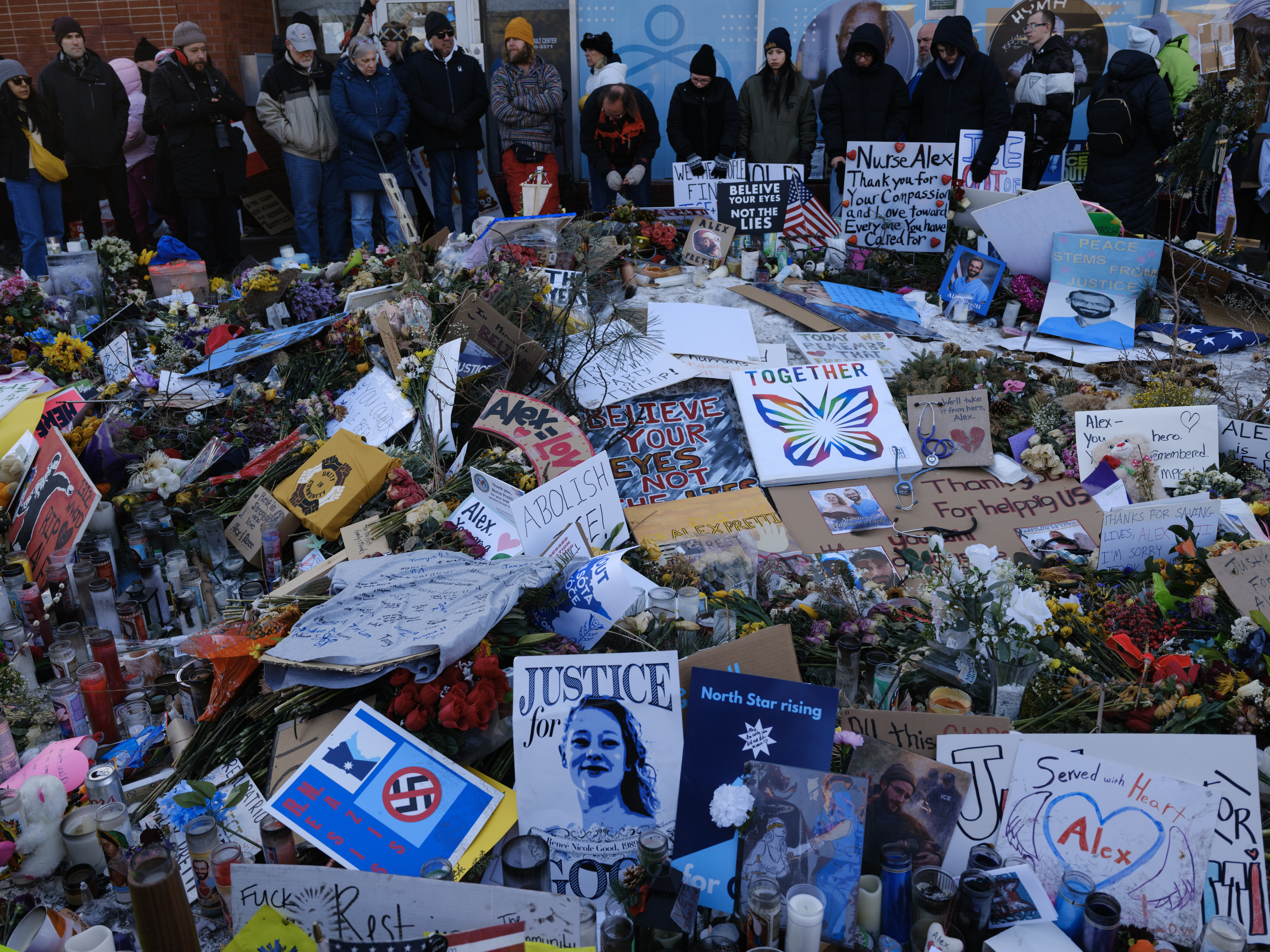
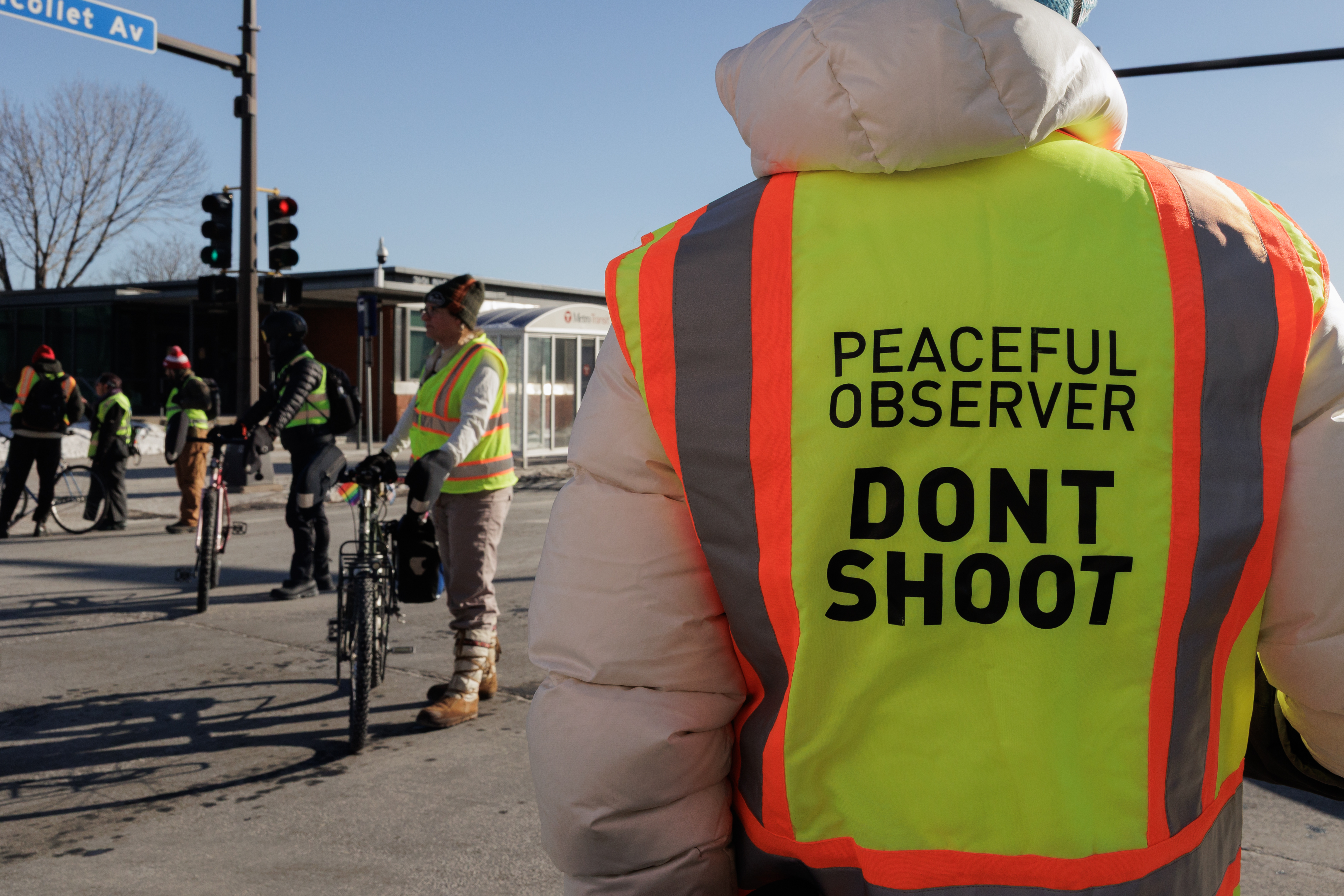
In his mostly suburban Minneapolis district, Little’s top political issue is at once highly motivating and highly fraught. As 3,000 federal agents descended on Minnesota for “Operation Metro Surge,” killing Alex Pretti and Renee Good and wounding or abducting scores more, Minnesotans who had not so much as lifted a protest sign a year ago joined ICE rapid response networks. Given the gravity of agents’ often unpredictable violence, many saw their work as putting their lives on the line.
Democratic politicians are eager to turn engaged protesters and observers into door-knockers and voters. Nationwide examples point to a proof of concept: Newark, New Jersey, Mayor Ras Baraka’s approval ratings skyrocketed after he was arrested for trespassing while monitoring an immigration detention facility. Brad Lander, then a New York City mayoral candidate who is now running for Congress, saw his star rise after his arrest outside of a Manhattan immigration court. Illinois congressional candidate Kat Abughazaleh finished second in a crowded primary after generating high-profile headlines for her federal indictment over a protest outside an ICE processing center near Chicago. (Baraka’s charges were dropped days after his arrest, and on Wednesday, federal prosecutors said they planned to dismiss felony charges against Abughazaleh. Lander rejected a deal to drop his charges last year and said he’d prefer to go to trial.)
“That was kind of personal for me because my wife is an immigrant.”
In the area around Minneapolis, the surge was “surreal,” Little told The Intercept in a joint interview with his wife, Coco. “It was kind of all-encompassing there for many months. We knew we had to be out there. That was kind of personal for me because my wife is an immigrant.”
The Intercept spoke with nearly a dozen people involved in ICE rapid response networks in and around the Minneapolis suburbs, including in leadership positions, several of whom felt that Little was “cosplaying” as an observer and overstating his activism for political clout. Others speculated that the outrage was manufactured to ruin his chances at the nomination.
There’s an inherent tension between enraged protesters who take matters into their own hands, outside of official political channels, and politicians who want to harness their rage into electoral energy. It raises the question of who gets to wear the mantle of resistance and blurs the line between when politicians are supportive — and when they’re extractive.
“There are many different legitimate ways for politicians to amplify our movements, like resistance to ICE,” said Justin Hansford, executive director of the Thurgood Marshall Civil Rights Center at Howard Law School, “but how they do it is of the utmost importance.”
In the suburbs of Minneapolis, the question of “how” would eventually tear a small community in half.
Jessica Vinar carries with her the hallmarks of progressive Minnesota politics. She’s a teacher, wearing a school lanyard adorned with pride pins, political buttons, and a small 3D-printed whistle, the preferred ICE-alerting tool seen on residents’ keychains and in small bowls at cafe entrances across the city.
In a bustling coffee shop in the heart of Minneapolis’s South Side, Vinar recounted the events of February 17, when she joined a group watching the roads for blacked-out SUVs in the once-sleepy Minneapolis suburb of Savage. An online ICE-monitoring website had reported multiple federal agents armed with weapons and clad in tactical gear.
Vinar learned that one of her companions was congressional candidate Matt Little, and the others were journalists from the New York Times. Dashcam videos from the scene shared with The Intercept show Little standing with two other people next to a dark gray car that appears to be his, and one white SUV, which he identifies as ICE’s. “There’s two more down that way,” Vinar tells Little in the video. He responds: “All right, will you hang out here with us for a little bit?”
There’s a six-minute gap in the dashcam video, when Vinar’s car is off and she’s standing outside. Vinar said she watched as the journalists photographed Little interacting with ICE agents and standing outside of a home. Then, “I hear him say something like, ‘I’m gonna see if they’ll chase me,’” Vinar recalled. “And they all pile into his vehicle, and they drive off.”
The day’s events received coverage in the New York Times and The Intercept, and Little confirmed this version of the events. But Vinar and Little disagree on what happened next.
In Vinar’s telling, she was left standing outside, alone, with an ICE vehicle behind her. When she gets back in her car and turns the camera back on, Little’s gray SUV is gone, and three other cars she identified as ICE’s are present. Masked people who appear to be federal agents drive past Vinar in the white SUV, waving and recording her. Then Little returns, following the white ICE vehicle as it drives past Vinar’s car a second time. The whole thing is over in a matter of minutes.
Little, who said he has not seen the dashcam video himself, told The Intercept that he thought the only ICE vehicle in the area had pulled out to follow him when he left, so he didn’t believe he’d left Vinar with the agents by herself. Vinar claims he did know and notes that, as captured in her video, she told him. Little told The Intercept that he believed that the additional vehicles she’d mentioned had left.
Several rapid responders in the area told The Intercept they have a strict protocol to never leave another observer alone with ICE, though one said people do get left alone from time to time. (Several activists spoke to The Intercept on the condition of anonymity for fear of retaliation from federal officials.)
Peterson, who patrols for rapid response throughout the wider region and was in the chat, said he “isn’t politically involved,” and did not know who Little was ahead of the incident. “I don’t care about the theatrics of it,” he said, “[but] he put one of my people at risk, and that’s not OK.”
The incident blew up across an intricate network of Signal chats, the local rapid response groups’ digital, decentralized town square. Was Little “trying to be helpful,” one chat member posed to The Intercept, or, as some suspected, “was Matt just staging a photo op?”
In a message reviewed by The Intercept, one person accused Vinar of changing her story after realizing it was Little. In Vinar’s initial message, she said that ICE agents had followed Little and circled back to harass her; she then clarified that Little had left the scene with agents still present. Another observer wrote that Little was claiming Vinar’s story was “typical last-minute misinformation.”
Little told The Intercept he “can only speak from” his own experience, but he and his wife are framing the activists’ anger as a manufactured political play. Vinar caucused for his opponent, state Rep. Kaela Berg, at a convention following the incident, Little added in a written statement after his interview. Pointing to his wife, he wrote, “Coco believed and still believes this is being spread as a political attack.”
Coco also reached out to Savage resident Mark Kloempken and his wife, whose home was at the center of the February 17 incident. Kloempken said he was enjoying the day’s mild weather, unconcerned about the ICE agent parked by his driveway.
“I’m waving to them and saying ‘hi,’” he said. “They seem friendly. They’re not a big deal.” Kloempken left to get some lunch, playing “Ice, Ice, baby,” as he drove off.
“[She] hates that I did that,” he said, indicating his wife, who asked to remain anonymous when they spoke to The Intercept over Zoom from their Savage home.
The couple had met Little a week prior to the incident. They said the politician was handing out whistles in their neighborhood when he offered to take Kloempken’s wife along with him to an immigration raid on a nearby apartment building.
“I’m old,” she told The Intercept — meaning, she’s not in any of the Signal groups. But she believes that Little was not being performative. “The day I went on that impromptu ride with him, there were no pictures, no photos taken of anything,” she said, adding, “he had me film what was going on so that he could drive.”
She said Little instructed her not to go out alone. “You always have to have two people,” she recalled him saying.
At what point do politicians’ shows of solidarity become performative, or even counterproductive? It’s a question that has troubled Hansford of Howard Law for years.
Hansford, 45, got his start in activism in earnest in Ferguson, Missouri, shortly after police officer Darren Wilson shot an unarmed Black teenager, Michael Brown, igniting a firestorm of activism across the country. Over the years, Hansford has worked closely with politicians and movement organizers on shaping policy and finding common ground.
“If you look up ‘extractive’ in the dictionary, it will be a picture of Nancy Pelosi with kente cloth on.”
Those relationships can end up being exploitative, said Hansford, pointing to the aftermath of the protests against police brutality after the killings of George Floyd and Breonna Taylor. In 2020, after Democrats harnessed the energy of Black Lives Matter and other mass mobilization efforts to win a trifecta in the White House, the Senate, and the House, they failed to pass any of the signature legislation that movement leaders were calling for, instead favoring stunts like an infamous photo of Democratic leadership kneeling in red and green Ghanaian kente stoles.
“If you look up ‘extractive’ in the dictionary, it will be a picture of Nancy Pelosi with kente cloth on,” said Hansford.
Still, “it’s smart for [Democratic] candidates to tap into the energy around ICE,” said Nina Smith, a political communications strategist and former senior adviser to Stacy Abrams. “Their constituents are being harmed and impacted by this financially, mentally, and at times physically. So they have to talk about this issue.”
In Minnesota, activists did point to examples of politicians who were quietly protecting the community without looking for a political moment. Many cited Aurin Chowdhury, a 29-year-old Minneapolis City Council member who speaks with the exasperation of someone who is as tired of the political establishment as she is committed to challenging it. By the time the federal occupation had ended, Chowdhury had been tear-gassed several times and became a mainstay in anti-ICE activities throughout the city.
“When you have masked men and guns occupying your city by the thousands, killing people, taking children, separating them from their families, terrorizing pregnant women — that reality becomes right in front of your face,” Chowdhury said. “It felt impossible to just sit at my computer and answer emails, or try to hold, like, a constituent meeting.”
Tucked away in a quiet corner of city hall, Chowdhury seems aware of how easily popular movements can be used for individual political gains.
“Just listen to what people are saying.”
“I worry that that’s something that can happen when the struggle of people is co-opted by high-level Democratic leaders who are seen as elites and are only willing to take incremental steps versus, like, actually addressing the heart of the issue,” she said. She urged Democratic party leadership to worry less about questions like “What is the message? And how do we get the American people on our side?”
“Maybe it’s just listen to what people are saying,” Chowdhury said, “and be bold and take risks.”
Matt Little is polite. He says “whoa” with a Midwesterner’s elongated O-sound, revealing more surprise than irritation when met with a new accusation.
He has spent most of his adult life on the political scene. He was elected to serve on the Lakeville City Council in 2010, when he was 25 years old. Two years later, while in law school, he became the youngest mayor in Lakeville’s history, defeating heavy outside spending from the Koch brothers’ super PAC Americans for Prosperity with a large war chest largely from labor unions. After one term as mayor, he was elected to the state Senate as a member of the Democratic–Farmer–Labor Party representing Lakeville, Farmington, and southern Dakota County, where he also served one term before he was unseated by Republican Zach Duckworth.
As a congressional candidate, Little has positioned himself as a standard-fare progressive, focusing his campaign on largely local issues like affordability and “getting ICE out of Minnesota.” His website boasts a section on an “Anti-ICE Bill of Rights,” which calls for a series of reforms, including banning federal agents from wearing masks and cutting ICE funding to pre-Trump levels. Little has not joined calls from other progressive candidates to “Abolish ICE” — instead calling to “replace” the agency with a different federal immigration agency.
Not unlike in his mayoral campaign over a decade prior, Little received endorsements from several labor unions, including the Minnesota Postal Workers Union and National Nurses United.
Little says that he’s “only posted a small margin” of the work he’s done on ICE and seemed confused by accusations that he was chasing clout. He sent The Intercept a list of roughly a dozen instances over the last six months where he claims he responded to ICE activity — some of which were documented on his social media.
“When you are in a leadership position in the community, and you have a platform to highlight the awful things that ICE is doing. You should use it,” he told The Intercept.
In addition to his political work, Matt Little is a practicing attorney with a personal injury firm called Little Law. In 2021, he represented Kami Sanders, then on the local school council, in a case where she accused a school board member of campaign finance violations. In February, she called him to ream him out.
“It would be super helpful if you would get your ass out here and actually help us,” she recalls telling Little over the phone, adding, “and leave your camera crews at home!”
Sanders is one of the older activists in the network of rapid responders. She has salt-and-pepper hair, vibrant and commanding eyes, and a face worn with decades of political work. She didn’t grow up in Minnesota, and instead carries a prominent East Texas accent and a homegrown personality to match. She answers questions by telling long, profanity-laced stories that crescendo into fiery one-liners like, “You can go fuck yourself until the cows come home.”
In the southern suburbs, four Minnesota state senators established one of the first rapid-response networks in the area and later designated themselves as the sole administrators of the group’s Signal thread — an unusual format for Minnesota anti-ICE resistance. According to Sanders, who administers the Dakota County Signal group, which includes Lakeville, while many elected officials were valuable participants in rapid response activities, power imbalances among some leaders and residents quickly created a rift within the network.
“They would only dispatch in the areas that they were elected,” said Sanders. “That feels political to me.”
Still, she credits them for showing up and for not publicizing their involvement for political gain. Sanders said she cannot say the same for Little.
“There are other politicians in this who actually have been boots on the ground and are not using it. I mean, one of his opponents has been boots on the ground, and you never hear her talk about it,” said Sanders, referring to Berg.
The fact that the congressional candidate received coverage in the country’s premier mainstream newspaper appears to have further riled some of the activists. “When the New York Times article came out,” said Peterson, “everybody was kind of like, wait, do you guys see him around here? Because I sure haven’t.”
Peterson, a former military member, police officer, and longtime Republican from Kentucky, espoused a persistent suspicion of American politics. He said the occupation of the Twin Cities prompted a shift in his political beliefs — just not the sort that you can vote for. His deep skepticism of politicians extends to Little, whom he accused of “grifting” off the movement.
By March, Little’s campaign was in crisis management mode. At a meet-and-greet at a crowded local restaurant, dodging plates of chicken fingers and quesadillas, Little admitted that he had “some apologies to make.”
“I got incredibly defensive,” Little said, his hands hovering by his heart as he spoke, “and I thought it was just a political attack. It became very clear to me from conversations today and yesterday that there was no political motivation.”
Supporting Vinar’s version of the story, he added, “It also became very clear to me that ICE was still in the neighborhood. And had I communicated better with observers that were there, I would have known that.”
A month later, however, Little is adamant that he led “the only remaining ICE vehicle away” from the house that day.
“If [Vinar] is saying that ICE drove by that house again after I left, then yes, I believe her and have told her that directly and multiple times,” he wrote in a statement to The Intercept on Monday. “But when I left, there were no ICE vehicles remaining.” He added that he was frustrated Vinar had not released her videos from the scene.
“If this isn’t about politics, then just release the full dash cam video so everyone can see what actually happened,” Little wrote.
“It is campaign season,” his wife said in the couple’s joint interview. Coco, who is active in the rapid response Signal chats and has been heavily involved in her husband’s campaign, said that Vinar “probably was very concerned on that day because of what happened, but I think some are definitely using it for political gain.”
“I hate to see her being used this way,” Coco added.
Vinar said she was originally hesitant to speak out for fear of dividing the movement. But she couldn’t stomach the idea of the months of fear and work she and her friends had done in the district to be co-opted.
“It feels like he’s using residents here as props,” she said. “And that doesn’t speak well to anyone, but it really doesn’t speak well to someone who is promising to represent us in our government.”
Correction: April 29, 2026, 6:23 p.m. ET
This story has been updated to clarify which of Little’s confrontations with ICE on February 17 received media coverage.