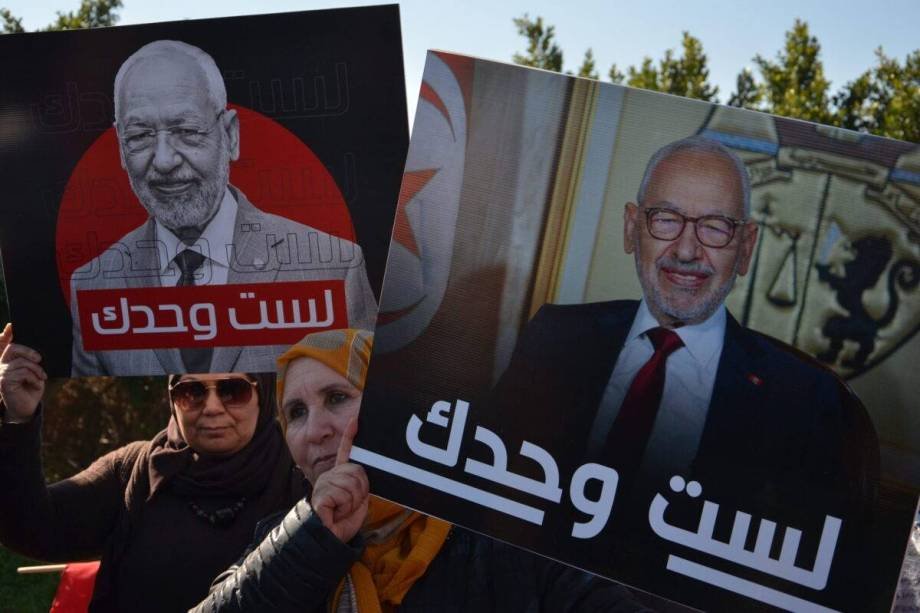
Tunisia’s Ennahda movement said Thursday that its leader Rached Ghannouchi suffered a sharp deterioration in his health while in detention and was transferred to a hospital, Anadolu reports.
In a statement, the movement said Ghannouchi, 84, “experienced a severe decline in his health condition, which forced prison authorities to urgently transfer him to a hospital for treatment and medical monitoring for several days.”
“In light of this serious development, the movement renews its call for Ghannouchi’s immediate release, considering his detention to be arbitrary,” the statement added.
Citing a UN expert panel decision, the movement said Ghannouchi is being prosecuted over freedom of opinion and expression and that the charges against him “lack any legal and factual basis.”
In March, the movement said the UN Working Group on Arbitrary Detention “had adopted an opinion in November 2025 concluding that Ghannouchi’s detention was arbitrary and calling for his immediate release.”
There has been no comment from Tunisian authorities on the statement as of yet.
READ: Tunisia court sentences Ghannouchi to 20 years in prison
On April 17, 2023, security forces raided Ghannouchi’s home and detained him before a court ordered his imprisonment on charges of making statements “inciting chaos and disobedience.”
On April 15, 2026, a Tunisian court sentenced him to 20 years in prison, along with three other Ennahda leaders, in a case known in local media as the “Ramadan gathering” case.
Ghannouchi has received multiple prison sentences in separate cases. In February, an appeals court increased a previous sentence from 14 to 20 years in a case referred to as “conspiracy against state security 2.”
A month earlier, a court sentenced him to three years in prison in a case related to “foreign funding.”
In November 2025, another court sentenced him to two years in prison “over donating prize money from an international award” he received in 2016 to the Red Crescent.
Ghannouchi has refused to attend court hearings, describing them as “political settling of scores,” while authorities maintain that the judiciary is independent and that detainees are being tried on criminal charges.
Opposition groups and rights organizations, however, say the cases are “politically driven” and are being used to target critics of President Kais Saied.
READ: Tunisian human rights league: jailing judges signals collapse of justice