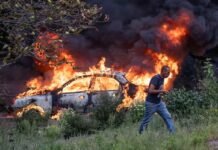
[DAMASCUS] Recently released video recordings broadcast by the Syrian Ministry of Interior have revealed confessions from a number of former pilots in the Syrian regime’s air force. These confessions include sensitive details about how decisions regarding aerial bombardment were made throughout the years of conflict, as well as the direct role played by the top leadership, headed by the former president and the Ministry of Defense, in determining both military and civilian targets.
According to these confessions, bombing operations were not carried out randomly or purely on the basis of field decisions. Rather, the pilots confirmed that instructions concerning targets and designated areas were delivered directly from air force command, in coordination with the minister of defense and with direct intervention from the former president.
The testimonies further indicate that aerial military operations evolved gradually over time. In the early stages of the conflict, helicopters were primarily used before the intensity escalated with the introduction of fighter jets starting in 2013. This development led to an increase in both the frequency of airstrikes and the geographical scope of operations.
One pilot, who had held senior leadership positions, noted that certain officers were granted special trust by the leadership and were assigned intensive bombing missions, particularly in the Eastern and Western Ghouta regions, which witnessed extensive military operations during the war years.
The confessions also reveal the existence of an organized system for managing bombing operations. Coordinates were sent to pilots prior to carrying out missions, with precise identification of targets. The pilots also indicated that some participants in these operations received financial rewards for executing strikes, reflecting the presence of material incentives linked to aerial military operations.
Many of these operations were launched from major air bases, most notably Al-Dumayr Military Airport in the Damascus countryside, in addition to other bases such as al-Sin and Khalkhala. Operations were conducted under centralized coordination between air force command and the supreme military leadership.
The confessions include admissions of carrying out airstrikes targeting civilian areas, including the marketplace in the city of Douma, which was subjected to intense bombardment using highly explosive vacuum missiles, resulting in a large number of casualties. The pilots also acknowledged conducting raids on the town of Deir al-Asafir in Eastern Ghouta as part of a series of operations described as among the deadliest.
In the context of specific operations, one pilot stated that he participated in an airstrike targeting the leader of Jaysh al-Islam, Zahran Alloush, in 2015, in an operation that highlights the level of intelligence and military coordination accompanying certain airstrikes.
These confessions come at a time when Syria is witnessing judicial and security efforts to pursue figures linked to the former regime. Authorities previously announced the arrest of a number of pilots and officers involved in bombing operations, including individuals listed under international sanctions.
Observers believe that these testimonies could constitute important legal material in any future accountability processes, whether at the domestic or international level, particularly in light of repeated accusations of the use of air power against civilian areas during the conflict.
If fully verified, these confessions provide a clearer picture of how aerial military operations were managed during the Syrian war. They highlight the centralization of military decision-making and the role of political leadership in directing strikes, potentially reopening the debate over individual and institutional responsibility in the conflict.
Since the outbreak of the Syrian conflict in 2011, the air force has been one of the most lethal instruments of war, particularly in areas outside government control, where it relied extensively on aerial bombardment, including barrel bombs and highly explosive missiles. Estimates by the United Nations Office of the High Commissioner for Human Rights indicate that the war in Syria claimed the lives of at least 306,887 civilians by 2022, with an average of approximately 84 civilians killed per day during the early years of the conflict.
Despite the difficulty of determining precise responsibility for each individual airstrike, multiple human rights reports agree that Syrian government forces and their allies were responsible for the largest share of civilian casualties. According to data from the Syrian Network for Human Rights, more than 200,000 civilians have been killed by regime forces since the beginning of the conflict, the highest figure among all parties to the war.
These figures demonstrate that aerial bombardment was a primary factor behind this high toll, particularly between 2012 and 2018, which marked the peak use of both warplanes and helicopters against populated areas. Cities such as Aleppo, Eastern Ghouta and Idlib became arenas for intensive bombardment targeting residential neighborhoods, markets, and vital infrastructure, resulting in large numbers of dead and injured, in addition to widespread displacement.
Field reports by humanitarian organizations, such as the Syrian Civil Defense, confirm that tens of thousands of civilians were killed or injured as a result of air attacks. Rescue teams were able to pull more than 125,000 people buried in rubble during the war years, indicating the scale and intensity of the bombardment.
Annual reports also document that bombing was not an exceptional occurrence but rather a recurring practice. In 2022 alone, for example, hundreds of civilians were documented as killed by regime forces, despite a decline in the pace of operations compared with peak years, reflecting the continued reliance on air power even in the later stages of the conflict.
Human rights analyses indicate that the use of warplanes in populated areas, particularly with weapons with extensive destructive capacity, directly contributed to the rising number of civilian casualties and led to repeated accusations of serious violations of international humanitarian law, including disproportionate or indiscriminate attacks.
Despite differing estimates among various sources, the common conclusion remains that aerial bombardment was one of the primary causes of civilian deaths in Syria and that its impact extended beyond human losses to include the destruction of infrastructure and the creation of one of the largest humanitarian crises in the contemporary world.