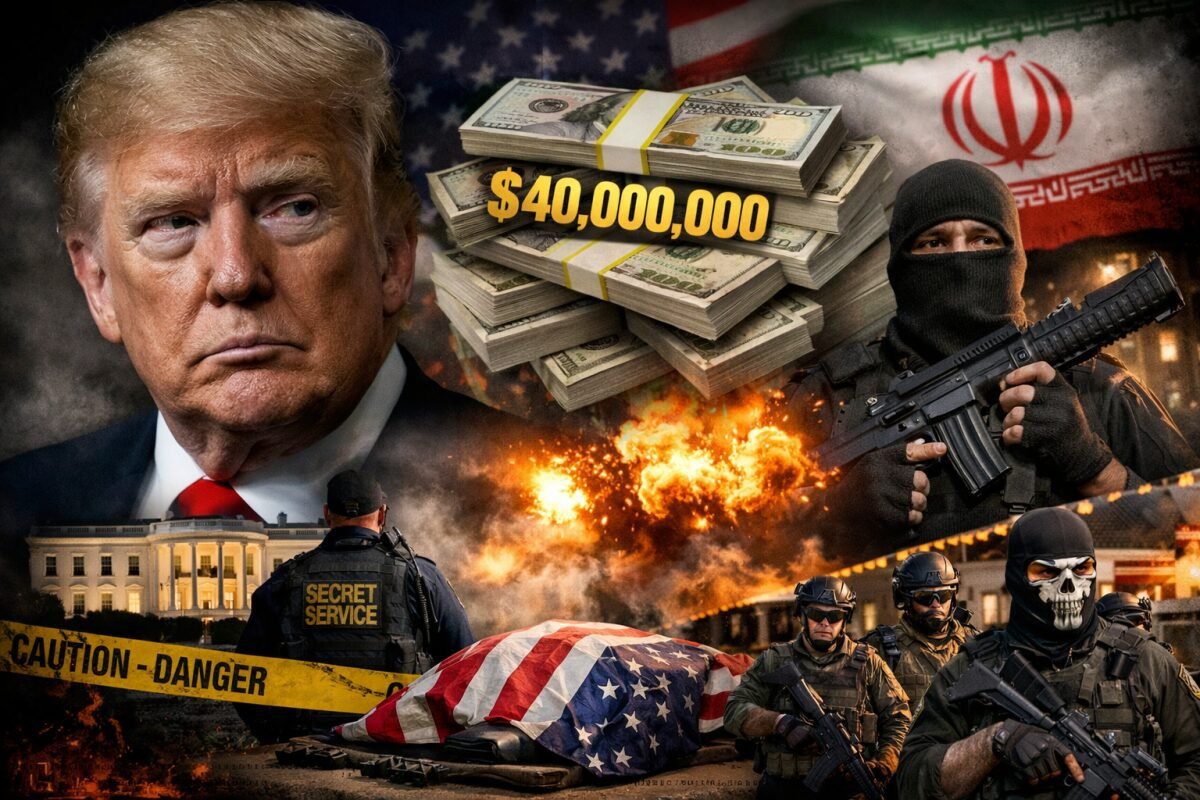
A storm of alarming claims is swirling around President Donald Trump, with insiders warning of a high-stakes global threat environment that has U.S. intelligence agencies on edge.
According to reports circulating among security analysts, Trump is facing escalating dangers following recent military actions tied to Iran. Some sources claim a massive financial bounty has been floated, alongside fears that hostile actors could attempt retaliation on American soil.
While the exact scope of these threats remains unclear, counterterrorism experts say the possibility of coordinated attacks—whether from foreign-backed operatives or extremist networks—has forced federal agencies into heightened alert mode.
“The concern isn’t just overseas anymore,” one analyst said. “It’s the unknown variables inside the country that keep officials up at night.”
The heightened concern comes after a dramatic escalation in U.S.-Iran tensions earlier this year. Military actions targeting Iranian leadership and infrastructure reportedly dealt significant blows—but also triggered fiery rhetoric from figures inside Iran.
Public statements broadcast on Iranian media have included vows of retaliation, intensifying fears that the conflict could spill beyond the Middle East.
Security experts point out that Iran has long been accused by U.S. officials of supporting proxy groups abroad, raising concerns about asymmetric responses rather than traditional warfare.
In response, security has been ramped up across multiple high-profile locations tied to the president, including the White House and Trump-owned properties in Florida and New Jersey.
Law enforcement coordination has reportedly increased, with a focus on surveillance, intelligence gathering, and limiting potential vulnerabilities.
Former military officials say these types of precautions are standard during periods of elevated geopolitical risk.
“The Secret Service doesn’t wait for confirmation—they act on potential,” one retired general noted. “When tensions spike globally, protection here at home tightens immediately.”
The president has already adjusted his public schedule amid the uncertainty, delaying a planned international trip as the administration focuses on the unfolding situation.
Behind the scenes, intelligence agencies are believed to be increasing monitoring efforts, including intercepting communications and tracking potential threats.
Trump himself acknowledged the risks that come with escalating military conflict, offering a blunt assessment when asked about potential retaliation.
“When you go to war, there are consequences,” he said. “We prepare for that reality every day.”
The warning comes after early casualties were reported among U.S. forces stationed in the region, underscoring the real-world stakes of the confrontation.
While some of the more dramatic claims—such as large-scale sleeper networks or specific bounty figures—remain unverified, experts agree on one point: tensions are high, and the risk environment has shifted.
For everyday Americans, the situation serves as a reminder of how quickly global conflicts can ripple back home.
As one insider put it: “This isn’t just about politics or foreign policy anymore. It’s about security—here, now, and what could come next.”